By Emmett Caldwell
A solar hot water system vs instantaneous gas comparison comes down to one tradeoff: a solar system has almost no fuel cost but depends on sunshine and storage, while an instantaneous (tankless) gas heater delivers hot water on demand regardless of weather but burns fuel every time you open a tap. Solar tends to suit homes with good roof exposure, moderate hot water use, and a willingness to keep a backup heat source. Gas tends to suit homes with cloudy winters, limited roof space, or heavy simultaneous demand. The rest of this article walks through each criterion so you can match the system to your house rather than to a headline.
Quick Comparison Table
| Criterion | Solar Hot Water System | Instantaneous Gas Heater |
|---|---|---|
| Energy source | Sunlight via collectors, with auxiliary heat | Natural gas or propane |
| Operating energy use | Near zero when sun is adequate; backup as needed | Continuous per draw; fuel burned on demand |
| Hot water on cloudy days | Depends on storage and backup | Full output at all times |
| Flow rate under heavy use | Limited by stored volume | Limited by unit’s GPM rating and gas supply |
| Installation complexity | High: roof, piping, tank, controls | Moderate: gas line, venting, electrical |
| Roof or space requirements | Significant roof area and storage space | Wall-mounted, minimal space |
| Maintenance | Periodic fluid, sensor and valve checks | Annual combustion and descaling service |
| Lifespan (manufacturer typical) | Often long for collectors; tanks vary | Commonly around 15–20 years |
| Carbon footprint | Low when sun does the work | Direct combustion emissions |
| Best for | Sunny climates, owners with roof access | Cloudy climates, compact or renovated homes |
Energy Efficiency: Winner Is Solar, When the Sun Cooperates
A solar collector converts a large fraction of incoming sunlight into heat that reaches the water, and the fuel it uses is free. Gas instantaneous units convert fuel to heat at efficiency ratings that manufacturers commonly list in the high 80s to around 95 percent for condensing models, but they still consume fuel every time water flows. On a clear summer day, a properly sized solar system can cover most or all of a household’s needs. The catch is that efficiency on paper does not equal performance in January. Winner for efficiency: solar, provided your site gets reliable sun. In a region with long overcast spells, gas closes the gap considerably.
Reliability and Hot Water on Demand: Winner Is Gas
An instantaneous gas heater responds to a tap opening within seconds and does not care what the weather is doing. For households where a shower must be hot at 6:30 a.m. on a gray morning, that dependability matters. Solar systems can deliver excellent water, but they rely on stored hot water, collector temperature, and often an electric or gas backup element. Owners often report that solar performance is strong in summer and noticeably weaker during winter months. If uninterrupted, weather-independent supply is your priority, gas wins this round.
Flow Rate and Simultaneous Use: Winner Is Gas
Instantaneous units are rated in gallons per minute at a given temperature rise, and this is where they shine for multi-bath homes. A unit rated for roughly 5 to 8 GPM can serve a shower and a kitchen sink at once, provided the gas line and venting are sized correctly. A solar system’s effective flow depends on how much hot water sits in the storage tank. If two showers run back to back, the tank may empty and the backup has to carry the load. Households with simultaneous demand should size a solar system generously or choose gas.
Installation and Site Requirements: Winner Is Gas
Installing a gas instantaneous heater usually means mounting a wall unit, running or verifying a gas line, adding combustion venting, and making electrical connections. Work of this kind generally requires a licensed plumber or gas fitter. A solar system needs a south- or west-facing roof (in the Northern Hemisphere) without heavy shading, structural capacity for the collectors and filled tank, insulated piping routed to the storage tank, and a controller with temperature sensors. Many jurisdictions require permits and inspections for both. Consult a licensed professional and your local building department before committing to either, and confirm roof load and gas safety requirements in writing. Winner for simplicity of siting: gas.
Maintenance and Long-Term Care: Winner Is Tie, Depending on Your Habits
Gas units need an annual inspection of the burner, heat exchanger, and venting, plus descaling in hard-water areas. Solar systems need periodic checks of the heat transfer fluid in closed-loop designs, pressure relief valves, temperature sensors, pump operation, and the tank’s anode or corrosion protection where applicable. Neither is difficult, but both should be on a schedule. Water quality matters for both; scale buildup reduces efficiency in gas heat exchangers and collector piping alike. Call this one a tie, with the edge going to whichever service provider you can reliably book.
Running Costs and Fuel Exposure: Winner Is Solar
Because solar collection uses no fuel, the ongoing operating cost of the solar portion is essentially the electricity for pumps and controls plus whatever backup fuel is used on dark days. Gas instantaneous heaters expose you to fluctuating gas rates and the expense of heating water every time it flows. Actual savings depend on local fuel rates, your household size, and how much of the year your system is supplied by the sun. Run your own numbers from your utility bills rather than relying on generic estimates. Winner for fuel exposure: solar.
Lifespan and Durability: Winner Is Gas for Simplicity, Solar for Collectors
Manufacturers commonly specify lifespans of around 15 to 20 years for gas instantaneous units, depending on water quality and service. Solar collectors, particularly sealed evacuated tube or flat-plate designs, are often rated for longer service lives, but storage tanks, pumps, and controllers have shorter ones and are the most common replacement items. Because a solar system has more components, the probability that one will need replacing in a given year is higher. Overall durability is a near tie, with the nod going to gas for simpler replacement planning. For more on storage tank choices and their service life, see Solar Hot Water Storage Tanks: Sizing, Types and Safety Parts.
Safety Considerations: Winner Is Tie
Gas appliances carry carbon monoxide and combustion risks that call for proper venting, a working CO detector, and annual service. Solar systems carry scalding risk because stored water can get very hot on a sunny day, and closed-loop systems operate under pressure. Both need pressure relief and temperature safeguards. A thermostatic mixing valve is essential for solar, and it is a sensible addition for gas too. Read Preventing Scalding From Solar Hot Water: Tempering Valves and Settings before you finalize any solar design. This is a tie: each option is safe when installed and maintained correctly, and each is hazardous when neglected.
Environmental Impact: Winner Is Solar
Solar collection produces no direct combustion emissions. Gas instantaneous heaters burn fuel at the point of use, producing carbon dioxide and some nitrogen oxides. Even high-efficiency condensing units emit combustion gases. Lifecycle impacts of manufacturing collectors and tanks exist for solar too, but over the service life most solar systems offset more emissions than gas. Winner: solar.
Which Should You Choose?
- Choose solar if you live somewhere with abundant sun, have a south-facing roof with little shading, and already keep a backup heat source for winter.
- Choose solar if long-term fuel exposure bothers you and you accept more maintenance in exchange.
- Choose gas instantaneous if you need hot water on cloudy days without planning around weather.
- Choose gas if you have no usable roof area or the roof structure cannot carry collectors and a full tank.
- Choose gas if several fixtures run at once and you want guaranteed flow rates.
- Choose solar with a generous storage tank if you have a family with high daily demand and sun-rich conditions.
- Consider a hybrid: solar preheating feeding a gas instantaneous unit, which can reduce fuel use while keeping on-demand reliability.
Sizing Your Decision
Before choosing, estimate daily hot water use in gallons per person and per fixture. Solar sizing starts with that number. Our guide to How to Estimate Your Household Hot Water Needs Before Going Solar shows the method step by step. If you are considering building part of a system yourself, Is a DIY Solar Water Heater Right for You? A Decision Guide will help you weigh skills, time and permits.
Recommended Products
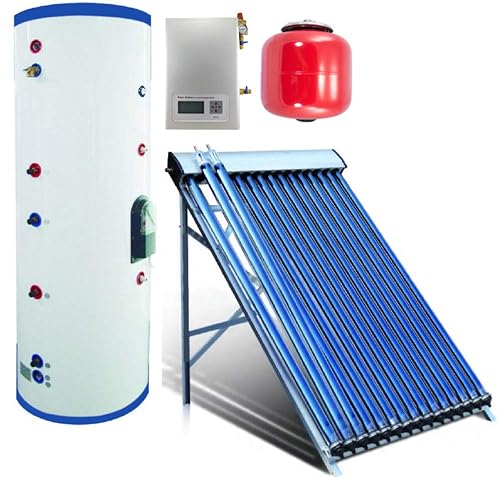
For a solar option, many homeowners start by reviewing a complete kit or a packaged system. Compare options such as the View on Amazon and review how it fits your roof and tank plans. Our roundup of 8 Best Solar Hot Water System Off Grid Picks for Homes (2026) covers several systems in more depth.
For the gas option, instantaneous units from established manufacturers such as the View on Amazon are widely sold for residential installs. Confirm venting, gas type and flow rating against your home before purchase, and have a licensed installer handle the work.
FAQ
Can a solar hot water system fully replace gas in a cold climate?
Usually not on its own. Most cold-climate installations use solar as the primary source during warmer months and rely on a backup heat source during winter. Whether solar can cover the full year depends on your local sun hours, collector area and storage volume.
Is an instantaneous gas heater more efficient than a storage tank?
It avoids standby heat loss from a tank, which is its main efficiency advantage. Total efficiency still depends on usage pattern, water temperature rise and the unit’s rated performance.
How much maintenance does each option really need?
Gas units typically need an annual professional check and periodic descaling in hard water areas. Solar systems need periodic checks of pumps, sensors, valves and fluid in closed-loop designs. Manufacturers’ schedules are the best guide.
Do I need a permit for either system?
In most areas, yes. Gas work and structural roof changes typically require permits and inspections. Check with your local building department and a licensed professional before starting. Our article on Solar Water Heater Codes, Permits and Professional Review outlines what to expect.
Can I combine solar and gas in one system?
Yes. A common arrangement uses solar to preheat water, which then passes through a gas instantaneous unit that tops it up to the set temperature. This reduces fuel use while keeping on-demand supply. Designs require correct controls and safety devices, so have a qualified installer confirm the layout.
Conclusion
For most readers, the solar hot water system vs instantaneous gas decision turns on climate, roof access and tolerance for planning around weather. Solar wins on fuel cost and environmental impact where sun is reliable. Gas wins on dependability, flow rate and ease of installation. Measure your daily demand, check your roof and local codes, and weigh the tradeoffs honestly. When in doubt, a hybrid design or a consultation with a licensed installer will often point you to the right answer for your house.

About Emmett Caldwell
Emmett covers solar water heaters, comparing specs, features and long-term owner feedback to help readers choose with confidence.