By Audrey Hayes
Updated November 2026
A solar hot water system comparison comes down to a few core questions: how the collector captures heat, how the water is stored and circulated, and whether the system relies on passive gravity flow or pumps and controllers. By the end of this guide, you will know the main system families, how they differ in climate performance and maintenance, and how to match one to your home. You will also get a checklist you can use to compare specific quotes or DIY plans side by side.
Start With the Three Core System Types
Nearly every residential solar hot water setup falls into one of three categories. The differences in collector design, circulation method and freeze protection drive most of the performance, cost and maintenance gaps you will see.
Shopping for one? See our guide: 6 Best Indirect Solar Hot Water System Options for Homes (2026).
Passive Thermosiphon (Batch and Close-Coupled)
Thermosiphon systems rely on the fact that hot water rises. Water heated in the collector becomes less dense and flows up into a storage tank mounted above it, while cooler water drops back down to the collector. There are no pumps or controllers, which makes these systems simple and quiet. The trade-off is that the tank must sit above the collector, and the whole arrangement is generally best suited to mild climates where freezing is rare.
Batch heaters are a related passive design. They are essentially insulated tanks or tubes that sit in the sun and heat the water they hold directly. They are very simple to build, and many DIY builders start here, but they lose heat quickly overnight and are best for warm regions or supplemental use.
Active Pumped Closed-Loop (Glycol Systems)
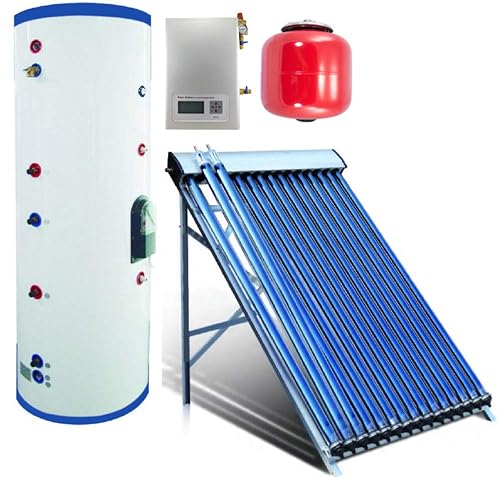
Active closed-loop systems use a small circulator pump, a differential temperature controller and a heat-transfer fluid, usually propylene glycol, that circulates between the collector and a heat exchanger in the storage tank. Because the fluid is separated from your potable water, these systems handle freezing climates well. The storage tank can sit anywhere, including indoors, and the controller maximizes heat capture.
The downsides are added complexity. You need a pump, a controller, sensors, an expansion tank and periodic checks of fluid pressure and condition. Glycol also degrades over time and should be tested and replaced on the schedule the manufacturer specifies.
Active Pumped Open-Loop (Direct Circulation)
Direct, or open-loop, systems pump potable water through the collector itself. They are efficient and avoid heat-exchanger losses, but they are only appropriate where water will not freeze and where the water quality will not foul the collector. Mineral-heavy water can scale the lines, so these systems are common in mild, low-hardness regions and rare in cold or hard-water areas.
Compare Collector Technology
The collector is where sunlight becomes heat, and the two dominant designs are flat plate and evacuated tube. Each has a clear profile.
Flat-Plate Collectors
Flat-plate collectors use a dark absorber plate in an insulated, glazed box. They are durable, relatively easy to install on a roof, and perform well in warm, sunny climates. They lose more heat to the surrounding air in cold weather, which is why they tend to be used in moderate to warm regions.
Evacuated Tube Collectors
Evacuated tubes have a vacuum layer around each absorber tube, which sharply reduces heat loss. They keep working better on cold, cloudy or windy days and are often chosen for colder climates. They are more fragile to handle, and individual tubes can be replaced if damaged. Many manufacturers rate their tubes for specific temperature and pressure limits, so check these before pairing them with a given storage tank.
Quick Comparison Table
| Factor | Thermosiphon | Closed-Loop Glycol | Open-Loop Direct |
|---|---|---|---|
| Moving parts | None | Pump, controller | Pump, controller |
| Freeze protection | Poor | Strong | Poor |
| Tank location | Above collector | Flexible | Flexible |
| Maintenance | Low | Moderate (fluid checks) | Moderate (scale and water quality) |
| Best climate | Mild, frost-free | Cold to moderate | Mild, soft water |
Evaluate Storage and Backup Options
The storage tank determines how much hot water you have on cloudy days and at night. Storage volume should be sized to your household’s daily use, commonly figured at roughly 1 to 1.5 times daily demand for a solar-first setup. Look for tanks with thick insulation, a heat-exchanger coil for closed-loop designs, and enough connections for a backup heater.
Almost every system needs backup. Options include an electric element, a gas booster or a heat pump. The choice affects both operating cost and how the system behaves in winter. If you are weighing a gas option, the related guides on this site cover Solar Hot Water System With Gas Backup: How to Set It Up Right and Solar Hot Water System With Gas Booster: How to Set One Up Step by Step.
Match the System to Your Climate and Site
Climate and roof conditions often decide the question before any other factor does. Use this checklist to narrow your options:
- Average winter low temperatures and how often water freezes outdoors
- Annual sun hours and shading from trees or neighboring buildings
- Roof orientation, pitch and structural capacity for the collector weight
- Water hardness, which affects scaling in open-loop systems
- Daily hot water demand, measured in gallons per day for your household
- Where the storage tank can physically fit, and whether it can sit above the collector
- Local permitting and whether your utility or HOA has rules about rooftop equipment
For roof planning and mounting details, see Solar Hot Water System on Roof: A Step-by-Step Guide to Planning and Mounting. If you are considering a fully independent setup, Solar Hot Water System Off Grid: A Step-by-Step Guide for Beginners explains how storage and backup change when there is no utility connection.
Compare Cost Drivers, Not Just Sticker Prices
Comparing systems on upfront equipment alone can mislead you. The total picture includes the collector type, the number of panels or tubes, the storage tank, the controller and pump for active designs, backup equipment, labor and any roof reinforcement. Long-term running costs depend on how much of your hot water the solar system supplies and what your backup fuel costs locally.
For a detailed breakdown of what drives pricing across system types, read Solar Hot Water System Price: What You'll Pay and What Drives It. Budget-minded readers may also want to review What Is the Cheapest Solar Hot Water System? Options and Trade-Offs, which explains where cost savings tend to cost you in performance or durability.
Recommended gear
If you plan to build or service a closed-loop system yourself, a few tools make the job far easier and safer:
- Digital thermometer with surface probe: helpful for checking collector outlet and tank temperatures during commissioning. View on Amazon
- Glycol test strips or refractometer: lets you check freeze protection and fluid condition at service intervals. View on Amazon
- Pipe insulation with UV-resistant jacket: reduces heat loss on exposed runs and protects lines outdoors. View on Amazon
- Pressure gauge for hydronic systems: confirms the loop is at the correct pressure after filling and during checks. View on Amazon
Common Mistakes
- Choosing a thermosiphon in a region with regular hard freezes, then discovering the collector cracks or drains poorly.
- Undersizing the storage tank, which leaves you short on cloudy days and forces constant backup use.
- Ignoring glycol maintenance in closed-loop systems and letting fluid degrade or lose freeze protection.
- Skipping a tempering valve, which can allow scalding temperatures at the tap.
- Placing a collector in partial shade for part of the day, which can cut output more than expected.
- Comparing quotes that include different equipment, so the numbers look close but the systems are not equivalent.
FAQ
What is the best solar hot water system type for cold climates?
Closed-loop glycol systems with evacuated tube or well-insulated flat-plate collectors are generally the most reliable choice where winters freeze. They protect the potable water from freezing and keep performance steadier in low temperatures.
Is a passive thermosiphon system good enough for most homes?
It can be, in mild, frost-free climates with a tank that can be mounted above the collector. In colder regions or where the tank must sit indoors, an active system is usually the safer fit.
How much storage do I need for a solar hot water system?
A common planning figure is 1 to 1.5 times your daily hot water use. Your actual need depends on household size, fixture use and how much backup heat you are willing to rely on.
Do solar hot water systems need backup heating?
Almost always, yes. Cloudy weather, long winter nights and high-demand days will exceed what the solar system alone can supply, so a backup heater is typically part of the design.
How often does a closed-loop system need maintenance?
Manufacturers usually specify checks of fluid pressure and freeze protection at least annually, with glycol replacement on a multi-year interval. Follow the schedule in your system’s manual, and consult a qualified professional for any repairs involving pressure or electrical components.
Can I compare systems if the manufacturers use different ratings?
Yes, but match apples to apples. Compare collector area, tank volume, backup type, freeze protection method and maintenance requirements rather than relying on marketing claims. Ask each source for the same information in writing.
Are open-loop systems safe to use with drinking water?
Direct circulation puts potable water through the collector, which is permitted in some regions when designed correctly. Check local plumbing codes and water quality, and consult a licensed plumber or installer before choosing this design, since health and safety requirements vary.
Conclusion
A solid solar hot water system comparison starts with climate, then moves to system type, collector technology and storage sizing. Thermosiphon designs favor simplicity in mild regions, while closed-loop glycol systems handle freezing conditions and flexible tank placement. Once you have narrowed the field, compare the full package, including backup, maintenance and installation details, before committing.
Ready to choose one?
About Audrey Hayes
Audrey Hayes is part of our editorial team and reviews and edits our solar water heaters guides, checking product details against manufacturer specifications and owner feedback.