 By Audrey Hayes
Updated November 2026
Choosing among solar thermal combi systems means balancing two jobs at once: heating domestic hot water and supplying space heat from the same collector loop and storage. This list is built for homeowners, installers and DIY builders who want a reference point before committing to a design. Each pick was weighed against four criteria: how well the product fits a combi role, the clarity of its published specifications, the reputation of the brand or author behind it, and the patterns owners tend to describe in their feedback. We did not test any of these items ourselves; the comparison draws on manufacturer documentation, technical literature and general owner reports.
Our top picks at a glance
- 1
 TOP CHOICEBest overallPlanning and Installing Solar Thermal Systems: A Guide for Installers,View on Amazon
- 2
 TOP CHOICEBest for system designersSolar Thermal Engineering: Space Heating and Hot Water SystemsView on Amazon
- 3
 TOP CHOICEBest for hybrid layoutsSolar Thermal Systems and Applications: New Design Techniques for ImprView on Amazon
- 4
 Best for analysis-focused readersSolar-Thermal Energy Systems: Analysis and DesignView on Amazon
- 5
 Best for off-grid electrical backup12PCS 195W Solar Panel Kit with 10KW InverterView on Amazon
- 6
 Best budget pick for small off-grid setups4PCS N-Type Bifacial 195W Solar Panel Kit with 60A MPPTView on Amazon
Our Top Picks
| Product | Best for | Key feature |
|---|---|---|
| Planning and Installing Solar Thermal Systems | Installers and homeowners planning a combi build | Practical planning and installation guidance |
| Solar Thermal Engineering: Space Heating and Hot Water Systems | Engineers sizing collectors and storage | Coverage of space heating and hot water together |
| Solar Thermal Systems and Applications | Readers exploring hybrid and new design layouts | Focus on improved thermal performance |
| Solar-Thermal Energy Systems: Analysis and Design | Students and designers doing performance calculations | Analytical method for system design |
| 12PCS 195W Solar Panel Kit with 10KW Inverter | Whole-home off-grid electrical supply alongside thermal planning | Large battery and inverter capacity |
| 4PCS N-Type Bifacial 195W Solar Panel Kit with 60A MPPT | Small off-grid cabins and RVs on a tighter budget | MPPT charge controller and pure sine wave inverter |
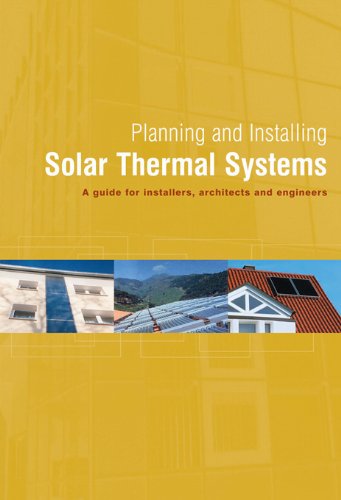
Planning and Installing Solar Thermal Systems: A Guide for Installers, Architects and Engineers
Planning and Installing Solar Thermal Systems: A Guide for Installers, Architects and Engineers
Best for: Overall planning of a combi system from concept to commissioning.
This book suits anyone who needs to understand how collectors, stores and controls fit together before buying equipment. It is written for professionals, but homeowners with a serious build in mind will find the planning chapters useful. Reading it before you finalize a layout can prevent costly rework.
Key specs:
- Format: printed guide covering system planning and installation
- Audience: installers, architects and engineers
Pros:
- Organized around the real sequence of planning and installation
- Useful for checking a supplier’s proposed layout
- Covers both design logic and installation practice
Cons:
- Assumes some technical background
- Does not replace local code requirements or a licensed professional’s review
Bottom line: The best starting point for someone who wants a single reference covering the full combi project.
Solar Thermal Engineering: Space Heating and Hot Water Systems
Solar Thermal Engineering: Space Heating and Hot Water Systems
Best for: Engineers sizing collectors, stores and heat distribution for combined loads.
The title signals the combi focus directly: space heating and hot water on the same solar side. Readers who need the engineering logic behind collector area, storage volume and load matching will find it more rigorous than general overviews.
Key specs:
- Subject: space heating and domestic hot water systems
- Level: engineering reference
Pros:
- Addresses combined space and water heating directly
- Strong on calculation methods
- Useful for checking sizing claims in vendor proposals
Cons:
- Older technical reference, so some hardware examples may be dated
- Heavy on math for casual readers
Bottom line: Best for people who want to size a combi system themselves rather than trust a rule of thumb.
Solar Thermal Systems and Applications: New Design Techniques for Improved Thermal Performance (Hybrid Energy Systems)
Solar Thermal Systems and Applications: New Design Techniques for Improved Thermal Performance (Hybrid Energy Systems)
Best for: Readers exploring newer layouts and hybrid thermal designs.
This title focuses on design techniques aimed at better thermal performance, which fits builders who want to go beyond a basic single-loop combi. It is a reasonable choice for those comparing hybrid approaches with conventional layouts.
Key specs:
- Theme: new design techniques and hybrid energy systems
Pros:
- Covers performance-oriented design approaches
- Relevant to hybrid thermal-electric planning
- Good companion to more traditional references
Cons:
- Newer techniques may need validation against local conditions
- Less focused on basic installation steps
Bottom line: A good pick for experienced builders comparing advanced combi configurations.
Solar-Thermal Energy Systems: Analysis and Design
Solar-Thermal Energy Systems: Analysis and Design
Best for: Performance analysis and design calculations for thermal systems.
This is a classic analytical text. It suits readers who want to model how a combi system behaves over a year rather than follow a fixed build sequence. Owners and students tend to use it as a calculation reference.
Key specs:
- Focus: analysis and design of solar-thermal energy systems
Pros:
- Strong analytical foundation
- Helps explain why a combi system performs as it does
- Widely cited in thermal engineering courses
Cons:
- Demanding for readers without engineering training
- Limited practical installation detail
Bottom line: The right choice for readers who want the analysis behind the design.
12PCS 195W Solar Panel Kit with 10KW Inverter
Solar Panel Kit:12PCS 195W Solar Panels(2340W)+2PCS 48V 100AH Cubix Lithium Battery(10.24kWh)+10KW Solar Inverter 120V/240V ECO-WORTHY 10KW Output 9.36KWH Off Grid Solar System Complete Kit for Home
Best for: Whole-home off-grid electrical supply alongside a thermal plan.
This kit targets electrical generation rather than heat. It may suit a home that wants solar electricity to power pumps, controls and backup heating elements while a thermal collector handles most hot water. Treat it as a complement to a thermal system, not a substitute.
Key specs:
- Panels: 12 × 195W (listed total 2340W)
- Batteries: 2 × 48V 100AH lithium (listed 10.24kWh)
- Inverter: 10KW, 120V/240V output
Pros:
- Large listed capacity for whole-home loads
- Split-phase 120V/240V output
- Complete kit reduces component matching work
Cons:
- Electrical, not thermal, so it does not replace a collector loop
- Installation requires a licensed electrician in most jurisdictions
Bottom line: Suited to off-grid homes that need serious electrical capacity to support a thermal system’s pumps and controls.
4PCS N-Type Bifacial 195W Solar Panel Kit with 60A MPPT
4PCS N-Type Bifacial 195W Solar Panel+12.8V 314Ah Lithium Battery+60A MPPT Charge Controller+2000W Pure Sine Wave Inverter ECO-WORTHY 800W Off Grid Solar System Complete Kit for RV Off Grid
Best for: Small off-grid cabins and RVs on a tighter budget.
This smaller kit fits a modest electrical load, such as a circulation pump and controller for a compact thermal loop. It is a budget pick for small structures where a full-size system would be oversized.
Key specs:
- Panels: 4 × 195W N-type bifacial
- Battery: 12.8V 314Ah lithium
- Charge controller: 60A MPPT
- Inverter: 2000W pure sine wave
Pros:
- MPPT controller suits variable light conditions
- Pure sine wave output is compatible with sensitive electronics
- Right-sized for small off-grid loads
Cons:
- Limited capacity for larger homes
- Still does not generate heat directly
Bottom line: A sensible budget option for small off-grid spaces that need electrical support for a thermal loop.
Buying Guide
Collector Type and Heat Output
Combi systems usually rely on flat-plate or evacuated-tube collectors. Flat plates handle mild climates well and cost less per square foot, while evacuated tubes retain heat better in cold weather. Check the collector area you need for your heating load, not just your hot water use, because a combi system must cover both.
Good picks for this: Solar Thermal Engineering: Space Heating and Hot Water Systems; Solar-Thermal Energy Systems: Analysis and Design
Storage Tank Size and Stratification
Combi systems store heat for both space and water, so tank volume matters more than in a water-only system. Look for stratification features that keep hot water near the top so the heating loop draws from the right zone. Undersized tanks lead to frequent backup firing.
Good picks for this: Planning and Installing Solar Thermal Systems; Solar Thermal Systems and Applications
Controls and Pump Requirements
Differential controllers, circulation pumps and check valves determine whether heat moves where it should. Confirm the controller can handle both the water and space heating demands. Electrical loads for pumps are small, but reliable power matters during daylight hours.
Good picks for this: 4PCS N-Type Bifacial 195W Solar Panel Kit with 60A MPPT; 12PCS 195W Solar Panel Kit with 10KW Inverter
Sizing for Your Climate and Load
Heating loads in cold regions can be several times larger than in temperate ones. Use heating degree-day data and your home’s heat loss estimate before picking collector area. A system sized only for summer hot water will underperform in winter.
Good picks for this: Solar Thermal Engineering: Space Heating and Hot Water Systems; Planning and Installing Solar Thermal Systems
Backup Heat Source Compatibility
Every combi system needs a backup for cloudy stretches. Confirm the backup boiler or heater can integrate with the solar loop without fighting it. Mismatched controls cause wasted fuel and temperature swings.
Good picks for this: Solar Thermal Systems and Applications; Solar-Thermal Energy Systems: Analysis and Design
Freeze Protection and Fluid Choice
Cold climates call for propylene glycol antifreeze or a drainback design. Check manufacturer temperature ratings and the fluid’s maintenance interval. Glycol degrades over time, so schedule testing.
Good picks for this: Planning and Installing Solar Thermal Systems; Solar Thermal Engineering: Space Heating and Hot Water Systems
Durability, Mounting and Maintenance
Check wind and snow load ratings for mounts, corrosion resistance of fittings, and the warranty terms on collectors and tanks. Plan for annual inspection of pumps, valves and fluid level. A combi system has more moving parts than a simple water heater, so maintenance access matters.
Good picks for this: 12PCS 195W Solar Panel Kit with 10KW Inverter; 4PCS N-Type Bifacial 195W Solar Panel Kit with 60A MPPT
FAQ
What is a solar thermal combi system?
It is a solar heating system that supplies both domestic hot water and space heating from a shared collector loop and storage tank. A backup heater covers periods of low sunlight.
How is a combi system different from a water-only solar heater?
A water-only system sizes collectors and tanks for hot water alone. A combi system must also carry space heat, which requires larger collector area, bigger storage and more complex controls.
Do I need a licensed installer?
In many jurisdictions, yes, especially for plumbing and gas or electrical connections. Consult a licensed professional and check local code before starting any build.
Can solar panels power a thermal system’s pumps?
Yes. Pumps and controllers draw modest electrical loads that small photovoltaic kits can often support. Confirm the voltage, pump draw and battery capacity match the kit you choose.
What happens in winter?
Output drops with shorter days and lower sun angles, so the backup heater carries more of the load. Freeze protection and proper collector tilt are essential in cold regions.
How much collector area do I need?
It depends on your heating degree-days, floor area, insulation level and hot water demand. Use a load calculation or consult a qualified designer rather than relying on a general rule.
Conclusion
For planning a solar thermal combi systems project, start with the design references: the installation guide suits most homeowners and installers, while the engineering texts help readers who need to size collectors and storage precisely. Off-grid builders who also need electricity for pumps and controls can look at the larger or smaller solar kits, matching capacity to load. No single item covers every need, so combine a design reference with a properly sized electrical supply and professional review.
Sources
- Federal guidance on solar water heating basics, system types and homeowner considerations (energy.gov)
- Research on solar thermal performance, modeling and renewable heating technologies (nrel.gov)
- Standards and engineering resources for building heating and hot water design (ashrae.org)
Before you buy: helpful guides
- Solar Thermal Air Conditioning: How It Works and How to Build a System
- Solar Thermal Energy Collection: How It Works and How to Build a Working System
- Solar Thermal Systems Manufacturers: How to Evaluate and Choose One (2026)
- Drain Back Solar Thermal Systems: How They Work and How to Build One (2026)
Related reading
- What Is a Solar Thermal System? How It Works and What You Need
- Top 7 Solar Thermal Energy Conversion System Options Worth Considering in 2026
- Top 6 Solar Thermal Power Generation System Options Compared for 2026
About Audrey Hayes
Audrey Hayes is part of our editorial team and reviews and edits our solar water heaters guides, checking product details against manufacturer specifications and owner feedback.