 By Audrey Hayes
Updated November 2026
If you are asking how many solar panels for hot water heater setups your household needs, the answer depends on how much hot water you use, how much sun your roof gets and whether you are buying a purpose-built solar thermal collector or a photovoltaic panel to power an electric element. This list compares seven products across those criteria. We weighed manufacturer specifications, brand reputation and the patterns owners commonly describe in their feedback, with a focus on whether each item actually fits a water-heating job rather than general off-grid power.
Our top picks at a glance
- 1
 TOP CHOICEBest overall4 Panel Standard SW-38 Hybrid Solar Water Heater Kit- Single Row InstallationView on Amazon
- 2
 TOP CHOICEBest for replacement collectorsSW-38 Solar Water Heater PanelsView on Amazon
- 3
 TOP CHOICEBest for whole-home PV backupSUNGOLDPOWER UL61730 450W Solar Panel 8PCS,Monocrystalline,Class A CelView on Amazon
- 4
 Best for small animal or greenhouse heating30W Solar Panel Heater Portable Solar Powered Heater with USB DC PortsView on Amazon
- 5
 Best for RV and off-grid cabinsRenogy4PCS 200W Solar Panels for RV Class B Van Marine Cabin Roof HomeView on Amazon
- 6
 Best budget pick300W Solar Panel 2 Pack, Upgraded 12V/24V PV Module for Home Rooftop RView on Amazon
- 7
 Best for bifacial output2PCS 400 Watt Solar Panels, Double-Side Design PV Module for Home RoofView on Amazon
Our Top Picks
How Many Solar Panels You Actually Need
Before comparing products, it helps to understand the two main system types, because they answer the sizing question differently.
Solar thermal (collector) systems use panels that heat water directly. A typical residential flat-plate collector is sized in square feet of absorber area. Most sizing guidance for a household of two to four people with a standard 50-to-80-gallon daily demand lands somewhere around 40 to 80 square feet of collector area, depending on climate and the solar fraction you want to cover. Sunny, low-latitude sites need less; cloudy or northern sites need more. A single collector panel is often about 20 to 40 square feet, so a family setup usually means two to four panels.
Photovoltaic (PV) systems generate electricity and power a resistance element in a tank. Here the math is in watts. A rough starting point is to estimate daily hot water energy, convert it to kilowatt-hours, and divide by the peak sun hours at your site. Heating 50 gallons by about 70°F needs roughly 14 kWh of energy, and at 4 to 5 peak sun hours you would need on the order of 3 to 4 kW of panels, before accounting for losses. Smaller PV arrays can work for supplemental heat, which is why the sizing answer varies so much.
Knowing your daily demand first makes the rest of the decision much simpler. The guide on estimating household hot water needs walks through that calculation in detail.
Selection criteria used in this list
- Whether the product is designed for water heating or a clearly compatible role
- Stated size, output or construction specifications from the listing
- Brand reputation and consistency of owner feedback patterns
- Practicality for a DIY or simple kit installation
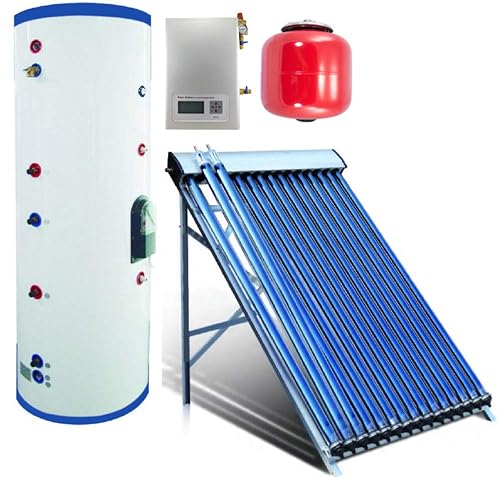
4 Panel Standard SW-38 Hybrid Solar Water Heater Kit- Single Row Installation
4 Panel Standard SW-38 Hybrid Solar Water Heater Kit- Single Row Installation
Best for: Best overall for a complete solar water heating kit with a four-panel single-row layout
This kit suits homeowners who want a matched collector array rather than sourcing panels and fittings separately. It is aimed at a standard residential roof with a single row of collectors.
Key specs
- Four-panel configuration in a single-row installation
- Designed as a hybrid solar water heater kit for domestic hot water
Pros
- Matched components reduce guesswork on panel count
- Single-row layout is simpler to mount on a typical roof
- Covers the full panel set in one purchase
Cons
- Fixed panel count may be too large or small for some households
- Installation still requires plumbing and roof-mount skills
Bottom line: A strong pick for a homeowner who wants a complete collector kit sized for a typical family and a single-row roof.
SW-38 Solar Water Heater Panels
SW-38 Solar Water Heater Panels
Best for: Best for replacement collectors or adding panels to an existing SW-38-compatible system
This listing suits someone who already has a solar water heater and needs to replace or expand the collector array rather than buying a full kit.
Key specs
- Sold as individual SW-38 solar water heater panels
Pros
- Useful for replacing a damaged collector
- Lets you match existing piping and mounting
- Buying panels separately gives flexibility in array size
Cons
- Only practical if your system is already compatible with this model
- You will need to confirm fittings and mounting hardware yourself
Bottom line: Best for existing owners who need matching collectors, not for a first-time buyer starting from scratch.
SUNGOLDPOWER UL61730 450W Solar Panel 8PCS,Monocrystalline,Class A Cell,Rigid,High Efficiency,Charging 12V/24V/48V Solar System,for Rooftop,Farm,On and Off Grid,CEC Listed(Total 3600W)
SUNGOLDPOWER UL61730 450W Solar Panel 8PCS,Monocrystalline,Class A Cell,Rigid,High Efficiency,Charging 12V/24V/48V Solar System,for Rooftop,Farm,On and Off Grid,CEC Listed(Total 3600W)
Best for: Best for whole-home PV backup that powers an electric water heater element
This eight-panel monocrystalline array suits households that want to run an electric resistance water heater from solar electricity rather than use a thermal collector.
Key specs
- Eight 450W panels, 3600W total array capacity
- Monocrystalline, rigid, CEC listed per the listing name
Pros
- Total capacity is large enough to cover a substantial share of electric water heating
- Monocrystalline construction is widely used for efficiency
- Works with 12V, 24V and 48V system voltages
Cons
- Requires an inverter, controller and electrical work, so it is not a simple plumbing job
- Power output depends heavily on sun hours and your water heater’s element wattage
Bottom line: The right choice for someone sizing a PV system to heat water electrically, ideally with a qualified electrician.
30W Solar Panel Heater Portable Solar Powered Heater with USB DC Ports for Chicken Coop Pet House Greenhouse Overheating System
30W Solar Panel Heater Portable Solar Powered Heater with USB DC Ports for Chicken Coop Pet House Greenhouse Overheating System
Best for: Best for small animal or greenhouse heating rather than household hot water
This small 30W unit is aimed at heating a chicken coop, pet house or greenhouse, not a domestic water tank. It is included here because readers searching on panel counts sometimes need a small supplemental heater rather than a full water system.
Key specs
- 30W solar panel with portable heater design
- USB DC ports for small loads
Pros
- Simple, self-contained setup with no plumbing
- Useful for small enclosed spaces
- Portable and easy to reposition
Cons
- Output is far too small to heat a household water tank
- Heating capacity is limited to small volumes of air or enclosures
Bottom line: Not suitable for a hot water heater; choose it only for a small animal shelter or greenhouse heating need.
4PCS 200W Solar Panels for RV Class B Van Marine Cabin Roof Home Farm and Other Off-Grid Systems, IP67 Renogy Solar Panels 800 Watt N-Type, 16BB 25% High-Efficiency
Renogy4PCS 200W Solar Panels for RV Class B Van Marine Cabin Roof Home Farm and Other Off-Grid Systems, IP67 Solar Panels 800 Watt N-Type, 16BB 25% High-Efficiency
Best for: Best for RV and off-grid cabins that need a compact PV array
Four 200W panels suit a van, boat or small cabin where roof space is limited and the goal is electricity to run a water heater element or pump.
Key specs
- Four 200W panels, 800W total per the listing name
- IP67 rating and N-type cells per the listing name
Pros
- Compact total output suits mobile and small-footprint installs
- IP67 rating indicates good weather and water resistance
- N-type cell construction is marketed for high efficiency
Cons
- 800W is too little to run a full electric tank heater continuously
- Needs a compatible charge controller and battery bank
Bottom line: A fit for off-grid travel or a cabin needing modest supplemental heat, not for a full-size household water heater.
300W Solar Panel 2 Pack, Upgraded 12V/24V PV Module for Home Rooftop RV Camper Marine Boat Off Grid System All Black 600 Watt Solar Panel,18BB Solar 24.6% High Efficiency Monocrystalline
300W Solar Panel 2 Pack, Upgraded 12V/24V PV Module for Home Rooftop RV Camper Marine Boat Off Grid System All Black 600 Watt Solar Panel,18BB Solar 24.6% High Efficiency Monocrystalline
Best for: Best budget pick for a small two-panel PV array
Two 300W panels give a modest, lower-commitment way to test a PV-powered water heating idea or add supplemental capacity.
Key specs
- Two 300W panels, 600W total per the listing name
- 12V/24V module, monocrystalline per the listing name
Pros
- Lower starting footprint than a multi-panel array
- Monocrystalline construction is common and well understood
- Works in 12V or 24V systems
Cons
- 600W is well short of what a full electric water heater element needs
- Requires controller, wiring and battery planning
Bottom line: Suits a budget-minded user who wants to start small with supplemental heating, with the understanding that it will not cover full demand.
2PCS 400 Watt Solar Panels, Double-Side Design PV Module for Home Rooftop Farm Shed Camper Marine Off-Grid Renogy Bifacial Solar Panel 800W N-Type 16BB, 25% High-Efficiency
2PCS 400 Watt Solar Panels, Double-Side Design PV Module for Home Rooftop Farm Shed Camper Marine Off-Grid Renogy Bifacial Solar Panel 800W N-Type 16BB, 25% High-Efficiency
Best for: Best for bifacial output on a ground mount or reflective surface
Bifacial panels can capture some reflected light from the back, which makes them most relevant for ground mounts or light-colored surfaces rather than dark roofs.
Key specs
- Two 400W panels, 800W total per the listing name
- Double-sided (bifacial) design and N-type cells per the listing name
Pros
- Bifacial design can add output where reflection is strong
- Two-panel kit is simple to handle and mount
- N-type construction is marketed for efficiency
Cons
- Bifacial gains depend on mounting height and ground reflectivity
- 800W total still needs a larger array to fully heat a household tank electrically
Bottom line: A good match for a ground-mounted or shed-mounted PV setup where the rear side can see reflected light.
Quick Comparison
| Product | Best for | Key feature |
|---|---|---|
| 4 Panel Standard SW-38 Hybrid Solar Water Heater Kit | Complete solar thermal kit | Four matched panels, single-row layout |
| SW-38 Solar Water Heater Panels | Replacement collectors | Matches existing SW-38 systems |
| SUNGOLDPOWER 450W 8PCS | Whole-home PV backup | 3600W total, CEC listed |
| 30W Solar Panel Heater | Small animal or greenhouse heat | Portable, USB ports |
| 4PCS 200W Solar Panels for RV | RV and off-grid cabins | IP67, 800W total |
| 300W Solar Panel 2 Pack | Budget small PV array | 600W total, 12V/24V |
| 2PCS 400W Bifacial Panels | Ground or shed mounts | Double-sided design |
Buying Guide
Decide between thermal collectors and PV panels
The first decision is the technology. Thermal collectors heat water directly and usually give more hot water per square foot. PV panels produce electricity that must drive a resistance element, which is more flexible but less efficient for water heating. If your only goal is hot water, a thermal kit is usually the simpler route.
Good picks for this: 4 Panel Standard SW-38 Hybrid Solar Water Heater Kit, SW-38 Solar Water Heater Panels
Estimate your daily hot water demand
Sizing starts with how many gallons you use per day and how much you need to raise their temperature. Roughly, each gallon heated by 70°F needs about 0.58 kWh. A family using 60 gallons a day therefore needs around 35 kWh of heat energy, which tells you the scale of the array before you look at any product.
Good picks for this: SUNGOLDPOWER UL61730 450W Solar Panel 8PCS, 300W Solar Panel 2 Pack
Check collector area and panel count
For thermal systems, compare total absorber area against your target. Kits are often specified by panel count rather than square feet, so confirm the area per panel before you assume a four-panel kit fits your roof or your demand.
Good picks for this: 4 Panel Standard SW-38 Hybrid Solar Water Heater Kit, SW-38 Solar Water Heater Panels
Consider your climate and sun hours
Peak sun hours change everything. A site with five or more peak sun hours will need far fewer panels than a northern or cloudy site. Winter performance matters too, and freeze protection can change which system is practical. For cold-season planning, see the guide on keeping a solar water heater working in winter.
Good picks for this: SUNGOLDPOWER UL61730 450W Solar Panel 8PCS, 2PCS 400 Watt Solar Panels
Match voltage and electrical components
PV arrays need charge controllers, inverters or matched resistance elements. Check that the panel voltage (12V, 24V or 48V) matches your controller and battery bank. Mismatched voltages are one of the most common installation errors.
Good picks for this: 4PCS 200W Solar Panels for RV, 300W Solar Panel 2 Pack
Look at mounting, weight and roof fit
Panels add load to a roof and need proper flashing and attachment. Confirm the weight per panel and the mounting hardware before buying. A structural check is worth the time for any roof-mounted array.
Good picks for this: 4 Panel Standard SW-38 Hybrid Solar Water Heater Kit, 2PCS 400 Watt Solar Panels
Plan for durability and weather resistance
Look for ratings like IP67 on the listing, tempered glass, and frames suited to your environment. Outdoor panels face UV, hail and temperature swings, so construction quality affects how long the array lasts.
Good picks for this: 4PCS 200W Solar Panels for RV, SUNGOLDPOWER UL61730 450W Solar Panel 8PCS
Plan maintenance and freeze protection
Thermal systems need periodic checks for leaks, pressure and glycol levels where used. Owners often report that a simple annual inspection prevents most problems. Check for leaks as part of routine care.
Good picks for this: SW-38 Solar Water Heater Panels, 4 Panel Standard SW-38 Hybrid Solar Water Heater Kit
FAQ
How many solar panels do I need for a typical family?
For a thermal collector system, a family of two to four often needs roughly 40 to 80 square feet of collector area, which usually means two to four standard panels depending on size. For a PV system heating water electrically, the requirement is in kilowatts and depends on demand and sun hours, so it is typically several kilowatts of panels rather than a few.
Can a small solar panel heat my whole water tank?
Usually not. A 30W or 200W panel produces too little energy to heat a full household tank in a reasonable time. Small panels are better for supplemental heat or small enclosures.
Is a solar thermal collector better than a PV panel for water heating?
For hot water alone, thermal collectors are generally more efficient because they convert sunlight directly into heat. PV panels are more flexible, since the electricity can power other loads, but they lose some energy in conversion.
How do I calculate the panel size for an electric water heater?
Estimate your daily kWh needed to heat your water, then divide by your site’s peak sun hours and adjust for system losses. The result is the array size in kilowatts. Have an electrician check your calculation before installing.
Do solar water heaters work in winter?
They work less efficiently in cold, cloudy months. Many systems need a backup heater and freeze protection. Plan for seasonal output rather than assuming summer performance year-round.
Do I need a permit to install solar panels for water heating?
Requirements vary by location. Many jurisdictions require permits for roof work and electrical connections. Check with your local building department, and consult a licensed professional for any electrical or structural work.
Conclusion
There is no single answer to how many solar panels for hot water heater use, but the sizing logic is consistent: estimate your daily demand, check your sun hours, and choose thermal collectors for direct hot water or a PV array for electric heating. The four-panel SW-38 kit is the strongest fit for a complete thermal system, while the eight-panel 450W array suits whole-home electric PV backup. Smaller products like the 30W heater or the 200W and 300W panel sets fit supplemental or off-grid needs. Because electrical and structural work carries real risk, consult a licensed professional before installing any array.
Before you buy: helpful guides
- Diy Solar Panel Water Heater for Hot Tub: A Step-by-Step Guide for Beginners
- Solar Hot Water Heater Thermosiphon: How to Build and Set One Up
- Solar Hot Water Heater in Winter: How to Keep It Working in Cold Months
- Solar Panel Water Trough Heater: How to Build One Step by Step
- Solar Hot Water Heater Rebates: How to Find and Claim Yours
About Audrey Hayes
Audrey Hayes is part of our editorial team and reviews and edits our solar water heaters guides, checking product details against manufacturer specifications and owner feedback.