 By Audrey Hayes
Updated November 2026
Shopping for a 300 litre solar hot water system means balancing tank capacity, collector type, coil design and how the unit will mount on your roof or ground. This guide compares five listings on how well they match common household needs, based on published specifications, manufacturer claims, brand reputation and the feedback owners tend to share. The criteria were fit for typical household demand, coil and tank configuration, collector and mounting approach, certification status and the general owner experience reported for each product type.
Our top picks at a glance
- 1
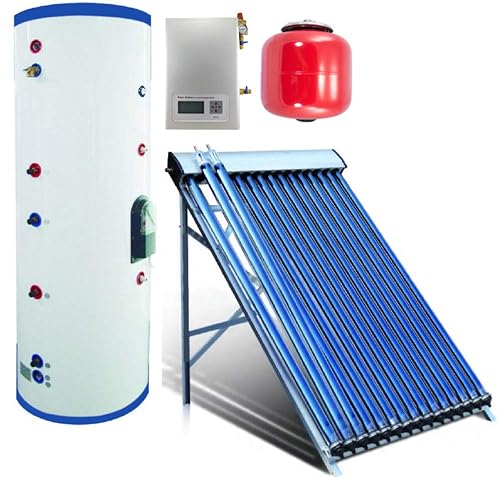 TOP CHOICEBest overall300 Liter Water Heater Active Split System Single Coil Tank 45 Deg FraView on Amazon
- 2TOP CHOICEBest for larger households600 Liter Water Heater Active Split System Dual Coil Tank 45 Deg FrameView on Amazon
- 3
 TOP CHOICEBest for pool-style heatingIndustrial Grade Solar Pool Heater DIY Kit – Superior High-Wind StraplView on Amazon
- 4
 Best for above ground poolsDoheny's Solar Pool Heating System for Above Ground Pools – Eco-FriendView on Amazon
- 5
 Best for whole-house split setupsWhole House On/Off Grid Split Solar Water Heater System (300L or 75 Gallons)View on Amazon
Our Top Picks
Quick Comparison
| Product | Best for | Key feature |
|---|---|---|
| 300 Liter Water Heater Active Split System Single Coil Tank | Typical household hot water at 300 litres | Single coil tank with evacuated tubes |
| 600 Liter Water Heater Active Split System Dual Coil Tank | Larger households needing more capacity | Dual coil tank with evacuated tubes |
| Industrial Grade Solar Pool Heater DIY Kit | DIY builders wanting a strapless mounting approach | High-wind strapless mounting system |
| Doheny’s Solar Pool Heating System for Above Ground Pools | Above ground pool owners | 5′ x 20′ collector kit |
| Whole House On/Off Grid Split Solar Water Heater System | Whole-house split installations | 300L or 75 gallon capacity with on/off grid use |
300 Liter Water Heater Active Split System Single Coil Tank 45 Deg Frame Evacuated Vacuum Tubes Hot SRCC Certified
300 Liter Water Heater Active Split System Single Coil Tank 45 Deg Frame Evacuated Vacuum Tubes Hot SRCC Certified
Best for: Typical household hot water at 300 litres
This suits a household that wants a single 300 litre tank with an active split layout, where the storage tank sits apart from the collector array. It is a common match for a family of three to five that uses hot water across showers, dishwashing and laundry.
Key specs
- Capacity: 300 litres
- Coil: single coil tank
- Collector: evacuated vacuum tubes
- Frame: 45 degree mounting frame
- Certification: SRCC certified
Pros
- Single coil keeps the tank configuration simple to understand and service.
- Evacuated tubes generally perform better than flat plates in cold or overcast conditions, according to common manufacturer guidance.
- SRCC certification gives buyers an independent performance reference point.
Cons
- A single coil offers less flexibility than dual coil designs if you later want to add a second heat source.
- Split systems require careful pipework routing, which adds installation time.
Bottom line: A strong default choice for a standard household that wants a 300 litre system with a proven certification and a simple layout.
600 Liter Water Heater Active Split System Dual Coil Tank 45 Deg Frame Evacuated Vacuum Tubes Hot SRCC Certified
600 Liter Water Heater Active Split System Dual Coil Tank 45 Deg Frame Evacuated Vacuum Tubes Hot SRCC Certified
Best for: Larger households needing more capacity
This is the step-up option for homes that run out of hot water with the 300 litre size. It also fits buyers who plan to pair solar with a secondary heat source, since the dual coil design allows that connection.
Key specs
- Capacity: 600 litres
- Coil: dual coil tank
- Collector: evacuated vacuum tubes
- Frame: 45 degree mounting frame
- Certification: SRCC certified
Pros
- Double the storage gives more buffer for high-demand days.
- Dual coil layout supports backup heating integration.
- Same evacuated tube and SRCC profile as the 300 litre model.
Cons
- Larger tank is heavier and needs a stronger mounting location.
- Overkill for a couple or small household using 300 litres comfortably.
Bottom line: Pick this if you need more than 300 litres of storage or want a dual coil setup for backup heating.
Industrial Grade Solar Pool Heater DIY Kit – Superior High-Wind Strapless Mounting System & Maximum Freeze Resistance (6-4’x12.5′ / 300 Square Feet)
Industrial Grade Solar Pool Heater DIY Kit – Superior High-Wind Strapless Mounting System & Maximum Freeze Resistance (6-4'x12.5' / 300 Square Feet)
Best for: DIY builders wanting a strapless mounting approach
This is a pool heating kit rather than a domestic tank system, so it fits builders who are heating water for a pool and want a large collector area with a strapless mount. It is not a drop-in replacement for a household hot water tank.
Key specs
- Collector array: 6 panels, 4′ x 12.5′ each
- Total area: 300 square feet
- Mounting: strapless high-wind system
- Freeze resistance: maximum rating as stated in the listing
Pros
- Large collector area suits big pool volumes.
- Strapless mounting is designed to handle high wind loads.
- Freeze resistance is a stated feature for cold-climate use.
Cons
- Designed for pool water, so it does not deliver domestic hot water storage.
- Installation requires solid roof or rack planning and some DIY skill.
Bottom line: Suitable for pool owners who want a large DIY collector kit, but not for someone seeking a 300 litre household hot water tank.
Doheny’s Solar Pool Heating System for Above Ground Pools – Eco-Friendly – 5′ x 20′ Collector Kit
Doheny's Solar Pool Heating System for Above Ground Pools – Eco-Friendly – 5' x 20' Collector Kit
Best for: Above ground pool owners
This kit is aimed at above ground pool owners who want a modest collector footprint and a simpler installation than a large roof array. Like the previous pick, it heats pool water rather than storing domestic hot water.
Key specs
- Collector size: 5′ x 20′
- Application: above ground pools
- Type: solar pool heating collector kit
Pros
- Compact collector suits smaller pool areas.
- Designed specifically for above ground pool configurations.
- Eco-friendly positioning appeals to buyers who want a passive heating approach.
Cons
- Limited to pool heating, not household hot water supply.
- Heating output depends heavily on sun exposure and pool size.
Bottom line: A sensible choice for an above ground pool owner, though it is not a replacement for a 300 litre domestic system.
Whole House On/Off Grid Split Solar Water Heater System (300L or 75 Gallons)
Whole House On/Off Grid Split Solar Water Heater System (300L or 75 Gallons)
Best for: Whole-house split installations
This is the closest match to the search intent, since it lists a 300 litre capacity for domestic hot water and is positioned for both on-grid and off-grid use. It suits buyers who want a split system that can run without relying fully on mains power for circulation.
Key specs
- Capacity: 300 litres (75 gallons)
- Configuration: split system
- Operation: on-grid or off-grid
Pros
- Stated 300 litre capacity matches the search need directly.
- On/off grid flexibility suits remote or backup-power setups.
- Split layout allows the tank to sit in a sheltered location.
Cons
- Off-grid operation usually depends on a pump and controller that need correct sizing.
- Owners should confirm the included components before buying, since listing details can vary.
Bottom line: Best for buyers who specifically want a whole-house 300 litre split system with flexible power options.
Buying Guide
Before you compare listings, check how each factor affects your daily hot water use and your installation site. The points below cover the decisions that matter most.
Tank capacity and daily demand
A 300 litre tank is a common size for a household of three to five, but actual needs depend on showers, laundry and dishwashing. Add up your typical daily draw, then compare it against the storage size. For more detail, see What Size Solar Hot Water System Do I Need? A Step-by-Step Sizing Guide.
Good picks for this: 300 Liter Water Heater Active Split System Single Coil Tank, 600 Liter Water Heater Active Split System Dual Coil Tank
Coil configuration
Single coil tanks are simpler to install and service. Dual coil tanks allow a secondary heat source to be connected, which helps on cloudy days or during winter.
Good picks for this: 300 Liter Water Heater Active Split System Single Coil Tank, 600 Liter Water Heater Active Split System Dual Coil Tank
Collector type
Evacuated tube collectors generally retain heat better than flat plate designs in cold or cloudy conditions. Check the collector type stated in the listing before you buy.
Good picks for this: 300 Liter Water Heater Active Split System Single Coil Tank, Whole House On/Off Grid Split Solar Water Heater System
Certification
SRCC certification is an independent performance reference used in the United States. Look for it on the product documentation and confirm it matches the model you are buying.
Good picks for this: 300 Liter Water Heater Active Split System Single Coil Tank, 600 Liter Water Heater Active Split System Dual Coil Tank
Mounting and roof load
Collectors and filled tanks add significant weight. Confirm your roof structure, mounting angle and wind exposure before ordering. A strapless or high-wind mount is useful in exposed locations.
Good picks for this: Industrial Grade Solar Pool Heater DIY Kit, Doheny’s Solar Pool Heating System for Above Ground Pools
Use case: domestic versus pool
Domestic hot water systems store and deliver potable water. Pool heating kits circulate pool water through collectors. Do not substitute one for the other, since they are designed for different loads and water quality needs.
Good picks for this: 300 Liter Water Heater Active Split System Single Coil Tank, Industrial Grade Solar Pool Heater DIY Kit
Durability and care
Check the frame material, tank construction and warranty terms. Plan for periodic inspection of seals, pipework and collector glazing, and for flushing the system as the manufacturer recommends.
Good picks for this: 600 Liter Water Heater Active Split System Dual Coil Tank, Whole House On/Off Grid Split Solar Water Heater System
FAQ
Is 300 litres enough for a family?
For many households of three to five, 300 litres covers daily showers and laundry, especially with a sunny roof. Heavier use or several days of cloud may call for a larger tank or a backup heater.
What is the difference between a single and dual coil tank?
A single coil tank connects only to the solar loop. A dual coil tank adds a second connection so a backup heat source can be integrated.
Are evacuated tubes better than flat plates?
Evacuated tubes generally perform better in cold or overcast weather because the vacuum reduces heat loss. Flat plates can be more economical in mild, sunny climates.
Does SRCC certification matter?
SRCC certification means the product has been rated under a recognized testing standard, which helps when comparing models on a consistent basis.
Can I use a pool heater kit for household water?
No. Pool heating kits are designed for pool water and do not provide domestic hot water storage or the safety components required for potable supply.
Should I hire a professional to install a solar water heater?
For roof mounting, plumbing connections and electrical work, consult a licensed installer or qualified professional, especially where local codes or warranties require it.
Conclusion
For most households, the 300 Liter Water Heater Active Split System Single Coil Tank is the most direct match for a 300 litre need. Households that need more storage or plan to add backup heating should look at the 600 Liter Water Heater Active Split System Dual Coil Tank. The Whole House On/Off Grid Split Solar Water Heater System suits buyers who want flexible power options for a whole-house split installation. The two pool heating kits are useful only for pool owners and should not be treated as household hot water solutions. Always check the listing details and confirm fit with your roof and plumbing before buying.
Sources
- Federal guidance on how solar water heaters work and how to size them for household use (energy.gov)
- Research on solar thermal performance and system design (nrel.gov)
Before you buy: helpful guides
Related reading
- What's the Best Solar Hot Water System? 3 Top Picks Compared (2026)
- What Is the Cheapest Solar Hot Water System? Options and Trade-Offs
About Audrey Hayes
Audrey Hayes is part of our editorial team and reviews and edits our solar water heaters guides, checking product details against manufacturer specifications and owner feedback.