By Audrey Hayes
Updated November 2026
Shopping for a solar hot water system evacuated tube setup means balancing three things: how much hot water your household uses, how much roof or ground space you have, and whether your tank needs a single or dual heat exchanger coil. This guide compares four split-system evacuated tube packages from 200 to 800 liters. The selection criteria were tank capacity relative to daily use, coil configuration, frame angle for roof mounting, and how well each model fits a typical residential install.
Our top picks at a glance
- 1
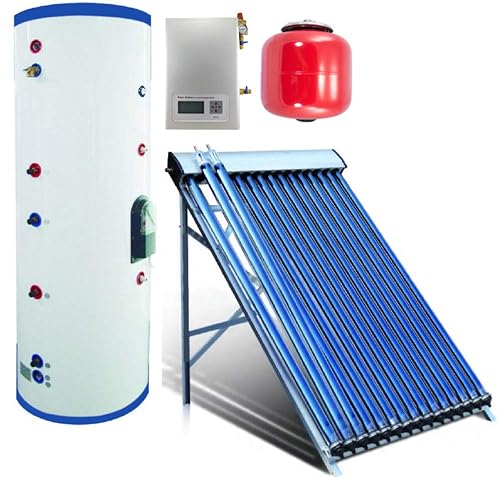 TOP CHOICEBest overall400 Liter Water Heater Active Split System Single Coil Tank 45 Deg FraView on Amazon
- 2Best for large families600 Liter Water Heater Active Split System Dual Coil Tank 45 Deg FrameView on Amazon
- 3Best for small kitchens and apartments200 Liter Water Heater Active Split System Single Coil Tank 45 Deg FraView on Amazon
- 4Best for high-demand households800 Liter Water Heater Active Split System Single Coil Tank 45 Deg FraView on Amazon
Our Top Picks
| Product | Best for | Key feature |
|---|---|---|
| 400 Liter Active Split System Single Coil | Typical family homes | Mid-size storage with a single coil circuit |
| 600 Liter Active Split System Dual Coil | Large families and dual-source setups | Dual coil for auxiliary heat input |
| 200 Liter Active Split System Single Coil | Small kitchens and apartments | Compact footprint |
| 800 Liter Active Split System Single Coil | High-demand households | Largest storage capacity in the set |
400 Liter Water Heater Active Split System Single Coil Tank 45 Deg Frame Evacuated Vacuum Tubes Hot SRCC Certified
400 Liter Water Heater Active Split System Single Coil Tank 45 Deg Frame Evacuated Vacuum Tubes Hot SRCC Certified
Best for: Typical family homes that want a balance of storage and roof footprint.
This is the middle of the range and the most practical starting point for a household of three to five people with regular showers and a dishwasher. The 45-degree frame angle suits most mid-latitude roofs without extra racking.
Key specs
- Tank capacity: 400 liters
- Coil configuration: single coil
- Collector type: evacuated vacuum tubes in a split system
- Frame angle: 45 degrees
- Certification noted in listing: SRCC
Pros
- Storage suits a typical household without oversizing the roof array
- Single coil keeps the plumbing layout simple
- 45-degree frame is a common angle for residential roofs
Cons
- Single coil means no second heat source can be integrated directly
- Larger households may run short on cloudy multi-day stretches
Bottom line: The safest all-round pick for a family home with moderate hot water use and a south-facing roof.
600 Liter Water Heater Active Split System Dual Coil Tank 45 Deg Frame Evacuated Vacuum Tubes Hot SRCC Certified
600 Liter Water Heater Active Split System Dual Coil Tank 45 Deg Frame Evacuated Vacuum Tubes Hot SRCC Certified
Best for: Large families and homes that plan to pair solar with a backup heat source.
The dual coil lets you connect an auxiliary heater, such as a gas booster or electric element, to the same tank without a separate loop. That matters for households that run hot water heavily in winter.
Key specs
- Tank capacity: 600 liters
- Coil configuration: dual coil
- Collector type: evacuated vacuum tubes in a split system
- Frame angle: 45 degrees
- Certification noted in listing: SRCC
Pros
- Dual coil supports an auxiliary heat connection
- Greater storage carries households through low-sun days
- Same frame angle as the 400-liter model for consistent mounting
Cons
- Heavier and larger, so plan for structural load and floor or stand space
- Dual-coil plumbing is more involved and usually needs a licensed installer
Bottom line: Pick this if you have a larger household and want room to add a backup heater later.
200 Liter Water Heater Active Split System Single Coil Tank 45 Deg Frame Evacuated Vacuum Tubes Hot SRCC Certified
200 Liter Water Heater Active Split System Single Coil Tank 45 Deg Frame Evacuated Vacuum Tubes Hot SRCC Certified
Best for: Small kitchens, apartments and single-person or couple households.
At 200 liters this is the smallest tank in the set. It fits households with modest demand and limited indoor or roof space.
Key specs
- Tank capacity: 200 liters
- Coil configuration: single coil
- Collector type: evacuated vacuum tubes in a split system
- Frame angle: 45 degrees
- Certification noted in listing: SRCC
Pros
- Smallest footprint of the four, easier to fit in tight utility rooms
- Simple single-coil layout
- Lower storage means the tank heats faster on sunny days
Cons
- Limited storage for households with several daily showers
- Little buffer for cloudy stretches
Bottom line: A right-sized choice for small households; oversizing a tank wastes heat through standby loss, so do not buy larger than you need.
800 Liter Water Heater Active Split System Single Coil Tank 45 Deg Frame Evacuated Vacuum Tubes Hot SRCC Certified
800 Liter Water Heater Active Split System Single Coil Tank 45 Deg Frame Evacuated Vacuum Tubes Hot SRCC Certified
Best for: High-demand households, small commercial uses and homes with multiple bathrooms.
The 800-liter tank is the largest option here. It suits homes with heavy simultaneous use and those that want maximum reserve between sunny days.
Key specs
- Tank capacity: 800 liters
- Coil configuration: single coil
- Collector type: evacuated vacuum tubes in a split system
- Frame angle: 45 degrees
- Certification noted in listing: SRCC
Pros
- Largest reserve in the set for heavy daily use
- Single coil keeps the hydraulic design straightforward
- Handles several bathrooms drawing at once
Cons
- Heavy and large; structural and access planning is essential
- Oversized for most single-family homes, which raises standby heat loss
Bottom line: Choose this only if your measured daily consumption really justifies it; otherwise the 400-liter model is more efficient.
Buying Guide
Tank Capacity and Daily Hot Water Use
Estimate your daily hot water use in liters, then size the tank to hold roughly one to one and a half days of demand. Oversizing increases standby heat loss, while undersizing leaves you without hot water on overcast days.
Good picks for this: 400 Liter Active Split System Single Coil, 200 Liter Active Split System Single Coil
Coil Configuration: Single or Dual
A single coil heats the tank from the solar loop only. A dual coil lets you add an auxiliary heater to the same tank, which helps in winter or during long cloudy periods. Check your plumber’s advice before connecting a second source.
Good picks for this: 600 Liter Active Split System Dual Coil, 800 Liter Active Split System Single Coil
Frame Angle and Roof Orientation
Collector angle affects winter output. Many installers aim for a tilt near your latitude plus or minus 10 to 15 degrees. The 45-degree frame in these listings is a common residential angle, but confirm it against your site.
Good picks for this: 400 Liter Active Split System Single Coil, 600 Liter Active Split System Dual Coil
Physical Size and Structural Load
Measure the roof area, stand or wall space, and the access path for the tank. Larger tanks and their water weight require a structural check, especially on lightweight roofs.
Good picks for this: 200 Liter Active Split System Single Coil, 400 Liter Active Split System Single Coil
Certification and Standards
Look for SRCC certification in the listing, which indicates the product has been rated under a recognized solar collector standard. Ask your local building department whether permits or code approval apply.
Good picks for this: 400 Liter Active Split System Single Coil, 800 Liter Active Split System Single Coil
Use Case: Household or Light Commercial
Residential use is the norm for these tanks, but larger tanks sometimes serve small guesthouses or light commercial sites. Match the tank to your real occupancy rather than a guess.
Good picks for this: 800 Liter Active Split System Single Coil, 600 Liter Active Split System Dual Coil
Durability and Maintenance
Evacuated tubes are glass and can break from hail or thermal shock. Plan periodic checks of tube condition, glycol level if your system uses it, and pressure relief valves. Schedule a yearly inspection with a qualified installer.
Good picks for this: 400 Liter Active Split System Single Coil, 200 Liter Active Split System Single Coil
FAQ
What size solar hot water system evacuated tube do I need for a family of four?
A household of four with normal use often fits a 400-liter tank, though heavy daily use may push you toward 600 liters. Track your real consumption for a week before deciding.
What is the difference between a single coil and a dual coil tank?
A single coil connects only to the solar loop. A dual coil lets you add a second heat source, such as a gas or electric backup, to the same tank.
Does an evacuated tube system work in cold climates?
Evacuated tubes perform better than flat plates in cold, cloudy conditions because the vacuum reduces heat loss. Freeze protection, usually glycol in a closed loop, is still required wherever temperatures drop below freezing.
Can I install a solar hot water system myself?
Some homeowners handle mounting, but plumbing connections, roof penetrations and electrical controls usually require a licensed professional. Check local code and permit rules first. Consult a licensed installer before starting work.
How often do evacuated tubes need replacing?
Individual tubes can break from hail or damage, and they can be replaced without replacing the whole collector. Inspect them yearly and after severe weather.
Why is a tank too large a problem?
Oversized tanks hold water at temperature longer, which increases standby heat loss and wastes solar energy. Matching storage to real demand improves efficiency.
Conclusion
For most family homes, the 400-liter single-coil model offers the most balanced fit of storage, footprint and simple plumbing. Households that plan a backup heater should look at the 600-liter dual-coil version. The 200-liter tank suits small households with limited space, while the 800-liter tank is for genuinely high demand. Match the tank to measured use, confirm roof orientation and structural load, and have a licensed installer review the final layout.
Sources
- Federal guidance on solar water heating systems and how they are sized and installed (energy.gov)
- Research and performance data on solar thermal technologies (nrel.gov)
- Standards and technical resources for building water heating and energy efficiency (ashrae.org)
Related reading
- 6 Best Solar Hot Water System Vacuum Tube Options for Homes (2026)
- 6 Best Evacuated Tube Solar Hot Water Collector Options for Homeowners (2026)
- What Is the Cheapest Solar Hot Water System? Options and Trade-Offs
- Top 5 Solar Thermal Storage Tanks for Home Hot Water Systems
- Top 4 Service Solar Hot Water System Options Compared (2026)
About Audrey Hayes
Audrey Hayes is part of our editorial team and reviews and edits our solar water heaters guides, checking product details against manufacturer specifications and owner feedback.