By Audrey Hayes
Updated November 2026
Choosing a solar thermal hot water system comes down to a handful of decisions: whether you want a split or integrated tank, how the controller manages pumping and backup heat, how the loop circulates fluid, and how much of the system you can realistically install yourself. Solar thermal hot water systems use collectors to heat water or a heat-transfer fluid directly, which is a different job from solar photovoltaic panels feeding an electric heater. This list covers five components and complete-system parts that home builders and retrofitters commonly source, with the selection criteria explained so you can match them to your roof, climate and plumbing.
Our top picks at a glance
- 1
 TOP CHOICEBest overallMISOL 110V Controller of Solar Water HeaterView on Amazon
- 2
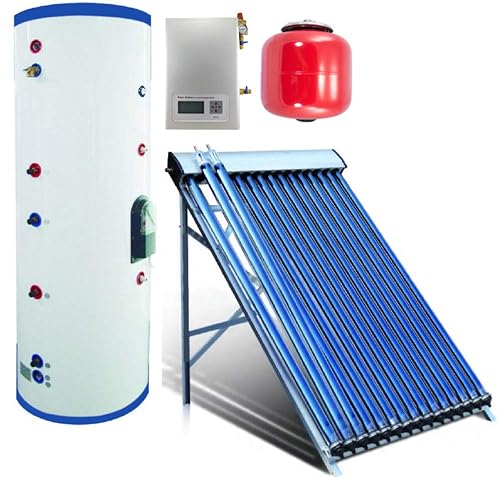 TOP CHOICEBest for split pressurized loops200 Liter Water Heater Active Split System Single Coil TankView on Amazon
- 3
 TOP CHOICEBest for remote monitoringMISOL WiFi 110V Controller of Solar Water HeaterView on Amazon
- 4
 Best for thermal expansion control1 Gallon Potable Thermal Expansion TankView on Amazon
- 5
 Best budget pickTOPWAY 3/4" NPT 110V Hot Water Circulation PumpView on Amazon
Our Top Picks
The table below summarizes how the five products fit different roles in a system. Read the individual sections for specifics.
| Product | Best for | Key feature |
|---|---|---|
| MISOL 110V Controller of Solar Water Heater | Pressurized split systems | Pump and backup-heater control |
| 200 Liter Water Heater Active Split System Single Coil Tank | Active split installations | Single coil heat exchanger tank |
| MISOL WiFi 110V Controller of Solar Water Heater | Owners who want remote checks | WiFi status and control |
| 1 Gallon Potable Thermal Expansion Tank | Closed loops needing pressure relief | 3/4″ MNPT compact tank |
| TOPWAY 3/4″ NPT 110V Hot Water Circulation Pump | Budget-minded loop circulation | 3-speed recirculating pump |
MISOL 110V Controller of Solar Water Heater
MISOL 110V Controller of Solar Water Heater, Used for Separated pressurized Solar hot Water System
Best for: Pressurized split solar thermal systems that need automatic pump control and backup heater switching.
This controller suits installers and owners running a separated, pressurized loop who want the electronics to handle pump start and stop based on collector and tank temperatures. It is a core control element rather than a whole system.
Key specs
- 110V operation, as stated in the listing name
- Designed for separated pressurized solar hot water systems
Pros
- Matches the pressurized split-loop architecture named in its listing
- Straightforward 110V wiring for common US outlets
- A dedicated controller keeps sensor logic separate from the pump
Cons
- Wiring and sensor placement require basic electrical competence
- Owners often report that setup depends heavily on matching the correct sensors and pump
Bottom line: A strong fit for anyone building a pressurized split loop who wants dedicated, proven control logic.
200 Liter Water Heater Active Split System Single Coil Tank
200 Liter Water Heater Active Split System Single Coil Tank 45 Deg Frame Evacuated Vacuum Tubes Hot SRCC Certified
Best for: Active split solar thermal installations in homes with a dedicated storage tank location.
This tank is built for an active split arrangement, where a pump circulates heat-transfer fluid through the collector loop and a coil in the tank. It suits households that want the storage tank physically separated from the roof collectors.
Key specs
- 200 liter capacity, as stated in the listing name
- Single coil design for the heat exchanger
- Listed as SRCC certified in the product name
Pros
- Single coil simplifies the heat-exchanger arrangement
- SRCC certification indicates third-party performance rating
- Sized for a typical family household
Cons
- Requires a planned floor location and adequate tank support
- Owners often report that coil performance depends on proper pump and controller matching
Bottom line: A practical choice for a split system where tank placement is flexible and the loop is designed around a single coil.
MISOL WiFi 110V Controller of Solar Water Heater
MISOL WiFi 110V Controller of Solar Water Heater, Used for Separated pressurized Solar hot Water System (110v-wifi)
Best for: Owners who want remote status checks on a pressurized split solar thermal loop.
This is the WiFi version of the MISOL controller. It serves the same separated pressurized loop role but adds connectivity so you can check conditions without going to the tank.
Key specs
- 110V operation, as stated in the listing name
- WiFi connectivity, as stated in the listing name
Pros
- Remote visibility into loop status
- Same pressurized split-loop application as the standard controller
- Useful for spotting pump or sensor faults early
Cons
- WiFi setup depends on a reliable signal near the controller location
- Owners sometimes report needing to confirm app compatibility before purchase
Bottom line: Best for owners who want monitoring in addition to core pump control.
1 Gallon Potable Thermal Expansion Tank
1 Gallon Potable Thermal Expansion Tank, 3/4" MNPT Connection, Compact Design for Water Heater, RV, Marine, Boat, Off-Grid Systems, Residential Plumbing & Solar Thermal
Best for: Closed potable loops that need a small expansion tank to absorb pressure rise when water heats.
Thermal expansion tanks protect a closed system from pressure spikes as heated water expands. This compact one is sized for small residential and off-grid loops rather than large commercial circuits.
Key specs
- 1 gallon capacity, as stated in the listing name
- 3/4″ MNPT connection, as stated in the listing name
- Rated for potable water, as stated in the listing name
Pros
- Compact footprint for tight mechanical spaces
- Potable rating suits drinking-water circuits
- MNPT connection fits common residential fittings
Cons
- Pre-charge must match system pressure, which requires checking on installation
- Undersized tanks can cause pressure relief valve discharge, which owners often report as a common issue
Bottom line: A sensible protective part for small closed loops where pressure relief is a concern.
TOPWAY 3/4″ NPT 110V Hot Water Circulation Pump
TOPWAY 3/4" NPT 110V Hot Water 3-Speed Circulation Recirculating Pump Circulator Pump for Water Heater System
Best for: Budget-conscious loops that need a 110V recirculating pump with adjustable speed.
This pump circulates water or fluid through a hot-water loop. It suits builders who want variable speed to balance flow against collector and tank temperatures.
Key specs
- 110V operation, as stated in the listing name
- 3/4″ NPT connection, as stated in the listing name
- 3-speed setting, as stated in the listing name
Pros
- Three speeds allow flow tuning
- Standard NPT fitting simplifies plumbing
- Recirculating design suits hot-water loops
Cons
- Owners often report that pump noise becomes noticeable at higher speeds
- Pump is not a substitute for a matched controller and sensors
Bottom line: A workable budget pick for a loop that already has a controller in place.
Buying Guide
System architecture: active split versus integrated
Decide early whether the collectors feed a tank on the roof (integrated) or a separate storage tank in the house (split). Active split systems use a pump and controller, so the controller and pump become essential parts. Integrated systems need fewer electronic parts but place the tank where roof load and freeze protection are harder to manage.
Good picks for this: 200 Liter Water Heater Active Split System Single Coil Tank, MISOL 110V Controller of Solar Water Heater
Controller logic and sensor compatibility
The controller decides when the pump runs, typically by comparing collector temperature with tank temperature. Confirm the controller’s voltage, sensor types and pump output before buying. Mismatched sensors are a frequent source of poor performance.
Good picks for this: MISOL 110V Controller of Solar Water Heater, MISOL WiFi 110V Controller of Solar Water Heater
Tank capacity and household sizing
A common rule of thumb is to size storage to daily hot-water use, with extra capacity for cloudy days. A 200 liter tank suits many family households, but check your actual usage. Oversized tanks waste standby heat, while undersized tanks run out of solar-heated water.
Good picks for this: 200 Liter Water Heater Active Split System Single Coil Tank
Pressure management and expansion
Closed loops heat fluid and water, which expands. Without an expansion tank, pressure can rise enough to open relief valves. Match the expansion tank to system volume and fill pressure, and check the pre-charge at commissioning.
Good picks for this: 1 Gallon Potable Thermal Expansion Tank
Circulation pump selection
Pump flow rate and head must match the loop’s pipe run and fittings. Variable-speed options let you fine-tune flow, which affects how efficiently heat moves from collector to tank. Oversized pumps can cause excess flow and noise.
Good picks for this: TOPWAY 3/4″ NPT 110V Hot Water Circulation Pump
Monitoring and remote visibility
Monitoring helps catch faults such as a stalled pump or a failed sensor before they cost you hot water. WiFi controllers add remote visibility, but confirm signal strength at the install location and whether the app suits your phone.
Good picks for this: MISOL WiFi 110V Controller of Solar Water Heater
Installation location, freeze protection and durability
Outdoor plumbing and collectors need freeze protection, UV-resistant materials and secure mounting. Check local codes, since many jurisdictions require permits and licensed work for plumbing and electrical connections. Consult a licensed professional for roof loading and electrical work.
Good picks for this: 200 Liter Water Heater Active Split System Single Coil Tank, 1 Gallon Potable Thermal Expansion Tank
FAQ
What is a solar thermal hot water system?
A solar thermal hot water system uses collectors to capture sunlight as heat and transfer it to water or a heat-transfer fluid, which is then stored in a tank for household use. It differs from photovoltaic systems, which generate electricity.
What is the difference between an active and a passive system?
Active systems use a pump and controller to move fluid between collectors and storage. Passive systems rely on natural convection or gravity and have no pump. Active systems give more layout flexibility but need electrical supply and maintenance.
Do I need a backup heater?
Most homes in cloudy or cold climates use a backup heater, typically electric or gas, to supply hot water when solar input is insufficient. Backup control is usually handled by the controller.
Why is an expansion tank needed?
Heated water expands, and in a closed loop that expansion raises pressure. An expansion tank absorbs the extra volume and helps keep pressure within the safe range of relief valves and fittings.
How do I size a circulation pump?
Pump sizing depends on flow rate and head loss through the pipe run, fittings and heat exchanger. Check manufacturer specifications and consult a qualified installer or engineer for calculations, especially for longer runs.
Can I install a solar thermal system myself?
Many owners handle parts of the job, but roof mounting, plumbing and electrical work often require licensed professionals and permits. Check local code requirements before starting, and consult a licensed contractor for connections to your home’s systems.
How long do these systems last?
Service life depends on materials, maintenance and climate. Owners often report that fluid checks, sensor inspections and pressure checks extend component life. Check manufacturer warranties for specific parts.
Conclusion
For most pressurized split installations, start with a matched controller such as the MISOL 110V Controller of Solar Water Heater, then pair it with the 200 Liter Water Heater Active Split System Single Coil Tank. If you want remote monitoring, the WiFi controller adds that without changing the core loop. The 1 Gallon Potable Thermal Expansion Tank protects closed potable circuits, and the TOPWAY circulation pump suits budget-minded loops that already have a controller. Match each part to your own system volume, pressure and climate, and confirm specifications before purchase.
Sources
- Federal guidance on solar water heating basics, system types and efficiency considerations (energy.gov)
- Information on solar thermal collector certification and performance rating
- Research on solar thermal system performance and design (nrel.gov)
Related reading
- Top 5 Solar Thermal Storage Tanks for Home Hot Water Systems
- 6 Best Solar Thermal Hot Water Heating System Options for Homes (2026)
- What Is the Cheapest Solar Hot Water System? Options and Trade-Offs
- Top 4 Service Solar Hot Water System Options Compared (2026)
- Sunbird Solar Hot Water System Prices: What You'll Pay and Why It Varies
About Audrey Hayes
Audrey Hayes is part of our editorial team and reviews and edits our solar water heaters guides, checking product details against manufacturer specifications and owner feedback.