By Audrey Hayes
Updated November 2026
A solar water heater with no hot water usually has one of a handful of causes: the collector isn’t heating, the circulation pump or controller has stopped, the backup heater isn’t working, or the tank is cold because of a plumbing or valve problem. This guide walks you through checking each one in a logical order so you can find the fault without guessing. Work through the steps in sequence, and you should be able to restore hot water or know exactly what needs a professional.
Step 1: Confirm the Problem Is Really the Heater
Before opening anything, rule out the simple causes. Check whether the cold water supply valve to the tank is fully open, and confirm the hot water shutoff at the house is not closed. Run a hot tap for two or three minutes, since water in the pipes may simply be cool from a long stretch without use. If hot water returns after a few minutes of running, the heater may be fine and the issue is distribution.
Shopping for one? See our guide: Top 5 Solar Hot Water Heater Evacuated Tube Collector Options Compared.
Step 2: Check the Collector Temperature and Sun Exposure
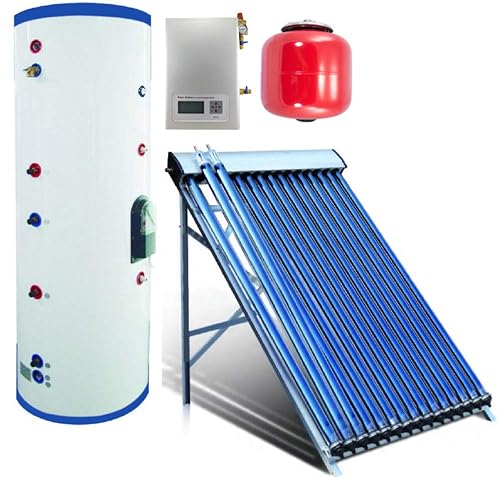
If the tank is cold, the collector is the next suspect. On a clear afternoon, the collector should feel hot to the touch, and in an active system the outlet pipe should be noticeably warmer than the inlet. If the panels are shaded by a new tree, snow, debris, or a dirty glazing surface, output drops sharply. Clean the glass with water and a soft brush, and trim any growth casting shadows. If the collector is clear and sunny but still cold, move on to the circulation system.
Step 3: Inspect the Pump, Controller, and Sensors
Most active solar water heaters use a differential controller that compares the collector and tank temperatures and switches a circulation pump on when the collector is warmer. Check the following:
- Confirm the controller has power and its display is lit.
- Listen for the pump running during sunny periods. No sound often means no power, a blown fuse, or a stuck impeller.
- Check that the sensor leads are seated firmly and not corroded or cut.
- Compare the displayed collector and tank temperatures with a handheld thermometer on the pipes.
If the controller shows a fault code, record it and check the manufacturer’s manual for its meaning. Many owners find a loose sensor connection or a failed sensor is the cause, and these are inexpensive to replace.
Step 4: Check the Backup Heater and Tank
When solar output is weak, the backup electric or gas element is what keeps water hot. Check the breaker or gas supply, and confirm the thermostat setting is above lukewarm. For electric elements, a tripped high-limit switch is common, and it usually has a reset button on the tank. Gas units need a working pilot or ignition and a clear flue.
| Symptom | Likely cause |
|---|---|
| Collector hot, pump silent | Controller, fuse, or pump failure |
| Pump running, outlet pipe cold | Air lock or closed valve in the loop |
| Tank cold, backup not heating | Tripped breaker, thermostat, or element |
| Hot water at tank, not at taps | Mixing valve or plumbing restriction |
Step 5: Look for Air, Leaks, and Closed Valves
Air trapped in the collector loop blocks flow and is a frequent cause of sudden loss of hot water. Check the high points of the loop for air vents and bleed them carefully if your system has them. Inspect fittings for drips or crystallized fluid, which indicates a leak. Confirm that isolation valves on the loop are open, since a valve left closed after maintenance will stop circulation completely. Glycol loops also lose pressure over time, so check the gauge against the value on the label.
Common Mistakes
- Assuming the heater is broken when a single closed valve is the cause.
- Running a pump dry, which can damage seals quickly.
- Ignoring a drop in glycol pressure, which can eventually freeze the loop.
- Resetting a high-limit switch repeatedly without finding why it tripped.
- Working on electrical or gas components without isolating power or supply first.
FAQ
Why does my solar water heater have hot water in the morning but not at night?
Stored heat can fade overnight, and a poorly insulated tank will cool quickly. If the backup heater doesn’t switch on after sunset, check its thermostat and power supply.
Can I reset the controller myself?
Many controllers can be reset by unplugging or cycling power for a minute. Check the manual first, since some models store fault history that is useful to a technician.
When should I call a professional?
Call a licensed installer or plumber if you find a leak, suspect a gas problem, need to replace a pump or sensor, or the system still gives no hot water after these checks. For electrical or gas work, consult a qualified professional.
Conclusion
Most cases of a solar water heater with no hot water trace back to a short list of causes: a shaded or dirty collector, a failed pump or controller, a tripped backup heater, air in the loop, or a closed valve. Working through the steps in order will usually isolate the fault quickly. For deeper troubleshooting, see Solar Hot Water System No Hot Water: 7 Causes and Fixes (2026) and Solar Hot Water Heater Repair: A Step-by-Step Troubleshooting Guide.
Related reading
- Solar Water Heater Temperature Problems: Too Cold or Too Hot
- Solar Water Heater Rainy Days: How to Keep Hot Water Flowing
Ready to choose one?
About Audrey Hayes
Audrey Hayes is part of our editorial team and reviews and edits our solar water heaters guides, checking product details against manufacturer specifications and owner feedback.