By Ethan Brooks
Updated November 2026
A solar thermal controller differential thermostat is the brain of a solar water heating loop. It compares the temperature at the collector with the temperature at the bottom of the storage tank, then switches the circulation pump on when the collector is hotter and off when the gain disappears. If you are building or upgrading a solar hot water system, choosing the right controller matters as much as choosing the panels. The picks below were selected on published specifications, brand reputation and the patterns owners commonly report, with an emphasis on sensor inputs, voltage ratings, temperature range, dead band adjustability and how well each unit suits a typical household loop.
Our top picks at a glance
- 1
 TOP CHOICEBest overallSolar Differential Temperature Controller T2-T1 Thermostat with AlarmView on Amazon
- 2
 TOP CHOICEBest for simple pump-only loopsDifferential Thermostat Home Solar Hot Water Heating Pump Controller, 12V, 10AView on Amazon
- 3
 TOP CHOICEBest for mains-powered installsDigital Sensor Temperature Controller, B94Q20Yy Differential TemperatuView on Amazon
- 4
 Best for refrigeration-style remote sensingW1609-101 TH-1609 Temperature Controller Thermostat for RefrigerationView on Amazon
- 5
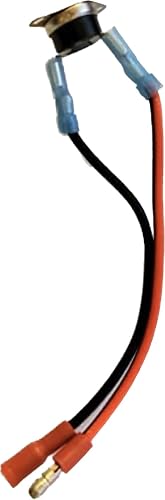 Best budget pick for small vent fansAmtrak Solar 12V Thermostat – Automatic Inline Temperature ControllerView on Amazon
Our Top Picks
| Product | Best for | Key feature |
|---|---|---|
| Solar Differential Temperature Controller T2-T1 Thermostat with Alarm | Full solar water heating loops | Two-sensor differential control with alarm output |
| Differential Thermostat Home Solar Hot Water Heating Pump Controller, 12V, 10A | Low-voltage pump circuits | 12V operation with 10A relay rating |
| Digital Sensor Temperature Controller, B94Q20Yy Differential Temperature Controller Thermostat | Mains-powered installations | AC 220V input with 5A relay and probe sensor |
| W1609-101 TH-1609 Temperature Controller Thermostat | Remote bulb sensing in cold environments | Capillary remote sensing bulb with wide range |
| Amtrak Solar 12V Thermostat | Small solar-powered fans and vents | Plug-and-play inline thermal switch |
Solar Differential Temperature Controller T2-T1 Thermostat with Alarm
Solar Differential Temperature Controller T2-T1 Thermostat with Alarm fr Water Heater, Pool. Pump, Chiller, Greenhouse 2 Sensors Fahrenheit Celsius
Best for: Full solar water heating loops that need true collector-to-tank differential control.
This is the most complete option on the list for a standard domestic loop. It is built around the T2-T1 logic that defines differential control: it reads two temperatures and runs the pump only when the upper sensor exceeds the lower one by a set margin. It is sold for water heaters, pools, chillers and greenhouses, so it covers a wide range of uses.
Key specs
- Two temperature sensors included
- Selectable Fahrenheit or Celsius display
- Alarm function for out-of-range conditions
Pros
- Designed specifically for T2-T1 differential logic
- Alarm output helps catch overheating or sensor faults
- Works across several applications, not just water heaters
Cons
- Setup requires careful sensor placement and wiring
- Manual is best read before installation, not after
Bottom line: The right first choice for most homeowners building a complete collector-to-tank loop who want alarm protection.
Differential Thermostat Home Solar Hot Water Heating Pump Controller, 12V, 10A
Differential Thermostat Home Solar Hot Water Heating Pump Controller, 12V, 10A
Best for: Simple pump-only loops running on 12V.
This controller is aimed at people who want a low-voltage solar thermal setup, often paired with a small DC pump and a PV panel. It keeps the wiring compact and avoids mains voltage at the collector.
Key specs
- 12V DC supply
- 10A relay rating for the pump circuit
Pros
- Low-voltage operation reduces electrical hazards at the roof
- Straightforward pump-control purpose
- Good match for off-grid or PV-powered loops
Cons
- Fewer features than multi-input controllers
- Requires a 12V supply, which may need a separate battery or converter
Bottom line: A sensible pick for PV-driven pump circuits where low voltage is a priority.
Digital Sensor Temperature Controller, B94Q20Yy Differential Temperature Controller Thermostat for Solar Water Heater
Digital Sensor Temperature Controller, B94Q20Yy Differential Temperature Controller Thermostat Ac220V/5A Sensor Probe, Differential Thermostat for Solar Water Heater
Best for: Mains-powered installations where a plug-in controller is acceptable.
This unit runs from standard AC household power and uses a probe-style sensor. It suits owners who have a grid connection near the tank and want a traditional controller rather than a battery-based one.
Key specs
- AC 220V input (confirm voltage matches your region before buying)
- 5A relay output
- Probe sensor included
Pros
- Mains power avoids battery maintenance
- Digital display makes temperature checks easy
- Works with a standard solar water heater loop
Cons
- 220V input will not suit 120V-only US outlets without verification
- A 5A relay limits the size of pump you can drive directly
Bottom line: A good fit for owners who have a 220V supply and a pump within the 5A rating; US readers should confirm voltage first.
W1609-101 TH-1609 Temperature Controller Thermostat for Refrigeration
W1609-101 TH-1609 Temperature Controller Thermostat for Refrigeration, -30°F to 90°F (-34°C to 32°C), 5 Ft Capillary, 3.5°F to 16°F Differential, Remote Sensing Bulb
Best for: Remote bulb sensing where the controller sits away from the collector or tank.
This is a refrigeration-style thermostat with a capillary remote bulb. It is not a dedicated solar differential controller, so it fits best in setups where a single-point temperature switch is acceptable, or as a backup or cold-climate freeze guard component.
Key specs
- Range of -30°F to 90°F (-34°C to 32°C)
- 5 ft capillary with remote sensing bulb
- 3.5°F to 16°F differential adjustment
Pros
- Remote bulb lets you place sensing away from the controller
- Adjustable differential suits many switching needs
- Wide temperature range
Cons
- Not designed as a two-sensor differential controller for collector-to-tank logic
- Requires separate wiring and a suitable relay or contactor for the pump
Bottom line: Better as a freeze-protection or single-point switch than as a primary differential controller for most solar loops.
Amtrak Solar 12V Thermostat – Automatic Inline Temperature Controller
Amtrak Solar 12V Thermostat – Automatic Inline Temperature Controller for Solar Attic Fan – Plug-and-Play Thermal Switch for Roof Vent, Gable Vent, Shed, Garage, Greenhouse & RV – Made in USA
Best for: Small solar-powered vent fans, attic fans and greenhouse ventilation.
This inline thermal switch is designed for ventilation rather than water heating. It switches a small 12V fan on when a set temperature is reached and off when it cools. It is included here because some DIY builders use it for auxiliary cooling or ventilation around a solar hot water installation.
Key specs
- 12V plug-and-play operation
- Inline thermal switch format
Pros
- Simple installation with no programming
- Suits small solar-powered fans
- Made in the USA, per the listing
Cons
- Not a differential controller and cannot run a water pump loop
- Limited to low-current loads
Bottom line: Choose this only for ventilation or fan control, not for controlling a water heater pump.
Buying Guide
Sensor Inputs and Differential Logic
A true differential controller reads at least two temperatures, usually a collector sensor and a tank-bottom sensor, and compares them. Confirm the controller has two inputs and that it switches the pump based on the difference, not on a single set point.
Good picks for this: Solar Differential Temperature Controller T2-T1 Thermostat with Alarm; Digital Sensor Temperature Controller, B94Q20Yy
Supply Voltage
Match the controller to your power source. Low-voltage 12V units suit PV-driven pumps. Mains units need a verified outlet voltage for your region. Never assume a 220V unit will run on 120V without checking.
Good picks for this: Differential Thermostat Home Solar Hot Water Heating Pump Controller, 12V, 10A; Digital Sensor Temperature Controller
Relay Rating and Pump Size
Check the relay amperage against your pump’s running current. A relay rated for 5A or 10A has limited headroom, so compare the pump’s nameplate current with the controller rating before wiring.
Good picks for this: Differential Thermostat Home Solar Hot Water Heating Pump Controller, 12V, 10A; Digital Sensor Temperature Controller
Temperature Range and Differential Adjustment
Look at the operating range and whether the switching differential is adjustable. A small differential causes frequent cycling; a large one wastes gain. Adjustable differential gives you control over how aggressively the pump runs.
Good picks for this: W1609-101 TH-1609 Temperature Controller Thermostat; Solar Differential Temperature Controller T2-T1
Sensor Placement and Cable Length
Sensor location affects accuracy more than most buyers expect. Mount the collector sensor on the absorber outlet pipe and the tank sensor near the bottom of the tank. Make sure the included cable reaches without splicing, since splices are a common failure point.
Good picks for this: Solar Differential Temperature Controller T2-T1 Thermostat with Alarm; W1609-101 TH-1609 Temperature Controller Thermostat
Alarm Functions and Safety
An alarm output that flags overheating or sensor fault protects both the system and the storage tank. Consider this a priority if the loop runs unattended for long periods.
Good picks for this: Solar Differential Temperature Controller T2-T1 Thermostat with Alarm
Durability and Environment
Rooftop and outdoor installations face heat, UV and moisture. Look for enclosures and sensor jackets rated for outdoor use, and keep the controller indoors or in a weatherproof box whenever possible.
Good picks for this: Amtrak Solar 12V Thermostat; Differential Thermostat Home Solar Hot Water Heating Pump Controller, 12V, 10A
FAQ
What does a solar differential thermostat actually do?
It compares the temperature at the collector with the temperature at the tank and turns the circulation pump on when the collector is hotter by a set amount. This prevents the pump from running when there is no useful heat to move.
Can I use a regular thermostat instead of a differential controller?
A single-point thermostat cannot compare two temperatures, so it will not manage collector-to-tank gain correctly. Use a true two-sensor differential controller for a solar water heater loop.
What voltage do solar thermal controllers use?
Units are commonly made for 12V DC, which suits PV-powered pumps, or for mains AC. Check the input voltage on the label and confirm it matches your power source before wiring.
How far apart should the two sensors be?
Place the collector sensor on the outlet pipe of the absorber and the tank sensor near the bottom of the storage tank. Keep sensor cables as short as the layout allows, and avoid splicing them.
Does the controller need to be installed by a professional?
Mains-voltage wiring should be done by a licensed electrician. Low-voltage DC wiring is more accessible to DIY builders, but if you are unsure about wiring or roof work, consult a qualified installer.
What is the difference between a differential thermostat and a solar thermal temperature sensor?
A sensor only measures temperature. A differential controller reads one or more sensors and switches a load, such as a pump, based on the difference between them.
Conclusion
For most homeowners building a complete solar water heating loop, the T2-T1 controller with alarm is the most complete choice because it is built around collector-to-tank differential logic. The 12V pump controller suits PV-driven low-voltage loops, and the mains-powered digital unit suits installations with a suitable outlet nearby. The refrigeration-style thermostat is better as a single-point or freeze-protection switch, and the 12V inline thermal switch belongs in ventilation rather than water heating. Match the controller to your voltage, pump current and sensing layout before you buy.
For background on how these controllers fit into a complete system, see Solar Water Heater Controls and Sensors: How Differential Control Works and 7 Best Solar Thermal Pump Controllers Compared for Home Water Heating. Readers comparing sensors should also look at Top 7 Solar Thermal Temperature Sensors Compared for Solar Water Heaters, and those planning the collector side can review Top 7 Solar Thermal Flat Panel Options Compared for Home Water Heating. If performance is lower than expected, Why Are Integrated Solar Thermal Panels Underperforming? 5 Causes and Fixes covers common causes.
Sources
- Federal guidance on solar water heating systems, components and how they are designed (energy.gov)
- Research on solar thermal system performance, controls and testing (nrel.gov)
- Electrical and rooftop work safety guidance for installers and homeowners (osha.gov)
Before you buy: helpful guides
About Ethan Brooks
Ethan Brooks is part of our editorial team and reviews and edits our solar water heaters guides, checking product details against manufacturer specifications and owner feedback.