By Ethan Brooks
Updated November 2026
Solar energy can be converted into thermal energy by absorbing sunlight on a surface and transferring that heat to a fluid or a storage medium, and most readers who search for this topic want a clear textbook or reference that explains the physics, the collector designs and the storage methods behind it. This list is built for students, installers, and engineers who want depth rather than marketing copy. Our selection criteria were specification clarity (does the book state its scope, edition and level), the reputation of the authors and publisher within solar engineering, how well the title matches the topic of converting sunlight to heat, and patterns in reader feedback about readability and usefulness.
Our top picks at a glance
- 1
 TOP CHOICEBest overallSolar Energy: Principles of Thermal Collection and Storage, 3eView on Amazon
- 2
 TOP CHOICEBest for research depthPerformance of Solar Energy Converters: Thermal Collectors and PhotovoView on Amazon
- 3
 TOP CHOICEBest for home water heatingSolar Water Heating, Revised & Expanded EditionView on Amazon
- 4
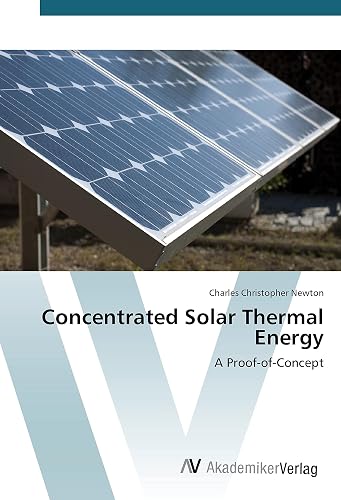 Best for concentrating systemsConcentrated Solar Thermal Energy: A Proof-of-ConceptView on Amazon
- 5
 Best budget pick for process heatSolar Energy Thermal ProcessesView on Amazon
Our Top Picks
| Product | Best for | Key feature |
|---|---|---|
| Solar Energy: Principles of Thermal Collection and Storage, 3e | Students and general readers | Covers collection and storage in one volume |
| Performance of Solar Energy Converters (Ispra Courses) | Researchers and advanced students | Lecture-based treatment of thermal collectors and photovoltaic cells |
| Solar Water Heating, Revised & Expanded Edition | Homeowners and DIY builders | Practical focus on water and space heating systems |
| Concentrated Solar Thermal Energy: A Proof-of-Concept | Readers interested in high-temperature systems | Focus on concentrating collectors |
| Solar Energy Thermal Processes | Engineers and process-heat planners | Thermal process applications and system design |
Solar Energy: Principles of Thermal Collection and Storage, 3e
Solar Energy: Principles of Thermal Collection and Storage, 3e
Best for: Students and general readers who want a single reference covering the full path from sunlight to stored heat.
This is a textbook-style treatment aimed at readers who need the underlying principles before they move to design work. It explains how absorber surfaces capture radiation, how heat is carried away by a working fluid, and how thermal storage smooths out the mismatch between when the sun shines and when heat is needed. Owners and instructors often describe it as a dependable foundation text rather than a quick guide.
Key specs:
- Third edition
- Subject: thermal collection and storage of solar energy
Pros:
- Covers collection and storage together, so the energy flow is easy to follow
- Suits self-study as well as coursework
- Principles-first approach holds up when technology changes
Cons:
- Math-heavy sections can slow readers without an engineering background
- Not a hands-on build manual
Bottom line: Pick this if you want the most complete single-volume explanation of how solar energy becomes stored heat.
Performance of Solar Energy Converters: Thermal Collectors and Photovoltaic Cells (Ispra Courses)
Performance of Solar Energy Converters: Thermal Collectors and Photovoltaic Cells: Lectures of a Course held at the Joint Research Centre, Ispra, Italy, November 11–18, 1981 (Ispra Courses)
Best for: Researchers and advanced students who want lecture-level depth on conversion efficiency.
This volume collects lectures from a course held at the Joint Research Centre in Ispra, Italy, in November 1981. Because it compares thermal collectors with photovoltaic cells, it is useful for understanding why solar energy can be converted into thermal energy more directly than into electricity, and where the losses occur. The content reflects the state of the field at the time, so it is best read for fundamentals and measurement methods rather than current equipment.
Key specs:
- Based on lectures from a course held November 11–18, 1981
- Covers thermal collectors and photovoltaic cells
Pros:
- Direct comparison of thermal and electrical conversion routes
- Written by specialists presenting primary course material
- Useful for understanding efficiency concepts
Cons:
- Dated, so current collector and cell technology is not covered
- Dense and assumes prior knowledge
Bottom line: A strong choice for researchers who want historical depth on solar conversion efficiency, not a modern buying reference.
Solar Water Heating, Revised & Expanded Edition
Solar Water Heating–Revised & Expanded Edition: A Comprehensive Guide to Solar Water and Space Heating Systems (Mother Earth News Wiser Living Series)
Best for: Homeowners and DIY builders who want to heat water and rooms from the sun.
This book sits in the Mother Earth News Wiser Living Series and is written for practical readers. It walks through how collectors absorb sunlight, how the heat moves into a storage tank, and how the system is controlled and maintained. It is a natural companion to hands-on solar water heater projects, since it addresses the day-to-day decisions builders face.
Key specs:
- Revised and expanded edition
- Covers solar water and space heating systems
Pros:
- Plain-language explanations suited to non-engineers
- Addresses both water and space heating
- Practical focus on system layout and upkeep
Cons:
- Less theory than a university text
- Installation details may need local code checks
Bottom line: The best fit for homeowners who want to turn sunlight into usable hot water and need a practical reference.
Concentrated Solar Thermal Energy: A Proof-of-Concept
Concentrated Solar Thermal Energy: A Proof-of-Concept
Best for: Readers interested in high-temperature systems that focus sunlight with mirrors or lenses.
Concentrating systems reach temperatures far above what flat-plate collectors can produce, which is why they appear in power generation and industrial heat research. This title presents a proof-of-concept approach, showing how concentrated sunlight can be converted into thermal energy at a scale and temperature that open new applications. It is more specialized than the general textbooks in this list.
Key specs:
- Focus: concentrated solar thermal systems
- Presented as a proof-of-concept study
Pros:
- Focused on a specific and growing branch of solar heat
- Useful for understanding concentration geometry and temperature gains
- Concise compared with full textbooks
Cons:
- Narrow scope, not a general introduction
- Limited detail on residential-scale systems
Bottom line: Choose this if your interest is in high-temperature concentrating collectors rather than household hot water.
Solar Energy Thermal Processes
Solar Energy Thermal Processes
Best for: Engineers and planners who need to size solar heat for industrial or process applications.
This book addresses thermal processes that use solar heat as an energy input, covering how collector output, fluid temperatures, and heat loads are matched. It suits readers who already understand basic collector behavior and need to move toward system design. Its focus on processes makes it more applied than the principles-based texts above.
Key specs:
- Subject: thermal processes using solar energy
Pros:
- Applied focus on design and process matching
- Useful for planners working beyond residential scale
- Complements theory-heavy texts
Cons:
- Assumes engineering background
- Less relevant for simple home water heaters
Bottom line: A good pick for engineers designing solar heat for processes, rather than for beginners or homeowners.
Buying Guide
Match the book to your level
Solar thermal texts range from introductory explanations to graduate-level derivations. Before buying, check whether the book assumes calculus and heat transfer knowledge. If you are new to the subject, start with a principles text, then move to specialized titles. Readers who already work in the field often find introductory books too basic. For background on the underlying physics, the articles What Is Thermal Solar Energy? How It Works and Where It Is Used and What Is the Definition of Solar Thermal Energy? A Plain Answer give a useful starting vocabulary.
Good picks for this: Solar Energy: Principles of Thermal Collection and Storage, 3e; Solar Water Heating, Revised & Expanded Edition
Check the edition and publication date
Solar thermal technology changes, particularly in collector materials, control systems and storage media. A book from the 1980s can still explain fundamentals well but may not describe current equipment. Look for the edition number and year, and treat older conference volumes as references for principles and measurement methods. Newer material on storage is covered in Top 7 Solar Thermal Energy Storage Options Compared for 2026 and Thermal Energy Storage for Solar Heating and Cooling: A Practical Guide (2026).
Good picks for this: Solar Energy: Principles of Thermal Collection and Storage, 3e; Performance of Solar Energy Converters (Ispra Courses)
Scope: collection, storage or conversion
Some books focus on flat-plate collectors, others on storage or on concentrating systems. A title on concentrated solar thermal energy will not help much if you need residential hot water, and vice versa. Decide which stage of the process matters most to your work: the collector that absorbs sunlight, the storage that holds the heat, or the conversion equipment that moves it to where it is used.
Good picks for this: Concentrated Solar Thermal Energy: A Proof-of-Concept; Solar Energy Thermal Processes
Practical use: home projects versus design work
If you plan to build or install a system, you need a book that covers layout, plumbing connections, freeze protection and control logic, not just theory. If you are designing for industry, you need material on process loads and temperature matching. A mismatch here is the most common reason readers feel a book was not useful. Compare the table of contents before buying.
Good picks for this: Solar Water Heating, Revised & Expanded Edition; Solar Energy Thermal Processes
Depth of math and technical detail
Heat transfer calculations, efficiency equations and storage sizing all require comfort with formulas. Some books present worked examples; others describe concepts with diagrams and minimal math. Skim a sample chapter to judge whether the level suits you. Readers who want to size systems themselves will want worked examples, while those who only need conceptual understanding can accept lighter treatment.
Good picks for this: Solar Energy: Principles of Thermal Collection and Storage, 3e; Performance of Solar Energy Converters (Ispra Courses)
Diagrams and illustrations
Solar thermal systems are easier to understand with clear diagrams of collectors, piping and storage tanks. Check whether the book includes system schematics, cross-sections of collectors, and temperature profiles. Visual material matters more for installation-focused books than for research volumes, where graphs of measured performance carry more weight.
Good picks for this: Solar Water Heating, Revised & Expanded Edition; Concentrated Solar Thermal Energy: A Proof-of-Concept
Format and availability
Some titles are reprinted or sold as older editions, and specialized conference proceedings can be harder to find in new condition. Confirm the exact edition listed, the page count, and whether the seller describes the copy accurately before purchase. If you plan to use the book on a job site, a durable binding and a clear index make a difference.
Good picks for this: Solar Energy Thermal Processes; Solar Energy: Principles of Thermal Collection and Storage, 3e
FAQ
How is solar energy converted into thermal energy?
Sunlight strikes an absorber surface, which is usually dark and designed to take in as much radiation as possible. The absorbed energy raises the surface temperature, and a fluid such as water or air carries that heat away through pipes or channels. The warmed fluid can be used directly or stored for later use.
Is solar thermal conversion more efficient than solar electricity?
For producing heat, solar thermal collectors generally convert a larger share of incoming sunlight than photovoltaic cells convert into electricity, because they do not need to make an electrical conversion step. Comparisons depend on operating temperature, climate and system design, so check the specific figures in the sources you read. For a broader comparison, see Solar Thermal Energy vs Photovoltaic (2026): Which Is Better for Your Home?
Do I need a textbook to understand the basics?
No. A good introductory article can explain the core process, and a textbook helps when you need equations, design methods, or a full picture of collection and storage. Start with the plain-language guides on this site, then choose a book that matches your level.
Can solar thermal systems work in cold climates?
Yes, but cold-climate designs need freeze protection, such as antifreeze loops or drain-back arrangements, and often better insulation. Manufacturers and installers typically specify the operating temperature range for each product. Books that cover solar water heating usually address freeze protection in detail.
What is the difference between flat-plate and concentrating collectors?
Flat-plate collectors absorb sunlight over their full surface and typically heat fluids to moderate temperatures, which suits water and space heating. Concentrating collectors use mirrors or lenses to focus sunlight onto a smaller area, reaching much higher temperatures. The article Solar Thermal Energy Collector Temperature Range: A Practical Guide (2026) explains the temperature differences in more detail.
Which book should a beginner start with?
A principles-based textbook or a practical home-focused guide is the usual starting point. Choose the principles text if you want the underlying physics, or the water heating guide if your goal is a working system.
Are these books suitable for installation work?
Some are better suited than others. Practical water heating guides cover installation layout, while research volumes and process-heat books focus on theory and design. Always check local building codes and consult a licensed professional before installing any system that connects to plumbing, electrical equipment or gas.
Conclusion
Solar energy can be converted into thermal energy through absorbers, working fluids and storage, and the right book depends on how deep you need to go. For a complete foundation, the textbook on thermal collection and storage is the most versatile choice. Homeowners and DIY builders will get more value from the practical water heating guide. Researchers interested in efficiency history should consider the Ispra lecture volume, while readers focused on high-temperature systems or industrial process heat will find the concentrating and process titles more relevant. Match the book to your role, check the edition, and confirm the scope before you buy.
Sources
- Federal overview of how solar thermal systems collect and use heat, plus current research programs (energy.gov)
- Technical resources on concentrating solar power and solar heat applications from the National Renewable Energy Laboratory (nrel.gov)
- Standards and design guidance for solar heating and hot water systems from a professional engineering association (ashrae.org)
Before you buy: helpful guides
- Solar Thermal Energy Collection: How It Works and How to Build a Working System
- Solar Thermal Energy Panels: How They Work and Whether They Suit Your Home
- How Is Solar Energy Is Better Than Thermal Power? A Clear Comparison
- Solar Thermal Energy Benefits: 6 Reasons It Pays Off for Homes
- What Are the Advantages of Solar Thermal Energy for Your Home?
About Ethan Brooks
Ethan Brooks is part of our editorial team and reviews and edits our solar water heaters guides, checking product details against manufacturer specifications and owner feedback.