By Ethan Brooks
Updated November 2026
Homeowners and DIY builders who want to understand solar thermal maintenance costs need more than a single price figure. They need to know what routine service involves, which components wear out, how often they fail, and what a competent owner can handle without a contractor. This list looks at seven references on solar thermal and solar system upkeep. Each was judged on technical depth, how directly it addresses thermal (not just photovoltaic) systems, coverage of troubleshooting and service intervals, and how useful it is for someone planning or maintaining a system on their own.
Our top picks at a glance
- 1
 TOP CHOICEBest overallSolar-Thermal Energy Systems: Analysis and DesignView on Amazon
- 2
 TOP CHOICEBest for hot water and space heatingSolar Thermal Engineering: Space Heating and Hot Water SystemsView on Amazon
- 3
 TOP CHOICEBest for process-level engineeringSolar Engineering of Thermal ProcessesView on Amazon
- 4
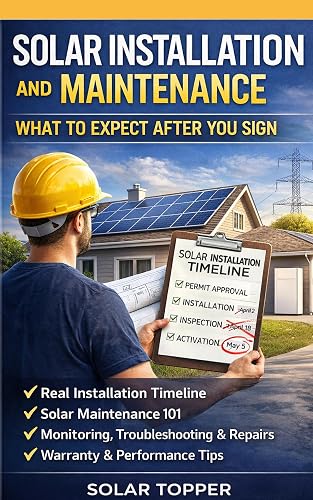 Best for hands-on service planningSolar Installation and Maintenance: What to Expect After You SignView on Amazon
- 5
 Best for homeowners new to solarSolar Panels Explained: A Homeowner's Guide to Rooftop SolarView on Amazon
- 6
 Best for installers and commissioningSolar Installation Engineer – Complete Practical GuideView on Amazon
- 7
 Best for operations and monitoringSolar Photovoltaic Operation and Maintenance for Residential, CommerciView on Amazon
Our Top Picks
Quick Comparison
| Product | Best for | Key feature |
|---|---|---|
| Solar-Thermal Energy Systems: Analysis and Design | Engineers and advanced builders | System-level design and performance analysis |
| Solar Thermal Engineering: Space Heating and Hot Water Systems | Hot water and space heating owners | Focus on thermal system components |
| Solar Engineering of Thermal Processes | Readers wanting engineering fundamentals | Thermal process and collector theory |
| Solar Installation and Maintenance: What to Expect After You Sign | Owners planning routine service | Maintenance and troubleshooting coverage |
| Solar Panels Explained: A Homeowner’s Guide to Rooftop Solar | Beginners and homeowners | Plain-language overview of ownership |
| Solar Installation Engineer – Complete Practical Guide | Installers and commissioning work | Testing, commissioning and O&M steps |
| Solar Photovoltaic Operation and Maintenance for Residential, Commercial and Utility Systems | Operations and monitoring | Long-term O&M practices |
Solar-Thermal Energy Systems: Analysis and Design
Solar-Thermal Energy Systems: Analysis and Design
Best for: Engineers and advanced builders who want to understand how maintenance decisions affect system performance over time.
This is a technical design text. It suits readers who want to model collector output, storage and losses rather than follow a checklist. Owners who plan to estimate the long-term cost of efficiency loss will find the analytical framework useful.
Key specs
- Subject: solar-thermal energy system analysis and design
- Focus: collector, storage and system performance calculations
Pros
- Strong on the physics behind thermal performance loss
- Useful for estimating how degradation affects energy output
- Covers system-level thinking rather than single components
Cons
- Heavy on math for casual homeowners
- Little direct guidance on service visit scheduling
Bottom line: Pick this if you want the engineering basis for why maintenance matters and how to quantify it.
Solar Thermal Engineering: Space Heating and Hot Water Systems
Solar Thermal Engineering: Space Heating and Hot Water Systems
Best for: Hot water and space heating owners who want thermal-specific guidance.
This book stays focused on the systems most homeowners actually install: solar water heaters and space heating loops. Its scope matches the components that generate most thermal service questions, such as fluid circuits, storage tanks and controls.
Key specs
- Subject: solar space heating and domestic hot water systems
- Focus: thermal system components and layout
Pros
- Directly relevant to thermal (not photovoltaic) systems
- Covers the components that drive most service needs
- Practical framing for hot water applications
Cons
- Older material; check current code and equipment references
- Limited modern monitoring content
Bottom line: A good fit if your system is a hot water or space heating setup and you want thermal fundamentals.
Solar Engineering of Thermal Processes
Solar Engineering of Thermal Processes
Best for: Readers who want a rigorous engineering foundation before tackling service decisions.
This is a broad reference on thermal processes and collector behavior. It is less about routine upkeep and more about the principles that determine how a collector performs and degrades.
Key specs
- Subject: solar thermal process engineering
- Focus: collector and thermal process fundamentals
Pros
- Authoritative engineering background
- Helps explain why performance drops over time
- Useful reference for technical questions
Cons
- Not a maintenance manual
- Dense for beginners
Bottom line: Choose this for depth on the physics, not for a service schedule.
Solar Installation and Maintenance: What to Expect After You Sign
Solar Installation and Maintenance: What to Expect After You Sign: The Complete Guide to Solar Installation, System Monitoring, Troubleshooting, and Long-Term Care (Solar Authority Series Book 5)
Best for: Owners planning routine service and troubleshooting.
This guide addresses what happens after installation: monitoring, troubleshooting and long-term care. It is written for owners who want to know what to check and when, which maps directly to recurring maintenance spending.
Key specs
- Subject: post-installation care and monitoring
- Part of the Solar Authority Series (Book 5)
Pros
- Practical focus on what owners should expect
- Covers monitoring and troubleshooting
- Helps you judge when a service call is warranted
Cons
- Leans toward photovoltaic systems in places
- Less engineering depth on thermal components
Bottom line: A strong pick for owners who want a service-focused guide.
Solar Panels Explained: A Homeowner’s Guide to Rooftop Solar
Solar Panels Explained: A Homeowner's Guide to Rooftop Solar, Batteries, Costs, Contractors, Permits, and Long-Term Performance
Best for: Homeowners who are new to solar and want plain-language context.
This overview covers ownership basics, including batteries, contractors, permits and long-term performance. It is less thermal-specific, but useful for understanding the wider ownership picture.
Key specs
- Subject: residential solar ownership overview
- Topics include costs, contractors and permits
Pros
- Accessible writing for beginners
- Covers ownership decisions beyond equipment
- Good starting point before reading technical texts
Cons
- Focused on rooftop photovoltaic rather than thermal
- Thin on solar thermal maintenance detail
Bottom line: Good for a general overview, but pair it with a thermal-specific title.
Solar Installation Engineer – Complete Practical Guide
Solar Installation Engineer – Complete Practical Guide: Solar PV Installation, Design, Testing, Commissioning, Operation & Maintenance (O&M), Troubleshooting, MW Solar Projects,Practical Site Knowled
Best for: Installers and builders handling commissioning and operations work.
This practical guide covers installation, design, testing and commissioning steps, with operation and maintenance included. It leans toward photovoltaic work, but its testing and O&M sections map onto the checks a thermal system also needs.
Key specs
- Subject: solar installation, testing and O&M
- Covers commissioning and troubleshooting
Pros
- Strong on testing and commissioning procedures
- Practical site-level detail
- Useful checklists for service visits
Cons
- Primarily photovoltaic in orientation
- Requires adapting steps to thermal fluid systems
Bottom line: Best for hands-on installers who can translate PV practice to thermal work.
Solar Photovoltaic Operation and Maintenance for Residential, Commercial and Utility Systems
Solar Photovoltaic Operation and Maintenance for Residential, Commercial and Utility Systems
Best for: Readers focused on operations, monitoring and long-term maintenance planning.
This title addresses O&M across residential, commercial and utility scales. Its planning concepts, such as scheduled inspection and performance tracking, carry over well to thermal systems even though the equipment differs.
Key specs
- Subject: solar O&M across system sizes
- Covers residential, commercial and utility contexts
Pros
- Good framework for scheduled maintenance
- Covers performance monitoring well
- Useful for planning recurring service budgets
Cons
- Photovoltaic-focused rather than thermal
- Commercial and utility sections may exceed residential needs
Bottom line: Pick this if you want a maintenance planning framework you can adapt to thermal equipment.
Buying Guide
Scope: thermal versus photovoltaic
Many solar books cover photovoltaic (PV) panels, which convert sunlight to electricity. Solar thermal systems heat a fluid, usually water or glycol, and the maintenance concerns differ: fluid quality, pump function, pressure, and freeze protection matter more. Check that a title names thermal systems before relying on it for service decisions.
Good picks for this: Solar Thermal Engineering: Space Heating and Hot Water Systems, Solar-Thermal Energy Systems: Analysis and Design
Depth of engineering content
Some titles explain the physics of collector efficiency and heat loss, while others focus on procedures. Decide whether you need to understand why performance drops or simply how to check it. Analytical texts help you estimate the cost of lost output; procedural guides help you schedule visits.
Good picks for this: Solar Engineering of Thermal Processes, Solar-Thermal Energy Systems: Analysis and Design
Troubleshooting coverage
Look for sections on common faults: low output, leaks, air in the loop, pump failure, and controller errors. A book that lists symptoms and checks gives you a way to decide whether a problem is a quick fix or a call-out job, which affects your real annual maintenance spend.
Good picks for this: Solar Installation and Maintenance: What to Expect After You Sign, Solar Installation Engineer – Complete Practical Guide
Maintenance schedules and intervals
A useful reference separates annual tasks (visual inspection, fluid pressure checks, controller review) from less frequent ones (fluid replacement, component replacement). Manufacturers typically specify fluid service intervals in their manuals, so always check the equipment documentation for your specific system.
Good picks for this: Solar Photovoltaic Operation and Maintenance for Residential, Commercial and Utility Systems, Solar Installation and Maintenance: What to Expect After You Sign
Audience and skill level
Match the book to your background. Homeowners benefit from plain-language overviews; installers and engineers need procedure and design detail. Reading a text far above your level tends to lead to skipped steps, so choose one that fits your current skills and add technical references later.
Good picks for this: Solar Panels Explained: A Homeowner’s Guide to Rooftop Solar, Solar Engineering of Thermal Processes
Currency and standards
Solar equipment, codes and recommended practices change. Check the publication date and whether the book references current standards. Older thermal texts remain valuable for fundamentals, but confirm any specific procedure against your local code and the manufacturer’s current instructions.
Good picks for this: Solar Thermal Engineering: Space Heating and Hot Water Systems, Solar Installation Engineer – Complete Practical Guide
Long-term care and monitoring
Ongoing monitoring of temperatures, pressures and output is the best early warning for maintenance problems. Guides that cover data logging and performance tracking help you catch degradation before it becomes an expensive repair.
Good picks for this: Solar Installation and Maintenance: What to Expect After You Sign, Solar Photovoltaic Operation and Maintenance for Residential, Commercial and Utility Systems
FAQ
What drives solar thermal maintenance costs?
The main drivers are the number of service visits, the cost of replacement parts such as pumps and controllers, fluid replacement, and whether you handle routine checks yourself. System size, roof access and local labor rates also matter. Your equipment manual will list the service tasks and intervals to plan around.
How often should a solar thermal system be serviced?
Many manufacturers recommend at least an annual inspection, with fluid checks and pressure tests included. Some call for more frequent checks in harsh climates. Confirm the schedule in your system documentation, since intervals vary by design and fluid type.
Can a homeowner do routine solar thermal maintenance?
Many owners handle visual inspections, pressure readings and controller checks. Work on pressurized fluid loops, electrical components and roof penetrations is better left to a qualified professional. If you are unsure, consult a licensed installer or service technician.
Is solar thermal maintenance similar to solar PV maintenance?
Some principles overlap, such as inspection, monitoring and performance tracking. The equipment differs substantially, though: thermal systems depend on fluid circuits, pumps and freeze protection, while PV systems depend mainly on panels, wiring and inverters. Use thermal-specific references where possible.
Why does solar thermal output drop over time?
Common causes include fouled collector glazing, degraded heat-transfer fluid, air in the loop, and failing pumps or controls. Scaling in hard-water areas can also reduce heat transfer. A regular inspection usually identifies these before output falls far.
Do I need to replace the heat-transfer fluid?
Glycol-based systems typically require periodic fluid testing and eventual replacement, because the fluid can break down over time. Test intervals and replacement guidance come from the manufacturer. Handle and dispose of fluid according to local rules.
Conclusion
For a thermal-specific engineering foundation, Solar-Thermal Energy Systems: Analysis and Design is the strongest overall pick. If your system heats water or a space, Solar Thermal Engineering: Space Heating and Hot Water Systems is the more directly relevant text. Owners who want a service-focused guide should look at Solar Installation and Maintenance: What to Expect After You Sign, while installers will find Solar Installation Engineer – Complete Practical Guide useful for commissioning steps. Homeowners new to solar may start with Solar Panels Explained: A Homeowner’s Guide to Rooftop Solar. For a broader view of how the work is structured and budgeted, see Solar Thermal System Maintenance: A Step-by-Step Guide for Homeowners and Cost of Solar Thermal: What You'll Pay and What Drives the Price (2026).
Sources
- Federal guidance on solar water heating, system types and owner considerations (energy.gov)
- Research on solar thermal performance, system modeling and component reliability (nrel.gov)
- Standards and professional guidance on solar energy system design and operation (ashrae.org)
Before you buy: helpful guides
Related reading
- Solar Thermal Heating Cost: A Step-by-Step Budgeting Guide for DIY Builders
- Solar Thermal Cost per M2: What Collectors Really Cost and What Drives the Price
About Ethan Brooks
Ethan Brooks is part of our editorial team and reviews and edits our solar water heaters guides, checking product details against manufacturer specifications and owner feedback.