By Ethan Brooks
Updated November 2026
Choosing a csi solar thermal calculator is the fastest way to find out whether a collector array, storage tank and pump will actually cover your household’s hot water and space heating loads. This list is built on specification review, brand reputation and the patterns owners tend to describe in their feedback, not on hands-on testing. The main criteria were clarity of inputs, suitability for solar thermal sizing rather than general engineering math, portability, durability and fit for a DIY or small-contractor workflow. Each pick is listed below with its strengths and limits so you can match it to your project.
Our top picks at a glance
- 1
 TOP CHOICEBest overallVictor 1310 Thermal Printing CalculatorView on Amazon
- 2
 TOP CHOICEBest for large jobsVictor PL8000 Thermal Printing CalculatorView on Amazon
- 3
 TOP CHOICEBest for a clear displaySharp EL-1901 Paperless Printing CalculatorView on Amazon
- 4
 Best budget pickMr. Pen Solar CalculatorView on Amazon
- 5
 Best for material estimatesCalculated Industries 4019 Material EstimatorView on Amazon
- 6
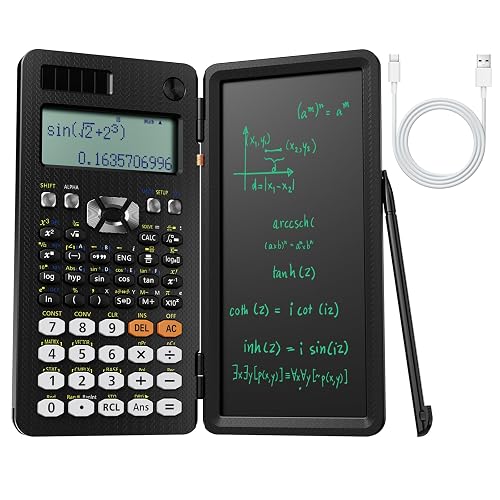 Best for technical formulasNEWYES 991ES MAX Scientific CalculatorView on Amazon
- 7
 Best for portabilityFolding Desktop Battery and Solar CalculatorView on Amazon
Our Top Picks
| Product | Best for | Key feature |
|---|---|---|
| Victor 1310 Thermal Printing Calculator | Printed records of collector and storage math | Fast printing with cost, sell and margin keys |
| Victor PL8000 Thermal Printing Calculator | Long calculation chains and checking work | Prompt logic and HELP key |
| Sharp EL-1901 Paperless Printing Calculator | Easy-to-read entries on a large screen | Check and correct with a 12-digit scrolling display |
| Mr. Pen Solar Calculator | Simple sums on a tight budget | Solar and battery power with a 12-digit display |
| Calculated Industries 4019 Material Estimator | Estimating materials for a build | Built-in project and material cost functions |
| NEWYES 991ES MAX Scientific Calculator | Engineering and thermodynamics formulas | 417 functions with a 4-line written display |
| Folding Desktop Battery and Solar Calculator | Carrying to job sites or class | Compact folding body with dual power |
Victor 1310 Thermal Printing Calculator
Fast Ink-Free 6.0 Lines-Per-Second Printing with Cost, Sell and Margin Keys, Dot Matrix Display, Plastic Enclosure, 10 x 7.8" Victor Big Print 12-Digit Thermal Printing Calculator, White (1310)
Best for: Printed records of collector and storage math
This suits a DIYer or contractor who wants a paper trail of each step when sizing a system, especially for permit files or client review.
Key specs
- Printing speed of 6.0 lines per second
- Dot matrix display
- 12-digit capacity
- Cost, sell and margin keys
Pros
- Printed tape makes it easy to check earlier entries
- Large, simple keypad for steady data entry
- Margin keys are useful when pricing a job
Cons
- Thermal paper needs replacing over time
- Bulkier than a pocket model
Bottom line: Best for anyone who needs a printed log of solar sizing and cost figures for records.
Victor PL8000 Thermal Printing Calculator
Fast 8.0 Lines-Per-Second Printing with Prompt Logic and HELP Key, Plastic Enclosure, 13.5 x 8.8-Inches Victor Technology 14-Digit Thermal Printing Calculator, White (PL8000)
Best for: Long calculation chains and checking work
This fits someone running many sequential calculations, such as collector area, flow rate and heat loss, who wants to verify each line.
Key specs
- Printing speed of 8.0 lines per second
- 14-digit capacity
- Prompt logic and HELP key
Pros
- Faster printing than the 1310 model
- Larger digit capacity for big numbers
- Prompt logic guides less experienced users
Cons
- Large footprint on a crowded desk
- Requires mains power and paper supplies
Bottom line: A strong choice for a desk setup where long, printed calculation chains matter most.
Sharp EL-1901 Paperless Printing Calculator
Check and Correct, Large 12-Digit Scrolling LCD Display, Adding Machine with Plastic Enclosure, 11.2 x 8.3-Inches Sharp Paperless Printing Desk Calculator, White (EL-1901)
Best for: Easy-to-read entries on a large screen
This suits users who prefer checking figures on screen rather than on paper, and who want a clear review function for corrections.
Key specs
- 12-digit scrolling LCD display
- Check and correct function
- Adding machine layout
Pros
- Check and correct makes fixing entries quick
- Paperless operation avoids roll replacement
- Large display is easy to read
Cons
- No printed record for filing
- Scrolling display is slower to review long chains
Bottom line: Good for users who value on-screen review and correction over printed output.
Mr. Pen Solar Calculator
Basic Office Calculators Mr. Pen- Standard Function Calculator, 12 Digits, Solar Calculator
Best for: Simple sums on a tight budget
This works for someone doing basic area and volume arithmetic who does not need advanced functions, and who wants a low-cost backup device.
Key specs
- 12-digit display
- Standard function keys
- Solar-powered operation
Pros
- Simple layout is easy to learn
- Solar power means no battery swaps
- Compact enough for a toolbox
Cons
- No scientific or engineering functions
- Basic display offers limited feedback
Bottom line: A budget pick for basic arithmetic, not for full solar thermal modeling.
Calculated Industries 4019 Material Estimator
Calculated Industries 4019 Material Estimator Calculator | Finds Project Building Material Costs for DIY’s, Contractors, Tradesmen, Handymen and Construction Estimating Professionals,Yellow
Best for: Estimating materials for a build
This suits DIY builders and contractors who need to estimate piping, insulation, mounting hardware and other materials alongside a solar thermal install.
Key specs
- Built for project and material estimating
- Designed for construction trades
Pros
- Material-focused functions suit install planning
- Built for trade use and rugged handling
- Helps convert project dimensions into quantities
Cons
- Not designed for thermodynamic or irradiance math
- Function set is narrower than a scientific calculator
Bottom line: Pick this for materials takeoffs on a solar install, paired with a separate tool for energy modeling.
NEWYES 991ES MAX Scientific Calculator
NEWYES Rechargeable Scientific Calculators 991ES MAX, 417 Functions, Writing Pad, Foldable Hard Case, 4-Line Written Display Advanced Calculators for Students School Engineering, Dual Power, Black
Best for: Engineering and thermodynamics formulas
This fits a user working through heat transfer, efficiency and unit-conversion equations, such as those behind collector performance and storage losses.
Key specs
- 417 functions
- 4-line written display
- Rechargeable with dual power
Pros
- Broad function set covers engineering formulas
- Written display shows equations as entered
- Foldable hard case protects it on site
Cons
- Steeper learning curve than basic models
- Does not replace a dedicated solar sizing program
Bottom line: The best fit for technical formula work behind a csi-style sizing approach.
Folding Desktop Battery and Solar Calculator
Scientifice Caculator Folding Desktop Battery & Solar Calculator for School Convenient to Carry Caculators
Best for: Carrying to job sites or class
This suits someone who wants a small, dual-powered calculator to keep in a bag or pocket for quick checks during a site visit.
Key specs
- Folding desktop body
- Battery and solar dual power
Pros
- Compact and easy to carry
- Dual power reduces battery worries
- Simple key layout for quick sums
Cons
- Limited functions for advanced work
- Small keys may be harder for large hands
Bottom line: A portable backup for quick arithmetic, not a primary solar sizing tool.
Buying Guide
Calculation Features
Check whether the device handles the formulas you need: area, flow rate, heat loss and unit conversion. Scientific models cover more ground than basic adding machines.
Good picks for this: NEWYES 991ES MAX Scientific Calculator, Calculated Industries 4019 Material Estimator
Display and Readability
Look for a display that shows multiple lines or a long digit count so you can review inputs. Large, clear screens reduce entry errors on long sums.
Good picks for this: Sharp EL-1901 Paperless Printing Calculator, Victor PL8000 Thermal Printing Calculator
Printed Records
If you need a paper trail for permits or client files, a printing model creates a tape you can keep. Confirm the paper type and replacement availability before buying.
Good picks for this: Victor 1310 Thermal Printing Calculator, Victor PL8000 Thermal Printing Calculator
Power Source
Solar and battery models keep working when mains power is unavailable, which matters on a roof or in a shed. Check how the battery is replaced and whether the solar panel works indoors.
Good picks for this: Mr. Pen Solar Calculator, Folding Desktop Battery and Solar Calculator
Size and Portability
A folding or compact body fits a toolbag or site kit. Desktop printers need a stable surface and a power outlet, so plan the workspace before you choose.
Good picks for this: Folding Desktop Battery and Solar Calculator, Mr. Pen Solar Calculator
Durability and Build
Job-site use exposes tools to dust, moisture and drops. Hard cases and sealed keypads extend service life, and trade-focused designs are usually more tolerant of rough handling.
Good picks for this: Calculated Industries 4019 Material Estimator, NEWYES 991ES MAX Scientific Calculator
Use Case and Workflow
Match the device to the job: sizing collectors and storage calls for technical functions, while material takeoffs call for estimating features. Many installers use two tools for these tasks.
Good picks for this: Calculated Industries 4019 Material Estimator, Victor 1310 Thermal Printing Calculator
FAQ
What is a csi solar thermal calculator used for?
It helps estimate collector area, storage volume and heat output for solar thermal water heating or space heating. Results depend on your site’s solar resource and load profile, so treat them as a planning estimate.
Do I need a scientific calculator for solar thermal sizing?
Not always, but formulas for heat loss, efficiency and unit conversion are easier with a scientific model. Simple area and volume math can be done on a basic device.
Is a printing calculator worth it for a home project?
It is useful if you want a written record of your calculations for permits or client review. For a one-time home project, an on-screen model may be enough.
Can a basic solar calculator replace a sizing program?
No. A basic device handles arithmetic but not solar irradiance, collector performance curves or system losses. Use dedicated sizing tools alongside any handheld calculator.
How do I check my calculator results?
Cross-check key outputs against the manufacturer’s collector data sheets and your local climate figures. Have a licensed installer or engineer review designs before you build or connect anything.
Should I use a material estimator for solar thermal installs?
Yes, for counting pipe, insulation, fittings and mounting hardware. Pair it with a sizing method so the quantities match the system you designed.
Conclusion
For a printed record of sizing math, the Victor models are the most direct choice. Users who need on-screen review should consider the Sharp EL-1901. Engineering formulas call for the NEWYES 991ES MAX, while the Calculated Industries 4019 suits material takeoffs. The Mr. Pen and folding models work as budget or portable backups. No single device replaces a dedicated solar thermal sizing program, so pair your handheld calculator with professional design review before installation.
Sources
- Federal guidance on solar water heating systems and how to size them (energy.gov)
- Research on solar thermal performance, modeling and system design (nrel.gov)
- Standards and handbooks on heating, cooling and building energy calculations (ashrae.org)
Before you buy: helpful guides
- Solar Thermal Payback Calculator: How to Estimate Your Break-Even Point
- Evacuated Tube Solar Thermal Collector: 7 Steps to Build or Choose One
- Parabolic Trough Solar Thermal Collector: How It Works and How to Build One
- Parabolic Solar Thermal Collector: How It Works and How to Build One
- Solar Thermal Heat Storage: How to Size and Build a Tank That Holds Heat (2026)
Related reading
- Worcester GreenSkies Solar Thermal Panels: 5 Best Options Compared
- Why Does Solar Panel Thermal Expansion Cause Problems? 5 Causes and Fixes
About Ethan Brooks
Ethan Brooks is part of our editorial team and reviews and edits our solar water heaters guides, checking product details against manufacturer specifications and owner feedback.