By Ethan Brooks
Updated November 2026
Installing solar thermal panels at home is one of the more practical ways to cut water heating energy, but the right starting point depends on whether you want a full DIY build, a complete kit, or a panel for a specific job like pool heating. This list compares five products across the criteria that matter most for a home installation: whether the product is a real collector or an educational guide, how it mounts, how it handles freezing and wind, how much installation work it demands, and how well it fits a typical residential roof. Because this is a research-based comparison built from manufacturer specifications and common owner feedback patterns, not from hands-on testing, always check the current listing details before you buy.
Our top picks at a glance
- 1
 TOP CHOICEBest overallInstall Your Own Solar Panels: Designing and Installing a PhotovoltaicView on Amazon
- 2
 TOP CHOICEBest for high-output rooftop arraysRenogy Bifacial Solar Panel 5900W N-Type 16BB 10PCS 590 WattView on Amazon
- 3
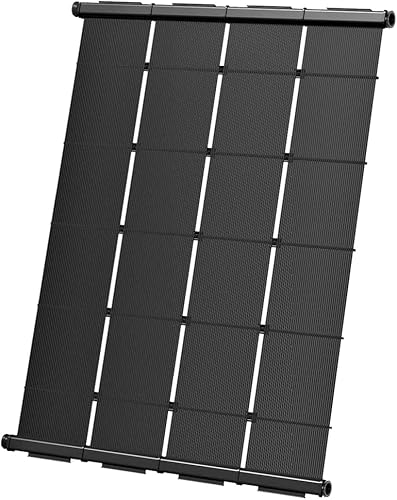 TOP CHOICEBest for pool and cold-climate heatingIndustrial Grade Solar Pool Heater Panel (4' X 10.5')View on Amazon
- 4
 Best budget pickSW-38 Solar Water Heater PanelsView on Amazon
- 5
 Best for a complete starter system4 Panel Standard SW-38 Hybrid Solar Water Heater KitView on Amazon
Our Top Picks
| Product | Best for | Key feature |
|---|---|---|
| Install Your Own Solar Panels | Learning the full installation process | Step-by-step design and mounting guidance |
| Renogy Bifacial Solar Panel 5900W | Large rooftop and off-grid arrays | Bifacial N-type cells rated IP68 |
| Industrial Grade Solar Pool Heater Panel | Pool and cold-climate heating | Strapless mounting and freeze resistance |
| SW-38 Solar Water Heater Panels | Budget single-panel water heating | Simple, standard collector format |
| 4 Panel Standard SW-38 Hybrid Solar Water Heater Kit | Complete single-row starter system | Four-panel single-row installation |
Install Your Own Solar Panels: Designing and Installing a Photovoltaic System to Power Your Home
Install Your Own Solar Panels: Designing and Installing a Photovoltaic System to Power Your Home
Best for: Learning the full installation process
This is a book rather than a collector, and it suits readers who want to understand design, wiring and mounting before committing to hardware. Its focus is photovoltaic systems, so readers planning a thermal water heater should use it for mounting, roof structure and electrical planning concepts, and pair it with a dedicated thermal guide.
Key specs:
- Format: printed book
- Subject: designing and installing a photovoltaic home system
Pros:
- Covers system design from site assessment through wiring
- Useful reference for roof load, mounting and electrical safety concepts
- Helps readers judge whether a DIY install is realistic for them
Cons:
- Not focused on solar thermal collectors
- Does not replace local permit or code requirements
Bottom line: Best for a first-time builder who wants a broad foundation before buying hardware. Thermal-specific readers should supplement it.
Renogy Bifacial Solar Panel 5900W N-Type 16BB 10PCS 590 Watt
Double-Sided Design, 10PCS 590 Watt Solar Panels for RV Marine Rooftop Home Boat Farm Shed Camper Off-Grid Systems, IP68 Renogy Bifacial Solar Panel 5900W N-Type 16BB, 25% High Efficiency
Best for: Large rooftop and off-grid arrays
This listing is a photovoltaic module bundle sold for RV, marine, shed and off-grid use. It is included here for readers comparing high-output modules, but it is not a thermal collector, so it will not heat water directly. Installers who want electricity to drive a resistive water heater or heat pump may find it useful.
Key specs:
- Quantity: 10 panels per listing
- Rated IP68 for water and dust resistance
- Bifacial double-sided design with N-type 16BB cells
Pros:
- Bifacial design can capture reflected light from the rear
- IP68 rating supports harsh outdoor exposure
- Large combined output for bigger arrays
Cons:
- Photovoltaic, not solar thermal, so it does not heat water directly
- Requires electrical design, inverter and wiring knowledge
Bottom line: Pick this only if you are building electric generation rather than a thermal water heater, or you are comparing PV and thermal approaches.
Industrial Grade Solar Pool Heater Panel (4′ X 10.5′)
Industrial Grade Solar Pool Heater Panel – Superior High-Wind Strapless Mounting System & Maximum Freeze Resistance (4' X 10.5')
Best for: Pool and cold-climate heating
This is a solar thermal panel designed for pool heating, with a mounting system built for wind and freezing conditions. It suits homeowners who want an unglazed collector for pool water or a low-temperature thermal loop, and who need a panel that can handle exposed installations.
Key specs:
- Dimensions: 4 ft x 10.5 ft
- Strapless mounting system designed for high wind
- Marketed for maximum freeze resistance
Pros:
- Large collector area for pool-scale heating
- Mounting system is built to resist wind uplift
- Designed for freeze-prone regions when drained correctly
Cons:
- Pool-oriented, so less suited to pressurized domestic hot water
- Large footprint needs a suitable roof or ground rack
Bottom line: The right choice for a pool owner or a low-temperature application. Domestic hot water users should look at a closed-loop water heater panel instead.
SW-38 Solar Water Heater Panels
SW-38 Solar Water Heater Panels
Best for: Budget single-panel water heating
This is a solar water heater panel in the SW-38 format, a size commonly used in residential thermosiphon and pumped systems. It fits readers who want a single collector to feed a storage tank and are comfortable plumbing the loop themselves.
Key specs:
- Model designation: SW-38 collector format
- Designed for residential water heating loops
Pros:
- Simple, widely recognized collector format
- Good fit for a single-tank starter system
- Easy to add panels later as needs grow
Cons:
- Requires you to source tank, pump and controls separately
- Check the listing for exact dimensions before planning roof space
Bottom line: A sensible pick for a budget-minded builder who already has or plans to buy the rest of the system.
4 Panel Standard SW-38 Hybrid Solar Water Heater Kit
4 Panel Standard SW-38 Hybrid Solar Water Heater Kit- Single Row Installation
Best for: Complete single-row starter system
This kit bundles four SW-38 panels for single-row installation. It suits a household that wants a full array in one purchase and plans a roof-mounted single row rather than a custom layout.
Key specs:
- Panel count: four SW-38 panels
- Layout: single-row installation
Pros:
- Panels are matched, which simplifies planning
- Single-row layout is easier to mount on a standard roof
- Scalable from one panel up to a full row
Cons:
- Tank, plumbing and controls are not described in the listing name, so confirm what is included
- Four panels may exceed what a small household needs
Bottom line: Best for a homeowner who wants a complete array in one order and has roof space for a single row.
Buying Guide
Collector type and application
Decide first whether you need domestic hot water, space heating or pool heating. Domestic hot water systems typically use closed-loop glycol or pressurized designs, while pool heaters are usually unglazed and run at lower temperatures. Photovoltaic modules, though useful for electricity, do not heat water directly. Check the listing description before buying.
Good picks for this: SW-38 Solar Water Heater Panels, Industrial Grade Solar Pool Heater Panel
Collector area and roof fit
Measure the usable roof area facing the sun, ideally within 15 to 20 degrees of true south in the Northern Hemisphere. Note the panel dimensions from the listing and plan spacing so panels do not shade each other. A 4 ft by 10.5 ft pool panel needs a very different footprint than a standard SW-38 collector.
Good picks for this: 4 Panel Standard SW-38 Hybrid Solar Water Heater Kit, Industrial Grade Solar Pool Heater Panel
Mounting and wind resistance
Roof and ground mounts must handle uplift from wind. Look for mounting systems that specify wind ratings and use appropriate hardware for your roof type. Strapless mounts, as described on some pool panels, reduce the number of penetrations but still require proper anchoring into structural members.
Good picks for this: Industrial Grade Solar Pool Heater Panel
Freeze protection
In cold climates, the system needs either a freeze-tolerant fluid, drainback design or automatic draining. Check the manufacturer’s freeze rating and whether the product is designed for drainage. Never assume an unglazed panel is freeze-safe without confirming the design.
Good picks for this: Industrial Grade Solar Pool Heater Panel, SW-38 Solar Water Heater Panels
Durability and weather rating
Look for ingress protection (IP) ratings on electrical products and for corrosion-resistant frames and glazing on thermal collectors. An IP68 rating, as listed on some photovoltaic modules, indicates protection against prolonged water immersion and dust. Thermal collectors should have UV-stable seals and frames.
Good picks for this: Renogy Bifacial Solar Panel 5900W, Industrial Grade Solar Pool Heater Panel
Installation skill and learning resources
Be realistic about your skills. Roof penetrations, plumbing, pressure ratings and any electrical work carry safety risks. Local codes and permit requirements vary. Reference material can help you plan, but it does not replace code compliance.
Good picks for this: Install Your Own Solar Panels, 4 Panel Standard SW-38 Hybrid Solar Water Heater Kit
System completeness
Panels alone do not heat water. You also need a storage tank, circulation or thermosiphon arrangement, controls and a freeze or overheat strategy. Read each listing carefully to see what is included. Buying a kit can simplify matching, but confirm the tank and plumbing components are covered.
Good picks for this: 4 Panel Standard SW-38 Hybrid Solar Water Heater Kit, SW-38 Solar Water Heater Panels
FAQ
Can I install solar thermal panels myself?
Many homeowners handle the mounting and plumbing themselves, but roof work, pressurized plumbing and electrical connections carry real risk. Check local permit requirements and consider hiring a licensed professional for roof penetrations, structural checks or electrical work. Consult a professional before starting any project that affects your roof or home systems.
What is the difference between solar thermal and photovoltaic panels?
Solar thermal panels capture heat to warm water or air directly. Photovoltaic panels convert sunlight into electricity. A photovoltaic module will not heat water on its own, so it suits electrical loads rather than a hot water tank.
Which direction should solar thermal panels face?
In the Northern Hemisphere, panels generally face south, and in the Southern Hemisphere they face north. A tilt roughly matching your latitude is a common starting point, though the best angle depends on your season of heaviest use. Confirm specifics with the manufacturer’s installation guide.
How many panels do I need for a household?
Required area depends on occupancy, hot water use, climate and tank size. Start by estimating daily hot water volume, then check manufacturer sizing guidance for collector area. Many households use one to four collectors depending on demand.
Do solar thermal panels work in winter?
They produce less heat in winter because of lower sun angles and shorter days, so a backup heat source is usually needed. Freeze protection is also essential in cold regions. Check the freeze rating and drainage design of any product before you buy.
Do I need a permit to install solar thermal panels?
Requirements vary by city, county and state. Many jurisdictions require permits for roof-mounted systems and plumbing changes. Contact your local building department before installation and consult a licensed professional where required.
Conclusion
For most readers, the decision comes down to the job. If you want to learn the process first, the design guide is a sound starting point. If you plan a pool heater, the industrial pool panel fits that use. For budget single-panel domestic hot water, the SW-38 panels offer a simple format, while the four-panel kit suits someone who wants a complete single-row array in one order. Photovoltaic products such as the Renogy bifacial module belong in the comparison only if you are weighing electricity against thermal heating. Confirm freeze ratings, roof capacity and local permit rules before you buy.
Sources
- Federal guidance on solar water heating basics, system types and sizing considerations (energy.gov)
- Research resources on solar thermal performance and system design (nrel.gov)
- Workplace and roof safety guidance relevant to rooftop installation work (osha.gov)
Before you buy: helpful guides
Related reading
- Worcester GreenSkies Solar Thermal Panels: 5 Best Options Compared
- Why Does Solar Panel Thermal Expansion Cause Problems? 5 Causes and Fixes
- Top 7 Solar Thermal Flat Panel Options Compared for Home Water Heating
- Top 5 Solar Thermal Collector Panel Options with Heavy-Duty Builds (2026)
About Ethan Brooks
Ethan Brooks is part of our editorial team and reviews and edits our solar water heaters guides, checking product details against manufacturer specifications and owner feedback.