By Ethan Brooks
Updated November 2026
Solar thermal air panels capture sunlight and turn it into warm air you can push into a room, a garage or an attic space. They are a different animal from photovoltaic modules, which make electricity, and from liquid-filled water heater collectors. If you are looking for a product that heats air directly, the choice comes down to how much surface area you need, how well the unit handles heat loss, and whether you plan to mount it on a roof, a wall or a freestanding frame. This list weighs those criteria against published specifications, brand reputation and the patterns owners tend to describe in their feedback. Nothing here comes from our own testing, so verify details against the manufacturer’s current documentation before you buy.
Our top picks at a glance
- 1
 TOP CHOICEBest overallSolar Attic Fan Kit, Panel IncludedView on Amazon
- 2
 TOP CHOICEBest for small kitchens1pcs Solar Panel 1.3W 5.5V with USB-CView on Amazon
- 3
 TOP CHOICEBest budget pickBXI Insulation Foam Roll with Reflective FoilView on Amazon
- 4
 Best for camping and off-grid useLVYUAN 400W Portable Solar PanelView on Amazon
- 5
 Best for RVs and vansRenogy-Style 100W Flexible Solar PanelView on Amazon
Our Top Picks
Quick Comparison
| Product | Best for | Key feature |
|---|---|---|
| Solar Attic Fan Kit (Panel Included, Plug-and-Play) | Attic and roof-space ventilation | Self-contained solar fan kit |
| Foldable 400W Portable Solar Panel (LVYUAN) | Camping and off-grid power | Foldable, IP64-rated blanket design |
| Flexible 100W Solar Panel (Renogy style flex) | RVs, vans and boats | Bendable, lightweight curved-surface build |
| Insulation Foam Roll with Reflective Foil (BXI) | Blocking radiant heat on ducts and walls | Self-adhesive, waterproof radiant barrier |
| Window Solar Panel 1.3W 5.5V (USB-C) | Small low-draw electronics and smart blinds | USB-C output, window mounting |
Solar Attic Fan Kit, Panel Included
50W Solar Attic Fan Kit, Panel Included, Plug-and-Play, Made in USA
Best for: Attic and roof-space ventilation
This kit suits homeowners who want to move hot air out of an attic on sunny days rather than generate heat for living space. It is a practical starting point for anyone new to solar air movement.
Key specs
- Panel included with the fan, sold as a complete kit
- Plug-and-play installation with no wiring to the household grid
- Listed as made in the USA
Pros
- Works without electrical wiring to the home
- Complete kit, so no separate panel sizing is needed
- Simple to mount on a south-facing roof section
Cons
- Ventilation rather than space heating, so it does not warm living areas
- Output depends heavily on direct sun hours
Bottom line: Choose this if your goal is cooling and venting an attic, not heating a room. It is the most straightforward option on this list for that job.
LVYUAN 400W Portable Solar Panel
LVYUAN 400W Portable Solar Panel, 36V Foldable Blanket Solar Panel IP64 P-PERC, Upgraded 23% Efficiency for Solar Power Station Generator for Outdoor Camping Backpacking Hiking, 22 Pounds
Best for: Camping and off-grid use
Owners who need a portable solar source for a power station or a small off-grid setup will find this the most capable model here. It is a power panel, so it is best paired with a battery and inverter rather than used to move heated air.
Key specs
- 400W rated output in a foldable blanket format
- 36V nominal panel configuration
- IP64 rating for dust and water resistance, per the listing
- Listed weight of about 22 pounds
Pros
- High wattage for a portable panel
- Folds down for transport and storage
- Weather-resistant rating suits outdoor use
Cons
- Requires a compatible controller and battery to be useful
- Heavier than thin flexible panels, so less convenient for mounting on curves
Bottom line: A strong choice for campers and off-grid users who want portable power. It is not a direct air heater, so match it to your storage system before buying.
Renogy-Style 100W Flexible Solar Panel
100W Flexible Solar Panel for for Marine RV Cabin Van Car Boat Curve Surfaces Off-Grid Systems, 0.1 Inch Lightweight, Black Renogy Flexible Solar Panel 100 Watt, 240° Ultra Flex Bendable
Best for: RVs, vans and boats
This flexible panel suits owners who need to fit a panel onto a curved or irregular surface where a rigid frame will not sit flat. It is lighter than glass-framed modules and easier to bond to a van roof or boat deck.
Key specs
- 100W rated output
- Thin, flexible build with a listed bend angle
- Designed for curved surfaces in marine and vehicle use
Pros
- Conforms to curved mounting surfaces
- Lightweight for mobile installations
- Good fit for compact off-grid systems
Cons
- Flexible panels typically run cooler than rigid ones, which affects output in hot conditions
- Adhesive mounting needs careful surface prep
Bottom line: Pick this for vehicles and boats where a flat rigid panel will not fit. For fixed home systems, a rigid module is usually easier to service.
BXI Insulation Foam Roll with Reflective Foil
BXI Insulation Foam Roll – 13 x 78 x 0.4 Inch Self-Adhesive Thermal Board, Reflective Aluminum Foil Heat Shield, Waterproof Radiant Barrier Panel for Garage Door, HVAC Pipe, RV Window, Basement Duct
Best for: Blocking radiant heat on ducts and walls
This is not a solar collector. It is a reflective radiant barrier board that helps control heat transfer, so it fits best as a supporting material around duct runs, garage doors or the back of a heated air channel. Owners building a DIY air collector often use boards like this to reduce heat loss.
Key specs
- Roll size of 13 x 78 inches and 0.4-inch thickness, per the listing name
- Self-adhesive backing
- Reflective aluminum foil face, waterproof per the listing
Pros
- Easy to cut and apply to flat or ducted surfaces
- Low-cost way to reduce radiant losses
- Waterproof face suits exterior use
Cons
- Does not generate any heat on its own
- Adhesive can underperform on dusty or textured surfaces
Bottom line: A useful add-on for insulating and shielding a solar air build, not a stand-alone heating solution. Budget-minded builders will find it a sensible addition.
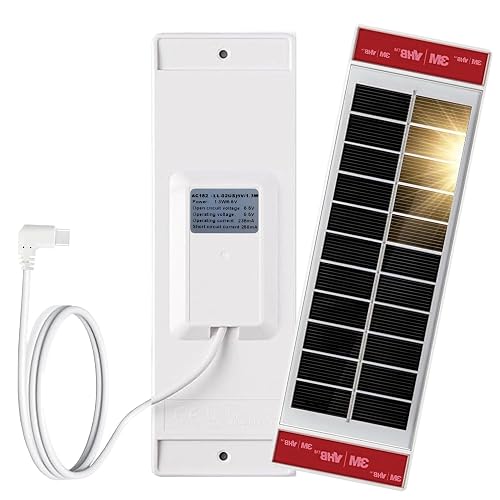
1pcs Solar Panel 1.3W 5.5V with USB-C
1pcs Solar Panel 1.3W5.5V, Suitable for Electric Blinds Smart Blinds, USB-C Plug Mobile Solar Power Generation, Installed on Window Solar Power Panel
Best for: Small low-draw electronics and smart blinds
This is the smallest panel on the list, meant to trickle-charge a small device or power a window blind motor. It is a poor match for any heating job and is included here for owners who want a minimal solar accessory.
Key specs
- 1.3W rated output at 5.5V
- USB-C plug for device charging
- Window-mount format
Pros
- Very simple to install on a window
- Low cost to add to a small system
- Suits low-power devices
Cons
- Output is far too small for any space or water heating task
- Performance drops with indirect or reduced window light
Bottom line: Choose this only if you need a tiny solar charger for a blind or small gadget. It will not contribute meaningful heat or power to a home system.
Buying Guide
Match the Panel Type to the Job
Solar thermal air panels heat air for ventilation or space warming. Photovoltaic panels make electricity. Power panels and attic fan kits solve different problems, so confirm what output you need before comparing wattage or airflow numbers.
Good picks for this: Solar Attic Fan Kit, LVYUAN 400W Portable Solar Panel
Check Wattage and Voltage Ratings
Rated wattage tells you peak output under standard test conditions. Real output is lower in heat, haze or partial shade. For a power setup, add up the daily watt-hours your devices need and size the panel with a margin. Voltage must match your charge controller.
Good picks for this: LVYUAN 400W Portable Solar Panel, Renogy-Style 100W Flexible Solar Panel
Consider Size, Weight and Fit
Measure the mounting surface before buying. Rigid panels need flat, load-bearing mounts. Flexible panels bend to curves but need clean adhesive surfaces. Foldable blankets are light enough to move but take up more space when stored in a vehicle.
Good picks for this: Renogy-Style 100W Flexible Solar Panel, LVYUAN 400W Portable Solar Panel
Think About Use Case
Ask whether you need to heat air, move air, store power or block heat loss. A ventilation fan, a radiant barrier and a power panel each belong to a different system. Mixing them without a plan wastes money and space.
Good picks for this: Solar Attic Fan Kit, BXI Insulation Foam Roll
Look at Durability and Weather Rating
Check the stated ingress protection rating and whether the frame or face is listed as waterproof. Outdoor panels face UV, wind and temperature swings. Owners frequently report that adhesive-mounted flexible panels need more attention to edge sealing than framed panels.
Good picks for this: LVYUAN 400W Portable Solar Panel, BXI Insulation Foam Roll
Plan for Care and Maintenance
Dust and debris reduce output. Clean glass or film surfaces with water and a soft cloth, and inspect wiring and mounts each season. Keep reflective barrier materials clean so the foil keeps its reflectivity.
Good picks for this: Solar Attic Fan Kit, Window Solar Panel 1.3W 5.5V
Confirm Electrical and Installation Safety
Any panel connected to a battery, inverter or house wiring needs correct fusing and grounding. Mistakes here create fire and shock risks. If you are unsure, consult a licensed electrician or solar installer before connecting anything to household power.
Good picks for this: LVYUAN 400W Portable Solar Panel, Renogy-Style 100W Flexible Solar Panel
FAQ
What is the difference between a solar thermal air panel and a solar PV panel?
A solar thermal air panel converts sunlight into heat that warms moving air. A photovoltaic panel converts sunlight into electricity. The two are built differently and serve different purposes, so check the product type before buying.
Can a solar attic fan kit heat my house?
No. Solar attic fan kits move hot air out of an attic to reduce heat buildup. They do not warm living space. Owners usually use them to cool the attic in summer.
Do I need a battery with a portable solar panel?
For most power uses, yes. A portable panel produces power only while the sun is shining, so a battery or power station stores that energy for use later. Pair the panel with a charge controller that matches its voltage.
Is a radiant barrier board a substitute for a solar collector?
No. A radiant barrier reflects heat and reduces heat transfer. It does not generate heat. It works best as a supporting material around ducts or walls in a solar air system.
How much sun does a solar panel need to work well?
Direct sunlight produces the most output. Shade, haze and angle losses all reduce performance. Mount the panel facing the sun as directly as your site allows and avoid shadows from trees or structures.
Are flexible solar panels less durable than rigid ones?
Flexible panels are lighter and conform to curves, but they often run hotter and can be more sensitive to mounting technique. Rigid panels with frames are generally easier to service. Compare the manufacturer’s warranty and mounting instructions for specifics.
Conclusion
For most home owners, the best solar thermal air panel depends on the job. A solar attic fan kit suits anyone who wants to vent heat from a roof space. A foldable 400W panel fits campers and off-grid users who need portable power. A flexible 100W panel works where a rigid frame will not fit, such as vans and boats. A radiant barrier board supports a DIY air build without generating heat itself. The window-mount USB-C panel is only useful for tiny electronics. Match the product to your real need, check specifications against the manufacturer’s current documentation, and consult a licensed professional before connecting anything to household electrical systems.
Sources
- Federal guidance on solar energy basics, system types and how solar technologies differ (energy.gov)
- Research on solar resource data and photovoltaic and thermal system performance (nrel.gov)
- Electrical and fire safety standards relevant to installing solar power equipment (nfpa.org)
Before you buy: helpful guides
Related reading
- Worcester GreenSkies Solar Thermal Panels: 5 Best Options Compared
- Why Does Solar Panel Thermal Expansion Cause Problems? 5 Causes and Fixes
- Top 7 Solar Thermal Flat Panel Options Compared for Home Water Heating
About Ethan Brooks
Ethan Brooks is part of our editorial team and reviews and edits our solar water heaters guides, checking product details against manufacturer specifications and owner feedback.