By Ethan Brooks
Updated November 2026
A solar thermal differential controller compares the temperature at the collector with the temperature at the bottom of your storage tank, then switches the pump on or off to match. Choosing one comes down to sensor compatibility, temperature range, relay capacity, protection features and how simple the wiring is for your setup. The picks below are based on product listings, manufacturer specifications and common owner feedback patterns.
Our top picks at a glance
- 1
 TOP CHOICEBest overallSolar Differential Temperature Controller T2-T1 Thermostat with AlarmView on Amazon
- 2
 TOP CHOICEBest for basic installsHappybuy Differential Temperature Controller T2-T1 ThermostatView on Amazon
- 3
 TOP CHOICEBest for boiler-linked systemsDifferential Temperature Controller Thermostat for Boiler SystemView on Amazon
- 4
 Best for a dedicated water heater displayEW-801 Digital Solar Water Heater Temperature ControllerView on Amazon
- 5
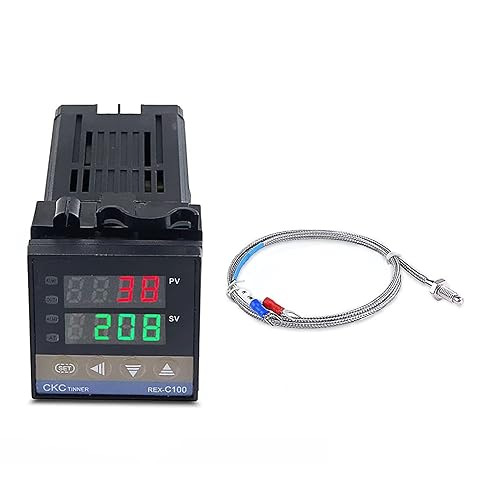 Best for high-temperature sensingREX-C100FK02-V*DA Solar Temperature ControllerView on Amazon
- 6
 Best for simple pump switchingSolar Temperature Difference Comparison Controller, Water Water CirculView on Amazon
- 7
 Best budget DIY pickHiLetgo 2pcs W1209 12V DC Digital Temperature Controller Board Micro DView on Amazon
Our Top Picks
Quick Comparison
| Product | Best for | Key feature |
|---|---|---|
| Solar Differential Temperature Controller T2-T1 Thermostat with Alarm | Overall use | Built-in alarm |
| Happybuy Differential Temperature Controller T2-T1 Thermostat | Basic installs | Two-sensor setup |
| Differential Temperature Controller Thermostat for Boiler System | Boiler-linked systems | Overheat and freeze protection |
| EW-801 Digital Solar Water Heater Temperature Controller | Water heater display | 12V supply, digital readout |
| REX-C100FK02-V*DA Solar Temperature Controller | High-temperature sensing | K-type thermocouple input |
| Solar Temperature Difference Comparison Controller (Model7) | Simple pump switching | Direct pump relay output |
| HiLetgo 2pcs W1209 12V DC Digital Temperature Controller Board | Budget DIY builds | Waterproof probe, 10A relay |
Solar Differential Temperature Controller T2-T1 Thermostat with Alarm
Solar Differential Temperature Controller T2-T1 Thermostat with Alarm fr Water Heater, Pool. Pump, Chiller, Greenhouse 2 Sensors Fahrenheit Celsius
Best for: Overall use with a dual-sensor solar loop
This suits owners who want a differential controller that works across pools, greenhouses and water heaters, with a visible alarm for out-of-range conditions.
Pros
- Works with Fahrenheit and Celsius readouts
- Alarm function flags out-of-range temperatures
Cons
- Setup menu takes some time to learn
Happybuy Differential Temperature Controller T2-T1 Thermostat
Happybuy Differential Temperature Controller T2-T1 Thermostat Water Heater, Pool Solar Panel Pump 2 Sensors Fahrenheit Celsius
Best for: Basic installs with two sensors
A good fit for first-time builders who want a straightforward T2-T1 comparison controller for a single solar loop.
Pros
- Simple two-sensor wiring
- Covers common solar water heater temperature ranges
Cons
- Fewer advanced protection settings than newer models
Differential Temperature Controller Thermostat for Boiler System
Differential Temperature Controller Thermostat for Boiler System with 2 sensors with Alarm and overheating and Freezing Protection
Best for: Boiler-linked systems needing protection
This controller suits systems that tie solar heat into a boiler loop and need overheating and freezing protection built in.
Pros
- Overheating and freezing protection included
- Alarm output for abnormal conditions
Cons
- Overkill for simple tank-only systems
EW-801 Digital Solar Water Heater Temperature Controller
EW-801 Digital Solar Water Heater Temperature Controller Differential Solar Thermostat with Sensor(12V Supply)
Best for: A dedicated water heater display
Owners who want a clear digital readout of collector and tank temperatures on a 12V system will find this type of controller easy to monitor.
Pros
- Digital display for both temperatures
- Runs on a 12V supply
Cons
- Requires a stable 12V power source
REX-C100FK02-V*DA Solar Temperature Controller
REX-C100FK02-V*DA Solar Temperature Controller Thermostat Relay Output SSR Output 0~400 with 1M thermocouple K SSR Output
Best for: High-temperature sensing with a thermocouple
This model is aimed at builders who need a wider temperature range and K-type thermocouple input rather than standard solar sensors.
Pros
- Wide 0 to 400 range
- Relay and SSR output options
Cons
- Thermocouple setup is less familiar to many homeowners
Buying Guide
Sensor Compatibility and Count
Most solar thermal differential controllers use two temperature sensors, one on the collector and one at the bottom of the storage tank. Confirm that the controller accepts the sensor type you plan to install, and that the sensor cables are long enough to reach both points without splicing.
Some units also support a third sensor for extra functions such as overheating or freezing protection. Check whether that feature is included before you buy.
Temperature Range and Display Units
Look for a temperature range that covers your system’s normal operation, including the high temperatures a collector can reach on a sunny day. Units that display both Fahrenheit and Celsius are easier to read and to match against manufacturer guidance.
Relay and Load Capacity
The relay output must be rated for the pump you intend to run. A relay that is too small can fail early, while a solid-state relay output may suit systems that switch often. Compare the rated current and voltage with your pump’s nameplate before ordering.
Protection Features
Overheating and freezing protection help safeguard your collector and storage tank in extreme weather. An audible or visual alarm can alert you to sensor faults or temperature problems, which is useful if the system runs unattended for long periods.
Power Supply and Installation Simplicity
Check the power input requirement, such as a 12V supply versus mains voltage, and make sure you have a suitable source nearby. Clear terminal labeling, a readable display and straightforward setup menus make installation and adjustment less error-prone, especially for first-time installers.
FAQ
What does a solar thermal differential controller do?
It compares the temperature at the solar collector with the temperature at the bottom of the storage tank. When the collector is sufficiently hotter, it turns the circulation pump on, and it shuts the pump off when the difference drops too low.
Do I need two temperature sensors?
Yes, a differential controller relies on two sensors so it can measure the temperature difference between the collector and the tank. Using only one sensor would not give the controller the comparison it needs to decide when to run the pump.
Can I use a controller designed for a pool or boiler in a solar water heating system?
Some general-purpose differential controllers work across several applications, but you should confirm that the sensor range, relay rating and control logic suit solar thermal use. Following the manufacturer’s installation instructions and local code requirements is important for safe operation.
What is the difference between a relay output and an SSR output?
A relay output uses a mechanical switch that clicks on and off, while a solid-state relay (SSR) uses electronic switching with no moving parts. SSR outputs are often preferred for frequent switching, though both can work well when the load and rating are matched correctly.
Why is freezing protection important for solar systems?
Water in collectors and exposed piping can freeze and crack components when temperatures drop. Freezing protection lets the controller run the pump to move warmer tank water through the collector when conditions get too cold, reducing the risk of damage.
Should I hire a professional to install the controller?
If you are comfortable with basic electrical work and can follow wiring diagrams carefully, many homeowners install these controllers themselves. For mains-voltage connections or complex plumbing, a licensed electrician or solar installer is the safer choice.
Conclusion
For most homeowners who want a dedicated, well-featured controller with protection functions and clear dual-unit displays, the models with alarms and overheating or freezing protection are the strongest fit. Those with simpler needs, or who are working with a low-voltage setup, may prefer a more basic unit with a 12V supply.
Before buying, match the sensor count, relay rating and power supply to your system, and choose a controller with the protection features your climate calls for. Doing this check first will help you pick the option that works reliably for your home water heating setup.
Related reading
- 7 Best Solar Thermal Pump Controllers Compared for Home Water Heating
- Worcester GreenSkies Solar Thermal Panels: 5 Best Options Compared
- Why Does Solar Panel Thermal Expansion Cause Problems? 5 Causes and Fixes
- Why Are Integrated Solar Thermal Panels Underperforming? 5 Causes and Fixes
- What Is the Largest Thermal Solar Plant in the World? Key Facts
About Ethan Brooks
Ethan Brooks is part of our editorial team and reviews and edits our solar water heaters guides, checking product details against manufacturer specifications and owner feedback.