By Graham Fisher
Updated November 2026
A solar water heater’s maximum temperature depends on the collector design, the tank rating and the controls you add. Most household storage tanks are built to hold water well below boiling, and a properly designed system will keep the tank under its rated limit even on the sunniest day. This guide explains where those limits come from, how to check them on your own build, and which safety devices close the gap.
Know the Limits Before You Measure Anything
Start with the components, because the lowest-rated part sets the ceiling for the whole system. Tanks and fittings usually carry a maximum working temperature and pressure on a label or in the spec sheet. Plastic pipe and some sealants can soften well before a copper or steel component would fail. Manufacturers typically specify a maximum tank temperature in the range that residential codes use for domestic hot water, and they expect you to keep the system within it using a thermostat or a temperature-limiting control.
Shopping for one? See our guide: Top 7 Solar Thermal Temperature Sensors Compared for Solar Water Heaters.
Write down the rated maximum for each part: the tank, the collector, the pipe, the pump (if you have one), and the expansion tank. Your working limit is the lowest of these numbers. We also found 6 Best Solar Water Heater Differential Temperature Controllers Compared (2026) useful on this point.
Understand Stagnation, the Real Source of High Temperatures
Solar collectors can overheat when water stops flowing. This is called stagnation. A pump failure, a power cut, a closed valve or an air lock can leave the collector sitting in full sun with no water moving through it. Flat-plate and evacuated tube collectors can then reach temperatures far above what the tank can take, and the tank temperature climbs quickly once circulation resumes or the fluid boils off.
Stagnation is the scenario your safety design must handle. Ordinary sunny-day operation is much less of a problem.
Add the Controls That Hold the Ceiling
A reliable setup uses several layers, not one device:
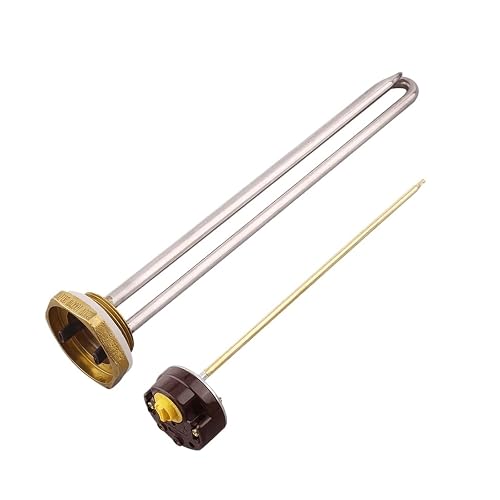
- Tank thermostat or high-limit switch that cuts the pump or closes a valve when the tank reaches your set maximum.
- Temperature and pressure relief valve (T&P valve) rated for the system, with its discharge piped safely to a drain. Test it on a schedule as the manufacturer directs.
- Expansion tank sized for the system volume, so heated water has room to expand without pushing against the relief valve.
- Thermal sensors at the collector outlet and tank, so you can see what the system is doing. The article on Top 7 Solar Thermal Temperature Sensors Compared for Solar Water Heaters covers sensor types in more depth.
Set the high-limit control below the lowest rated component, and leave a margin. Check the T&P valve by manually lifting its lever at least once a year, following the manufacturer’s directions.
Check Your System Step by Step
- Record the rated maximum temperature and pressure for every component.
- Confirm the T&P valve is rated for your tank and that its discharge line runs to a drain without any low points that could trap water.
- Install or verify the high-limit thermostat and wire it to shut off the pump.
- Size or check the expansion tank against the total water volume.
- Fill the system, bleed the air, and run it on a sunny day while watching the temperature readings.
- Simulate a failure by switching off the pump in the sun and confirm the temperature stays within limits.
Common Mistakes
- Trusting the tank’s rating without checking the pipe and fittings, which often have lower limits.
- Skipping the T&P valve or piping its discharge into a dead end.
- Setting the thermostat by feel instead of testing it with a reference thermometer.
- Ignoring a valve that drips or a relief lever that sticks, which can signal a pressure problem.
- Assuming the system is safe because it works on normal days. Test the failure case too.
FAQ
What is the maximum temperature a solar water heater should reach?
It should stay within the lowest rated limit of any component, usually well below boiling and controlled by a high-limit thermostat set with a margin. Check your tank and pipe specifications for the exact value.
Can a solar water heater overheat on its own?
Yes, during stagnation, when water stops circulating in full sun. A high-limit control and a correctly rated relief valve are the main protection.
How often should I test the T&P valve?
Follow the manufacturer’s schedule, and check it at least once a year by briefly lifting the lever. If the valve leaks or will not reseat, consult a licensed plumber or solar installer before continuing to use the system.
Conclusion
The solar water heater max temperature is set by your weakest component, not by the sun. Confirm every rating, install a high-limit control, a correctly sized expansion tank and a working relief valve, then test the stagnation case. Refer to the local plumbing or building code and a licensed professional for final approval of your installation.
Related reading
- Solar Water Heater Temperature Problems: Too Cold or Too Hot
- Pressure and Temperature Safety in Solar Water Heaters
- 3 Best Solar Water Heater Temperature Sensors and Controllers Compared
- Winterizing a DIY Solar Water Heater: Freeze Protection Options
Ready to choose one?
About Graham Fisher
Graham Fisher is part of our editorial team and reviews and edits our solar water heaters guides, checking product details against manufacturer specifications and owner feedback.