 By Audrey Hayes
Updated November 2026
Shoppers searching for an interest free solar hot water system usually want two things at once: a system that heats water reliably for their household, and a way to pay for it without carrying interest charges. That combination matters, but the product itself still has to fit your roof, your daily hot water use and your climate. This guide compares three real, Amazon-listed solar water heating systems and explains how we weighed them. Our selection criteria were specifications stated by each listing, the brand’s standing with installers and DIY builders, and the patterns owners tend to describe in their feedback, including heating performance, freeze protection and installation complexity. We did not test these units ourselves, and financing terms, where they exist, are set by the seller or lender, so confirm those separately before you commit.
Our Top Picks
Quick Comparison
| Product | Best for | Key feature |
|---|---|---|
| Solar Water Heating System Skyline5 Closed Loop | Homes in freezing climates | Closed-loop glycol circuit |
| 300 Liter Water Heater Active Split System Single Coil Tank 45 Deg Frame Evacuated Vacuum Tubes Hot SRCC Certified | Larger households with high hot water demand | 300 liter tank with evacuated tubes |
| Whole House On/Off Grid Split Solar Water Heater System (200L or 50 Gallons) | Whole-house use with flexible power options | Split design, on or off grid |
Solar Water Heating System Skyline5 Closed Loop

Solar Water Heating System Skyline5 Closed Loop
This system suits homeowners in regions where winter temperatures drop below freezing. A closed-loop design keeps the heat transfer fluid separate from your potable water, which is the main reason owners in cold areas tend to choose this layout over direct-circulation alternatives.
Key specs
- Closed-loop solar water heating configuration
- Designed around a separate heat transfer circuit
Pros
- Closed-loop layout suits freezing climates better than open systems
- Keeps potable water separate from the collector circuit
- Well suited to households that want low-maintenance operation
Cons
- Closed-loop systems need correct fluid maintenance over time
- Installation is more involved than a simple drain-back or thermosiphon setup
300 Liter Water Heater Active Split System Single Coil Tank 45 Deg Frame Evacuated Vacuum Tubes Hot SRCC Certified
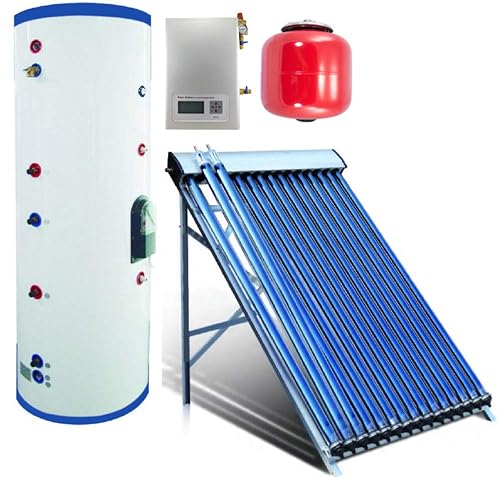
300 Liter Water Heater Active Split System Single Coil Tank 45 Deg Frame Evacuated Vacuum Tubes Hot SRCC Certified
This is the pick for larger households or anyone who runs showers, dishwashers and laundry on the same day. A 300 liter storage volume gives more buffer than smaller tanks, and the evacuated tube collector design generally performs better on cloudy or cold days than flat plate collectors, according to what manufacturers in this category commonly state.
Key specs
- 300 liter tank capacity
- Active split system with single coil tank
- Evacuated vacuum tube collectors
- 45 degree frame
- SRCC certified, per the listing name
Pros
- Large storage volume covers high daily demand
- Evacuated tubes perform well in lower-sun conditions
- SRCC certification gives a recognized performance reference
Cons
- Large tank and active split components need adequate roof and mounting space
- Active systems rely on a pump and controller, so they add electrical dependence
Whole House On/Off Grid Split Solar Water Heater System (200L or 50 Gallons)

Whole House On/Off Grid Split Solar Water Heater System (200L or 50 Gallons)
This system fits homeowners who want whole-house coverage and may not have reliable grid power at every site. The split design separates the collector from the storage tank, which gives installers more placement options on a home with limited roof space.
Key specs
- 200 liter (about 50 gallon) capacity
- Split design with separate collector and tank
- Available in on-grid or off-grid configurations, per the listing name
Pros
- Split layout allows flexible collector and tank placement
- On or off grid options suit remote or backup-minded homes
- Capacity suits a small to mid-sized household
Cons
- Off-grid operation depends on the specific configuration you buy, so confirm the components
- Split systems involve more piping and connections to install correctly
Buying Guide
When you compare any interest free solar hot water system, start with the practical basics: how much hot water your household uses, how much sun your roof receives, and whether freezing temperatures are a concern. Those three factors decide most of the rest.
Selection criteria
- Daily hot water demand measured in liters or gallons
- Roof orientation, tilt and shading
- Climate, especially freeze risk
- Installation complexity and your comfort level with plumbing
- Financing terms, which should be reviewed independently of the hardware
Important features
Look for a clearly stated collector type, tank volume, circulation method and freeze protection approach. Certification such as SRCC, where listed, gives you a recognized performance reference. Check whether the system includes a pressure relief valve and a way to limit outlet temperature.
Specs to check
- Tank capacity relative to your household size
- Collector area and type (flat plate, evacuated tube or batch)
- Circulation type: active pump, thermosiphon or closed loop
- Freeze protection method
- Maximum operating pressure and temperature ratings
Choosing by need
Cold climates generally call for a closed-loop or other freeze-protected design. Larger households benefit from greater storage volume. Homes with limited roof space or unusual mounting constraints may do better with a split system that separates the collector from the tank. For sizing guidance, see How to Estimate Your Household Hot Water Needs Before Going Solar.
Things to watch out for
Hot water from a solar system can reach scalding temperatures, so pair the system with proper controls. Preventing Scalding From Solar Hot Water: Tempering Valves and Settings explains how to do this. Water quality also affects longevity, and Water Quality and Scaling in Solar Water Heaters covers the details. Check local codes and permit requirements before installation, as described in Solar Water Heater Codes, Permits and Professional Review. Financing offers can change, so read the full terms in writing. Consult a licensed plumber, electrician or solar installer before any installation, especially where gas, electrical or structural work is involved.
FAQ
What does interest free mean for a solar hot water system?
It means the financing agreement charges no interest over the stated term. Many offers still include fees or require on-time payments to keep the zero-interest rate, so read the full agreement before signing.
How much hot water does a typical household need?
Daily use varies widely with household size and habits. Plan from your actual fixtures and usage rather than a general average. How to Estimate Your Household Hot Water Needs Before Going Solar walks through the calculation.
Do solar water heaters work in cold weather?
They can, but freezing is the main risk. Closed-loop designs and proper freeze protection are the usual approaches. See Winterizing a DIY Solar Water Heater: Freeze Protection Options for details.
Is an evacuated tube collector better than a flat plate?
Evacuated tubes generally handle cold and cloudy conditions better, while flat plate collectors are often simpler and less expensive to build. The right choice depends on your climate and budget. Solar Water Heater Collectors: Batch, Flat Plate and Evacuated Tube compares the options.
Can I install a solar hot water system myself?
Some homeowners do, but plumbing, roof mounting and electrical connections carry real risk. Consult a licensed professional, and check local permit rules first.
Do I need a storage tank?
Yes, in most systems. The tank holds heated water for use when the sun is not shining. Solar Hot Water Storage Tanks: Sizing, Types and Safety Parts explains sizing and safety components.
What maintenance do these systems need?
Expect periodic checks of fluid levels in closed-loop systems, pressure relief valves, pumps where fitted, and sediment or scale buildup. Maintenance schedules vary by manufacturer, so follow the one provided with your unit.
Conclusion
For cold-climate homes, the Skyline5 Closed Loop is the most natural starting point because its closed-loop layout addresses freeze risk directly. Larger households with heavy daily demand should look at the 300 liter evacuated tube system. Homes with limited roof space, or those wanting on or off grid flexibility, will find the split system the most adaptable. Whichever you choose, confirm the financing terms separately, verify sizing for your household, and have a licensed professional review the installation.
About Audrey Hayes
Audrey Hayes is part of our editorial team and reviews and edits our solar water heaters guides, checking product details against manufacturer specifications and owner feedback.


