By Graham Fisher
Updated November 2026
Shopping for solar water heater antifreeze usually means one of two things: you want to keep a closed-loop collector from freezing and cracking during cold snaps, or you want a product that won’t damage your pipes, pump seals or heat-transfer fluid. This list compares five products that appear on Amazon US and that address freeze protection in different ways. The selection criteria were specifications stated in each listing, brand reputation, and the patterns owners tend to describe in feedback, such as ease of pouring, fluid compatibility and whether the product is meant for heating loops at all. None of these were tested by us, and you should confirm compatibility with your own system before buying.
Our top picks at a glance
- 1
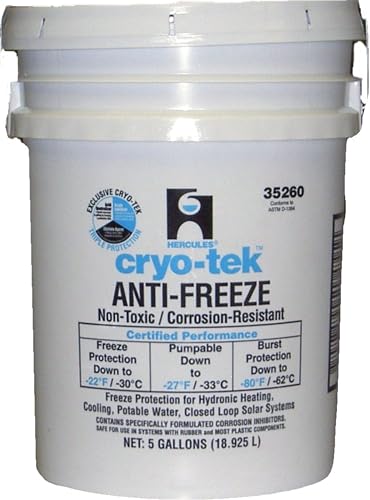 TOP CHOICEBest overallHercules CRYO-TEK Antifreeze 5GALView on Amazon
- 2
 TOP CHOICEBest for small heating loopsCryo-Tek Antifreeze for Heating System, 3.78 LView on Amazon
- 3
 TOP CHOICEBest for pool-style winterizingCPDI Champion Swimming Pool Antifreeze for Winterizing, 4 x 1 Gallon BottleView on Amazon
- 4
 Best budget pickSolar Molecular Antifreeze Instrument, Multi-Pack OptionView on Amazon
- 5
 Best non-fluid alternativeAnti-Freeze Electromagnetic Wave Technology Snow Removal DeviceView on Amazon
Our Top Picks
Quick Comparison
| Product | Best for | Key feature |
|---|---|---|
| Hercules CRYO-TEK Antifreeze 5GAL | Larger closed-loop systems | Five-gallon volume for full-loop charging |
| Cryo-Tek Antifreeze for Heating System, 3.78 L | Small heating loops and top-offs | Heating-system formulation in a single jug |
| CPDI Champion Swimming Pool Antifreeze | Pool-style winterizing of exposed lines | Four-gallon pack with rust and corrosion protection claims |
| Solar Molecular Antifreeze Instrument | Budget-minded trial or auxiliary use | Compact ABS body and multi-pack option |
| Anti-Freeze Electromagnetic Wave Snow Removal Device | People who want no fluid at all | Solar USB-powered, no liquid to drain |
Hercules CRYO-TEK Antifreeze 5GAL
(35260) Hercules CRYO-TEK Antifreeze 5GAL
Best for: Larger closed-loop solar systems that need a full charge of heat-transfer fluid.
This suits homeowners with a multi-panel loop or a tank that holds a significant fluid volume. Owners often report that the five-gallon size saves repeat purchases when first filling a system.
Key specs
- Container size: 5 gallons (per listing)
- Product type: propylene glycol-based antifreeze (manufacturers of this line typically specify this; confirm on the label)
- Intended use: closed-loop heating systems
Pros
- Large volume covers full-loop charging in many residential systems
- Well-known brand name in heating-fluid products
- Single purchase for initial fill and future top-offs
Cons
- Bulk container is heavy and awkward to store
- Overkill for very small loops or occasional top-ups
Bottom line: A strong choice for a full-size residential loop. Check that the fluid matches your collector manufacturer’s requirements before filling.
Cryo-Tek Antifreeze for Heating System, 3.78 L
3.78 L Cryo-Tek Antifreeze for Heating System
Best for: Small heating loops, topping off a system, or a single-collector setup.
This is a practical fit for owners with a compact loop who want a manageable jug and do not need a five-gallon drum on hand.
Key specs
- Volume: 3.78 liters (about one US gallon), per listing
- Intended use: heating system antifreeze
Pros
- Easy to handle and store
- Suitable for top-offs after routine maintenance
- Labeled for heating systems, which matches many solar loops
Cons
- May need several jugs for larger loops
- Less economical per gallon than bulk containers
Bottom line: Best for compact systems and maintenance top-offs. Confirm the fluid type against your collector’s spec sheet.
CPDI Champion Swimming Pool Antifreeze for Winterizing, 4 x 1 Gallon Bottle
CPDI Champion Swimming Pool Antifreeze for Winterizing, 4 x 1 Gallon Bottle, Supports Above Ground and Inground Pools and Spas, Burst Protection from Rust and Corrosion
Best for: Pool-style winterizing of exposed or drained lines, not a closed-loop heating fluid.
This suits owners who are draining exposed piping for the winter and want a product designed for pipe protection rather than a heat-transfer fluid. Check your collector manufacturer before using it in a closed loop.
Key specs
- Pack: 4 x 1 gallon bottles, per listing
- Stated uses: above-ground and in-ground pools and spas
- Stated benefits: burst protection and rust/corrosion protection (per listing)
Pros
- Four gallons in separate bottles for easy dosing
- Designed for winter pipe protection
- Useful for drained-line or auxiliary piping
Cons
- Pool formulations are not generally approved for closed solar heating loops
- Not a substitute for propylene glycol fluid where the manufacturer requires it
Bottom line: A reasonable pick for drained exposed piping, but not a default choice for a closed solar loop. Consult the collector manufacturer first.
Solar Molecular Antifreeze Instrument, Multi-Pack Option
Solar panel, compact ABS body, dashboard placement, multi-pack option(3pcs) Molecular Antifreeze Instrument Solar, Winter Frost Prevention Aid
Best for: Budget-minded trials and auxiliary use where a fluid is not the goal.
This is a non-fluid device aimed at winter frost prevention on vehicles and surfaces. It is not a heat-transfer antifreeze and should not be treated as a replacement for loop fluid in a solar water heater.
Key specs
- Body: compact ABS, per listing
- Pack option: 3-piece, per listing
- Power: solar-charged, per listing
Pros
- No liquid to drain or dispose of
- Compact and easy to mount
- Multi-pack option for several placements
Cons
- Not a freeze-protection fluid for closed loops
- Effectiveness claims are not independently verified in the listing
Bottom line: Only consider this if you are exploring non-fluid options for an accessory or vehicle. For a solar loop, choose a glycol fluid instead.
Anti-Freeze Electromagnetic Wave Technology Snow Removal Device
Anti-Freeze Electromagnetic Wave Technology Molecular Interference Car Snow Removal Device,Vehicle Frost Protection,Solar USB 2Pcs Electromagnetic Molecular Antifreeze Car Snow Removal Device, Silent
Best for: Owners who want a fluid-free accessory for frost and ice on nearby surfaces.
This product is a solar USB device marketed for vehicle frost protection. It has no role as a loop antifreeze, so it fits only as an auxiliary curiosity or a vehicle accessory.
Key specs
- Pack: 2 pieces, per listing
- Power: solar USB, per listing
- Operation: silent, per listing
Pros
- No liquid involved
- Compact and quiet
- Simple to place on a dashboard or sunny surface
Cons
- Not suitable as freeze protection for a solar collector loop
- Performance claims are not independently documented
Bottom line: Use it, if at all, for vehicle frost. For solar water heater freeze protection, rely on a proper heat-transfer fluid or drainage approach.
Buying Guide
Fluid type and compatibility
Closed-loop solar heaters almost always call for a propylene glycol-based heat-transfer fluid, not automotive coolant. Ethylene glycol is toxic and can degrade seals and components in many systems. Read your collector and pump manufacturer’s documentation before choosing a product, and keep the safety data sheet for the fluid on file.
Good picks for this: Hercules CRYO-TEK Antifreeze 5GAL, Cryo-Tek Antifreeze for Heating System
Freeze point rating
Look for the freeze point stated on the container or in the spec sheet, and choose a concentration that protects below your coldest expected night temperature with a margin. Many installers aim for protection several degrees below the local record low, but the exact target depends on your climate and collector design.
Good picks for this: Hercules CRYO-TEK Antifreeze 5GAL, Cryo-Tek Antifreeze for Heating System, 3.78 L
System size and fill volume
Estimate the total fluid volume in your collector, piping and heat exchanger before buying. A small loop may need only one gallon, while a multi-panel system can need several gallons for the initial fill. Buying a few extra ounces for purging and top-offs is common practice.
Good picks for this: Hercules CRYO-TEK Antifreeze 5GAL, Cryo-Tek Antifreeze for Heating System, 3.78 L
Use case: closed loop versus drainback
A closed-loop system circulates antifreeze continuously and needs a true heat-transfer fluid. A drainback system lets water drain from exposed collectors when the pump stops, so freeze protection comes from drainage rather than fluid. Pool antifreeze is sometimes used for drained exposed lines, but it is not a closed-loop heating fluid.
Good picks for this: CPDI Champion Swimming Pool Antifreeze for Winterizing, Hercules CRYO-TEK Antifreeze 5GAL
Container format and handling
Five-gallon drums are efficient for large systems but heavy and awkward. Smaller jugs and multi-bottle packs are easier to pour and store, and they limit waste when you only need a top-off. Pour carefully and use a funnel and a catch pan to avoid spills near the pump. For another angle, check out 7 Best Super Solar Water Heater Options Compared (2026).
Good picks for this: CPDI Champion Swimming Pool Antifreeze for Winterizing, Cryo-Tek Antifreeze for Heating System, 3.78 L
Corrosion and material compatibility
Check that the product is labeled as compatible with copper, brass, stainless steel and the seals in your pump and heat exchanger. Some listings mention rust or corrosion protection, but compatibility with specific elastomers is best confirmed with the equipment maker.
Good picks for this: Hercules CRYO-TEK Antifreeze 5GAL, CPDI Champion Swimming Pool Antifreeze for Winterizing
Maintenance and fluid replacement
Antifreeze loses inhibitor strength over time and can become acidic. Check fluid condition and pH periodically, and plan replacement according to the manufacturer’s interval, often every few years. Record the fill date and concentration so you know when service is due.
Good picks for this: Hercules CRYO-TEK Antifreeze 5GAL, Cryo-Tek Antifreeze for Heating System, 3.78 L
FAQ
Can I use regular car antifreeze in my solar water heater?
No. Automotive coolant is usually ethylene glycol, which is toxic and can damage components in a solar loop. Use a propylene glycol-based heat-transfer fluid that matches your manufacturer’s specification.
What freeze protection level should I choose?
Pick a concentration that protects several degrees below the lowest temperature you expect at the collector. Check local weather history and your manufacturer’s recommendation, and leave a margin for unusually cold nights.
How much antifreeze does a typical system need?
It depends on collector area, pipe length and tank size. Add up the fluid capacity of each component from the spec sheets, and buy slightly more than the calculated total to allow for purging and losses.
Is pool antifreeze safe for a solar heating loop?
Pool antifreeze is generally formulated for drained piping, not circulating heat-transfer loops. Confirm with the collector manufacturer before using it in a closed system.
Do I still need antifreeze if I use a drainback system?
Drainback systems rely on draining exposed components when the pump stops, so they usually do not need circulating antifreeze. Verify that drainage is complete and that exposed pipes slope correctly.
How often should solar antifreeze be replaced?
Follow the manufacturer’s maintenance interval. Many systems are checked every year and fluid is replaced every few years, or sooner if pH or color indicates degradation.
Are non-fluid frost devices a substitute for antifreeze?
Not for closed solar loops. Non-fluid accessories are marketed for vehicles or surfaces and do not replace heat-transfer fluid or proper drainage.
Conclusion
For a full closed-loop solar water heater, the Hercules CRYO-TEK Antifreeze 5GAL is the most practical volume choice for larger systems, and the Cryo-Tek Antifreeze for Heating System, 3.78 L, suits smaller loops and top-offs. The CPDI pool antifreeze fits drained exposed piping rather than circulating loops, and the two non-fluid devices are accessories rather than freeze protection for the collector. Confirm fluid type and concentration with your equipment manufacturer and, when in doubt, consult a licensed solar installer or plumber.
Sources
- Solar water heating basics, system types and freeze-protection approaches (energy.gov)
- Research on solar thermal system design and heat-transfer fluids (nrel.gov)
- Safe handling practices for chemicals and glycol-based fluids (osha.gov)
Related reading
- Winterizing a DIY Solar Water Heater: Freeze Protection Options
- Water Quality and Scaling in Solar Water Heaters
- Thermosiphon Solar Water Heaters: Natural Circulation Explained
- Solar Water Heater Temperature Problems: Too Cold or Too Hot
- Solar Water Heater Controls and Sensors: How Differential Control Works
- Solar Water Heater Collectors: Batch, Flat Plate and Evacuated Tube
- Solar Water Heater Codes, Permits and Professional Review
- Site Assessment for a Solar Water Heater: Sun, Shade, Roof and Space
About Graham Fisher
Graham Fisher is part of our editorial team and reviews and edits our solar water heaters guides, checking product details against manufacturer specifications and owner feedback.