By Graham Fisher
Updated November 2026
Choosing a solar thermal water heater system comes down to matching components to your climate, your roof or yard space, and how you plan to install it. This list compares five products that cover the main parts of a typical setup: a differential controller, a potable expansion tank, a split evacuated tube system, a closed-loop kit and a high-wind solar collector kit. Each was selected by reviewing manufacturer specifications, certification status, brand reputation and the patterns owners commonly report, with attention to whether the product fits a residential hot water application. Nothing here was bench-tested by the author, so confirm specs against the manufacturer’s documentation before you buy.
Our top picks at a glance
- 1
 TOP CHOICEBest overallSkyline5 Closed LoopView on Amazon
- 2
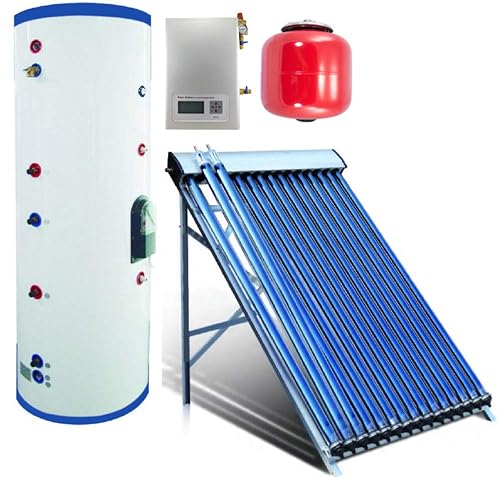 TOP CHOICEBest for split system tanks1000 Liter Water Heater Active Split SystemView on Amazon
- 3
 TOP CHOICEBest for pressurized controlsMISOL 110V ControllerView on Amazon
- 4
 Best for potable expansion1 Gallon Potable Thermal Expansion TankView on Amazon
- 5
 Best budget pick for large roofsIndustrial Grade Solar Pool Heater DIY KitView on Amazon
Our Top Picks
| Product | Best for | Key feature |
|---|---|---|
| Skyline5 Closed Loop | Freeze-prone climates using glycol | Closed-loop heat transfer circuit |
| 1000 Liter Water Heater Active Split System | Households needing a large storage volume | Evacuated tube collectors with single coil tank |
| MISOL 110V Controller | Pressurized split systems | 110V differential temperature control |
| 1 Gallon Potable Thermal Expansion Tank | Protecting potable lines from pressure rise | 3/4″ MNPT potable-rated connection |
| Industrial Grade Solar Pool Heater DIY Kit | Large roofs and high-wind sites | Strapless mounting, about 200 square feet |
Skyline5 Closed Loop
Solar Water Heating System Skyline5 Closed Loop
Best for: Freeze-prone climates where a closed-loop glycol circuit protects the collector.
This kit suits homeowners in regions with regular hard freezes who want the heat-transfer fluid kept separate from domestic water. Closed-loop designs are widely used where winter temperatures drop below freezing, because they avoid draining the collector.
Key specs
- Closed-loop heat transfer circuit
- Designed for residential solar thermal hot water use
- Requires a heat exchanger and circulation pump as part of the system
Pros
- Protects the collector in freezing weather when properly filled
- Keeps antifreeze out of potable water
- Well suited to a closed-loop, pressurized design
Cons
- Glycol fluid needs periodic checks and eventual replacement
- Requires a more involved installation than a simple drainback layout
Bottom line: Choose this if you live where freezing is common and you are comfortable maintaining a glycol loop.
1000 Liter Water Heater Active Split System
1000 Liter Water Heater Active Split System Single Coil Tank 45 Deg Frame Evacuated Vacuum Tubes Hot SRCC Certified
Best for: Households needing a large storage volume with separate collectors and tank.
This active split system pairs evacuated vacuum tube collectors with a separate storage tank, a configuration often chosen by larger households or those who want flexibility in tank placement.
Key specs
- 1000 liter tank capacity
- Single coil tank design
- Evacuated vacuum tube collectors
- 45 degree frame for mounting
- SRCC certified
Pros
- Large storage volume for high daily demand
- Evacuated tubes perform well in cool or cloudy conditions
- SRCC certification supports performance claims
Cons
- Large tank requires significant floor or mounting space
- Active systems need a controller and pump, adding complexity
Bottom line: A good fit for larger families and anyone with space for a big tank and a planned controller.
MISOL 110V Controller
MISOL 110V Controller of Solar Water Heater, Used for Separated pressurized Solar hot Water System
Best for: Pressurized split systems that need differential temperature control.
A controller is the brain of an active solar thermal system. It compares collector and tank temperatures and switches the circulation pump on when the collector is hotter. This model is sized for a 110V supply.
Key specs
- 110V operating voltage
- Designed for separated pressurized solar hot water systems
Pros
- Matches common US household voltage
- Purpose-built for pressurized split systems
- Relatively simple to integrate with a pump and sensors
Cons
- Requires separate temperature sensors and wiring knowledge
- Settings must be matched to your specific system
Bottom line: Pick this if you are building or upgrading a pressurized split system and can handle basic electrical work or hire it out.
1 Gallon Potable Thermal Expansion Tank
1 Gallon Potable Thermal Expansion Tank, 3/4" MNPT Connection, Compact Design for Water Heater, RV, Marine, Boat, Off-Grid Systems, Residential Plumbing & Solar Thermal
Best for: Protecting potable lines from pressure rise as water heats.
Water expands as it heats, and in a closed domestic system that expansion needs somewhere to go. An expansion tank absorbs it, protecting fittings and relief valves. This one is rated for potable use and has a 3/4″ MNPT connection.
Key specs
- 1 gallon capacity
- 3/4″ MNPT connection
- Potable water rated
Pros
- Potable rating suits drinking water lines
- Compact footprint for tight utility spaces
- Standard connection size fits common plumbing
Cons
- One gallon is small for large systems
- Must be sized and pre-charged correctly for your pressure
Bottom line: A practical add-on for most closed residential solar loops, provided you verify sizing for your system volume.
Industrial Grade Solar Pool Heater DIY Kit
Industrial Grade Solar Pool Heater DIY Kit – Superior High-Wind Strapless Mounting System & Maximum Freeze Resistance (4-4'x12.5' / 200 Square Feet)
Best for: Large roofs and windy sites where strapless mounting matters.
This kit is built around a large collector area of about 200 square feet and a mounting system designed for high wind. It is marketed for pool heating, so it suits homeowners who need a big surface area and want a DIY-oriented frame. Confirm suitability for domestic hot water before using it for potable heating.
Key specs
- Four collectors, each 4 feet by 12.5 feet
- About 200 square feet total collector area
- Strapless high-wind mounting system
Pros
- Large collector area for high heat output
- Mounting system designed for wind loads
- Clear DIY orientation with included mounting hardware
Cons
- Pool-focused design may need extra components for domestic use
- Large array requires a sturdy roof or ground structure
Bottom line: Best for owners with a large, sturdy, sun-facing area who can adapt a pool-rated kit for hot water with appropriate components.
Buying Guide
System Type: Closed Loop, Drainback or Thermosiphon
Closed-loop systems circulate antifreeze through the collector and a heat exchanger, which protects against freezing. Drainback designs drain the collector when the pump stops. Thermosiphon systems rely on natural convection and need the tank above the collector. Match the design to your climate and layout. For a deeper comparison, see Thermosiphon Solar Water Heaters: Natural Circulation Explained.
Good picks for this: Skyline5 Closed Loop, 1000 Liter Water Heater Active Split System
Controller and Sensors
Active systems depend on a differential controller and temperature sensors. Check the voltage, the number of sensor inputs and whether the controller supports your pump. Accurate sensors matter; see Top 7 Solar Thermal Temperature Sensors Compared for Solar Water Heaters for sensor options.
Good picks for this: MISOL 110V Controller
Storage Tank Volume and Fit
Size the tank to your daily hot water use. A common planning approach is to match storage to a day’s demand so the system carries you through cloudy periods. Review storage choices in Top 5 Solar Thermal Storage Tanks for Home Hot Water Systems.
Good picks for this: 1000 Liter Water Heater Active Split System
Collector Type and Area
Flat-plate collectors are simpler and cheaper to maintain. Evacuated tube collectors retain heat better in cold or overcast weather. Collector area should match your hot water goal, and the flat-panel options are compared in Top 7 Solar Thermal Flat Panel Options Compared for Home Water Heating.
Good picks for this: Industrial Grade Solar Pool Heater DIY Kit, 1000 Liter Water Heater Active Split System
Pressure Management and Expansion
Closed systems need an expansion tank sized for the system’s water volume and pressure rating. Confirm the tank is potable-rated if it sits on drinking water lines. Plumbing-related pressure rules are covered in general guides on 6 Best Solar Thermal Hot Water Heating System Options for Homes (2026).
Good picks for this: 1 Gallon Potable Thermal Expansion Tank
Mounting, Wind and Roof Load
Check the mounting system’s wind rating, roof pitch and attachment method. Large arrays add real weight and wind load. Confirm structural capacity with a qualified contractor or structural engineer before installing heavy collectors.
Good picks for this: Industrial Grade Solar Pool Heater DIY Kit
Water Quality and Maintenance
Hard water scales heat exchangers and collectors over time, reducing output. Plan for water treatment or regular flushing where needed. Learn more in Water Quality and Scaling in Solar Water Heaters.
Good picks for this: Skyline5 Closed Loop, 1 Gallon Potable Thermal Expansion Tank
FAQ
What is a solar thermal water heater system?
A solar thermal water heater system uses collectors to capture sunlight as heat and transfer it into water, usually with a pump, controller and storage tank. Unlike photovoltaic systems, it heats water directly.
Do I need a controller for every system?
Active systems with pumps generally need a differential controller. Passive thermosiphon systems do not, because they rely on natural circulation.
Why is an expansion tank needed?
Water expands as it heats. In a closed domestic loop, an expansion tank absorbs that increase so pressure does not build to unsafe levels.
Can a pool heater kit be used for hot water?
Pool heater kits are designed for lower-temperature, unpressurized use. Using one for potable water usually requires additional components and professional guidance.
How do I protect the system from freezing?
Closed-loop systems with glycol, or drainback designs, protect collectors in freezing climates. Check the manufacturer’s instructions for your region.
Should I hire a professional installer?
Electrical connections, roof work and pressurized plumbing carry real risk. Consult a licensed plumber, electrician or solar installer for work beyond your skill level.
Conclusion
For most readers, the right solar thermal water heater system starts with climate. Freeze-prone regions should look at closed-loop designs like the Skyline5 Closed Loop. Households needing large storage will find the 1000 Liter split system suits them best, paired with the MISOL 110V Controller. The potable expansion tank is a sensible addition for any closed loop, and the industrial pool kit suits owners with very large, sturdy roof space who can adapt it carefully. Verify specifications and local code requirements before purchasing.
Sources
- Federal guidance on solar water heating types, design considerations and operation (energy.gov)
- Research and technical data on solar thermal performance and system design (nrel.gov)
- Standards and technical guidance on building water heating and pressure systems (ashrae.org)
About Graham Fisher
Graham Fisher is part of our editorial team and reviews and edits our solar water heaters guides, checking product details against manufacturer specifications and owner feedback.